Fair housing advertising comes down to one rule: describe the property, never the person you imagine living in it. Federal law bars any housing ad that states a preference, limitation or discrimination based on a protected class. That covers the words, the photos, the directions and the audience you choose to show the ad to. Below you will find what the rules say, which phrases to swap out, how online targeting creates risk even with clean copy, and a checklist you can run before any listing goes live.
TL;DR
- The Fair Housing Act bans housing ads that show a preference or limitation based on race, color, religion, sex, national origin, familial status or disability.
- Rules reach beyond text: photos, symbols, directions, oral statements and where or to whom you show the ad all count.
- Write about the home (bedrooms, fenced yard, near transit), not the ideal tenant or buyer.
- Neutral wording does not cancel the risk if ad targeting or delivery shuts out a protected group.
- State and local laws often add protected classes, so check them before you publish.
Table of Contents
- What the Fair Housing Act says about advertising
- Who is protected
- What counts as an advertisement
- Words and phrases to avoid, and what to write instead
- Photos, symbols, directions and logos
- When neutral wording is not enough: placement and online targeting
- The Fair Housing poster
- State and local rules can go further
- A pre-publication checklist
- Our perspective
- Let us handle the marketing and the paperwork
- FAQ
- Sources
What the Fair Housing Act says about advertising
Section 804(c) of the Act, found at 42 U.S.C. § 3604, makes it unlawful to make, print or publish, or cause to be published, any notice, statement or advertisement for a sale or rental that indicates a preference, limitation or discrimination. The same applies to an intent to discriminate. The protected characteristics are race, color, religion, sex, handicap, familial status and national origin.
Two details matter in practice. First, the verb is broad: "cause to be published." If you hire an agent, a photographer or a listing service and the ad that goes out is discriminatory, you are not automatically insulated. Second, the law targets what the ad indicates. You do not have to intend to exclude anyone. An ad that a reasonable reader would take as signaling who is welcome and who is not is the problem.
HUD's implementing rule, 24 C.F.R. § 100.75, spells out the details. It prohibits words, phrases, photographs, illustrations, symbols and forms that convey that housing is available or unavailable to a particular protected group. It also forbids expressing a preference or limitation to agents, brokers, employees, prospective sellers or renters based on a protected characteristic. So an instruction like "don't show this one to families" given to your leasing agent is a violation even if it never appears in a public ad.
Who is protected
The federal classes are race, color, religion, sex, national origin, familial status and disability. HUD's 2024 guidance on advertising through digital platforms explains that sex includes sexual orientation and gender identity, and that familial status covers the presence of children under 18, seeking legal custody and pregnancy.

The same guidance makes clear the rules are not limited to landlords posting a "for rent" sign. They reach sale and rental advertising and related services such as property management, residential real estate services, mortgages, mortgage brokerage and home insurance. If your business touches any step of getting someone into a home, the advertising rules apply to you.
The National Fair Housing Alliance adds a point owners often miss: the advertising prohibitions apply to all housing, including housing that may qualify for other exemptions under the Act. A small owner who believes an exemption protects them from the Act's other provisions should still treat ad wording as fully regulated.
What counts as an advertisement
More than you might think. Under § 100.75, the rule covers written and oral notices and statements, including applications, flyers, brochures, deeds, signs, banners, posters, billboards and other documents used in selling or renting a dwelling. The National Fair Housing Alliance lists print and online ads, television and radio, and speech and verbal communications with prospective tenants, buyers or borrowers.
In day-to-day terms, these all count:
- Your listing on the MLS and on rental sites
- Social media posts, stories and comments that answer questions about a property
- Yard signs and open house signs
- Email and text replies to inquiries
- What a leasing agent says on a showing or a phone call
- Your rental application and any prequalification notice
That last group is where many violations start. A flawless listing followed by a casual "this one's really better for a couple without kids" in a text message undoes the work. If you syndicate your listings to many sites, our guide to rental listing syndication covers how to keep the wording consistent everywhere it appears.
Words and phrases to avoid, and what to write instead
The Indiana Civil Rights Commission gives clear examples. Phrases that signal who is preferred or excluded include "No children," "Adults only," "Christian household preferred," "Perfect for single professionals," "Ideal for young couples," "No wheelchairs" and "Not suitable for families." Its safer alternatives describe the property: "one bedroom apartment available," "second floor unit," "near public transportation," "two-bedroom home with fenced yard."
| Avoid | Why it is a problem | Write instead |
|---|---|---|
| Adults only / no kids | Limits based on familial status | One-bedroom apartment, quiet building |
| Perfect for young professionals | Implies a preferred buyer or renter | Walkable to offices and restaurants |
| Ideal for young couples | Preference by age, family or marital profile | Open floor plan with a second bedroom |
| No wheelchairs | Limits based on disability | Describe actual features, such as a step-free entry if there is one |
| Christian household preferred | Preference based on religion | Delete it |
| Not suitable for families | Limits based on familial status | Two-bedroom home with fenced yard |
| Near our church | Can read as religious preference | Near the park, 0.5 miles from the Marietta Square |
Coded and contextual language
A Fair Housing Advertising Manual distinguishes exclusionary language ("no children") from preference language ("ideal for female tenant") and flags words such as "restricted," "exclusive," "private," "integrated" and "traditional neighborhood" when they are used in a discriminatory context. Those words are not automatically unlawful in every use. The risk is that, in context, they can become evidence of a preference tied to a protected group. If a word does not add a concrete fact about the home, leave it out.
A useful habit: for every adjective, ask what physical fact it reports. "Spacious kitchen" reports a fact. "Great for entertaining families" reports an imagined household. If you want more ways to make a listing vivid without describing people, see our rental listing description ideas.
Photos, symbols, directions and logos
Since § 100.75 covers photographs, illustrations and symbols, images need the same care as copy. The National Fair Housing Alliance's practical advice is to broaden the market rather than narrow it: focus on amenities and truthful availability, use inclusive imagery and avoid describing an ideal renter or buyer.
The Florida Press Association's 2025 advertising guide offers a useful review list. It suggests checking whether:
- ads contain discriminatory words or visual aids
- directions rely on racially or religiously identifiable landmarks
- promotions contain discriminatory preferences
- any models are used in a non-discriminatory way
- the Equal Housing logo or statement is used appropriately
- distribution reaches protected classes
Directions are the sleeper issue. "Two blocks past the synagogue" is a navigation aid to one person and a signal to another. Use street names, mile markers and neutral landmarks like a grocery store or a transit station.
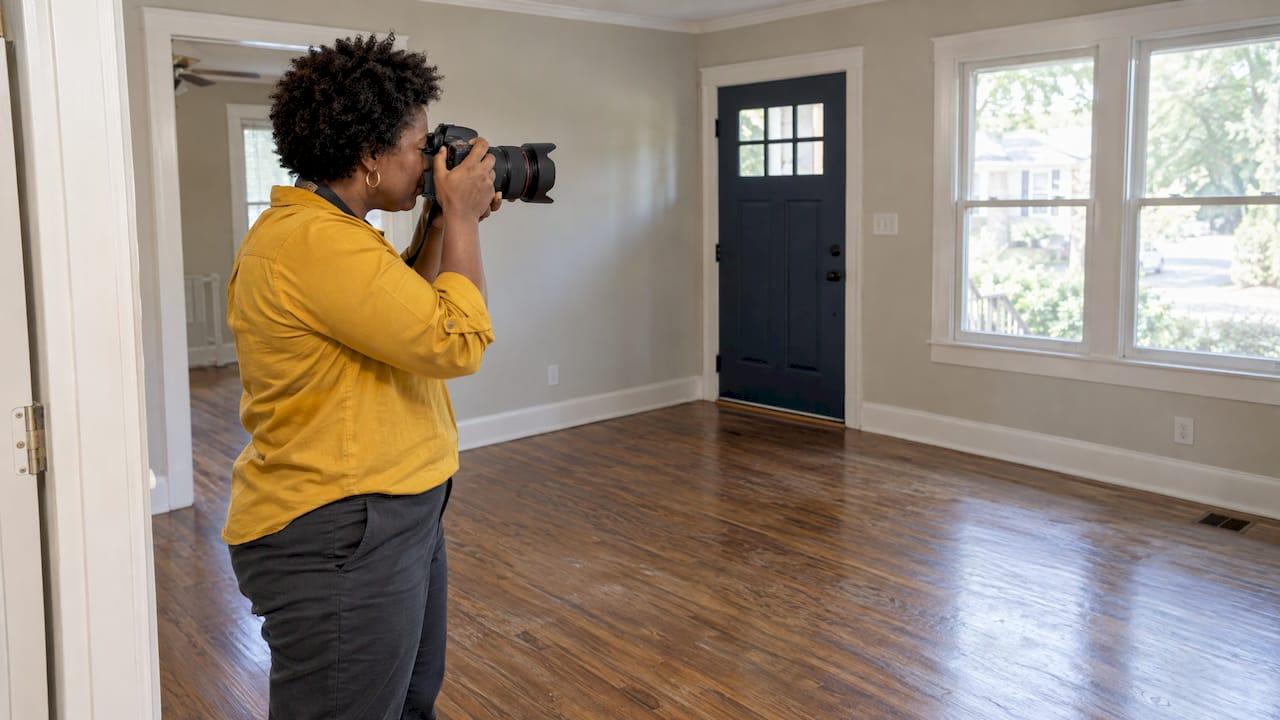
For photos, show the home first. If people appear in marketing images, use a range of people, and avoid a pattern in which every image shows the same type of household. An empty, well-lit room never raises the question.
When neutral wording is not enough: placement and online targeting
Clean copy can still produce a violation. Section 100.75 expressly identifies selecting media or advertising locations that deny particular segments of the housing market information about housing opportunities as discriminatory.
HUD's 2024 digital guidance applies that idea to modern ad platforms. It says algorithmic targeting or delivery can deny people information, deter consumers, steer people toward certain neighborhoods, show different prices or conditions, target vulnerable people, or charge different amounts. It cites audience categories, proxies, geography, lookalike tools and platform optimization as ways discriminatory delivery can happen.
The guidance includes a concrete example. A rental ad aimed at predominantly Black neighborhoods carries prominent "no criminal records!" and "good credit only!" disclaimers, while an otherwise similar ad aimed at White neighborhoods does not. HUD says this may deter or discourage applicants based on race. The lesson for landlords: screening criteria should be applied and presented uniformly, wherever the ad runs. Our tenant screening criteria checklist shows how to set written standards that apply to every applicant.
The 2019 settlement involving Facebook housing ads is a helpful benchmark for what safer settings look like. The programmatic relief exhibit describes safeguards including no zip-code targeting, a geographic radius of at least 15 miles, no targeting by age or gender on profiles, restrictions on protected-class-related detailed targeting and limits on lookalike audiences. You do not have to run ads on that platform to take the lesson: wide geography, no demographic filters and no lookalike audiences built from a narrow customer list.
Practical steps if you run paid ads:
- Choose the housing or special ad category the platform offers, where one exists.
- Target by broad area, not by zip code or demographic proxy.
- Skip lookalike audiences built from your past tenants or buyers.
- Save screenshots of the final settings along with the approved creative.
- Review who the ad actually reached, not only who you intended it for.
Our rental marketing strategy guide covers how to fill a vacancy fast with broad reach, which happens to be the safest approach for fair housing too.
The Fair Housing poster
If you are covered by the poster requirement, it must be prominently displayed where people seeking housing or covered real estate services can readily see it. HUD's poster regulations call for an 11 by 14 inch poster with the Equal Housing Opportunity legend, the Fair Housing Act nondiscrimination notice and HUD complaint information. Under 24 C.F.R. § 110.30, failing to display a required poster is prima facie evidence of a discriminatory housing practice.
For a brokerage or management office, that means one visible at the front desk or in the meeting room where clients sit. Hanging it behind a door or in a back hallway defeats the purpose.

State and local rules can go further
The federal Act is a floor. The National Fair Housing Alliance notes that many state and local laws protect more, possibly including sexual orientation, marital status, source of income or voucher use, and advises checking the applicable state and local law. New Jersey's 2026 adopted advertising rules show how far a state can go: they cover print and electronic housing ads, apply whether conduct is written, oral, electronic or facilitated by automated decision tools, and add protections such as marital status, pregnancy, gender identity or expression, sexual orientation, lawful source of income and military-service liability.
For Atlanta-area owners, start with our overview of Georgia fair housing laws, and check city and county rules for wherever the property sits, whether that is Marietta, Alpharetta, Johns Creek or elsewhere. If you accept vouchers, our Section 8 landlord guide is a good companion. Owners in associations should also read how HOA rental restrictions interact with the way you describe a home.
A pre-publication checklist
The Fair Housing Advertising Manual recommends a prepublication review covering wording, coded terms, symbols, images, directions, promotions, logo use, placement, audience settings and delivery. Put that into a one-page routine:
- Read the copy for people words. Remove any reference to who should or should not apply.
- Check every adjective against a physical fact about the property.
- Review photos and symbols for who they appear to invite.
- Verify directions use neutral landmarks.
- Confirm qualifications are uniform. Income, credit and background standards should be the same for every applicant and stated the same way.
- Check the Equal Housing logo or statement is used appropriately.
- Review placement and audience settings for geography and demographic filters.
- Look up state, county and city protections before publishing.
- Keep a record of the approved ad and its targeting.
- Escalate unusual cases. The manual advises having counsel or a fair housing professional review issues involving source of income, vouchers, occupancy, senior housing, roommates, accessibility or automated targeting.
The same discipline belongs in your application. See our guide to rental application questions for what to ask and how to handle consent. Disclosures matter too, for example lead paint disclosure on older homes, and giving them to every applicant the same way is part of treating everyone equally.
Our perspective
We manage rentals for Atlanta-area investors, and the pattern we see is simple: fair housing problems rarely come from bad intent. They come from habit. An owner writes "perfect for a small family" because it sounds friendly, or a quick text reply says more than the listing ever would.
That is why we treat advertising as a system, not a one-time edit. One standard set of qualifications, one reviewed description for each property, one approved set of photos, and broad distribution. When every listing starts from the same template and every inquiry gets the same answers, the chance of a slip drops sharply.
It is also better marketing. A listing that talks about the home reaches the widest pool of qualified applicants, which means a shorter vacancy. Our approach is built around full-service management with clear communication, so owners do not have to carry compliance questions alone.
Matt
Let us handle the marketing and the paperwork
If you own rental property in the Atlanta area and would rather not police every word of every listing, our property management service covers vacancy marketing, tenant placement, lease drafting and renewal, and legal compliance support as part of a full management suite. Published pricing is 10% per month for monthly management and a one-time $250 onboarding fee.

Thinking about a portfolio rather than one unit? Our investment consulting sessions let you talk through your plans with our team. And if you are selling a home, start here to see how we market it.
FAQ
What does the Fair Housing Act say about advertising for housing?
It makes it unlawful to make, print or publish a notice, statement or advertisement for a sale or rental that indicates a preference, limitation or discrimination based on race, color, religion, sex, handicap, familial status or national origin. It applies whether or not you intended to exclude anyone. The test is what the ad indicates.
Which ads are acceptable under the Fair Housing Act?
Ads that describe the property and its features, such as "one bedroom apartment available," "second floor unit," "near public transportation" or "two-bedroom home with fenced yard." These examples come from the Indiana Civil Rights Commission. They say nothing about who should live there.
What are examples of fair housing violations in advertising?
Phrases such as "No children," "Adults only," "Christian household preferred," "Ideal for young couples" and "No wheelchairs." Images or symbols that suggest housing is for one group also count. So does targeting an ad in a way that denies information to a protected group.
What is required for the Fair Housing poster?
It must be displayed prominently where people seeking housing or covered services can readily see it. It must be 11 by 14 inches and include the Equal Housing Opportunity legend, the nondiscrimination notice and HUD complaint information. Failing to display a required poster is treated as prima facie evidence of a discriminatory practice.
Do state and local laws add anything?
Often, yes. Many states and cities protect classes beyond the federal list, such as marital status or source of income. Check the rules for the exact location of the property before you publish.
Sources
- 42 U.S.C. § 3604: Discrimination in the sale or rental of housing
- HUD guidance on advertising through digital platforms (2024)
- 24 C.F.R. § 100.75: Discriminatory advertisements
- National Fair Housing Alliance: Responsible Advertising
- Indiana Civil Rights Commission: Advertising and Housing Discrimination
- Facebook settlement programmatic relief exhibit (2019)
- Florida Press Association Fair Housing Act Advertising Guide (2025)
- HUD requirements for display of posters (24 C.F.R. Part 110)
- New Jersey advertising rules, 58 N.J.R. 858(a)