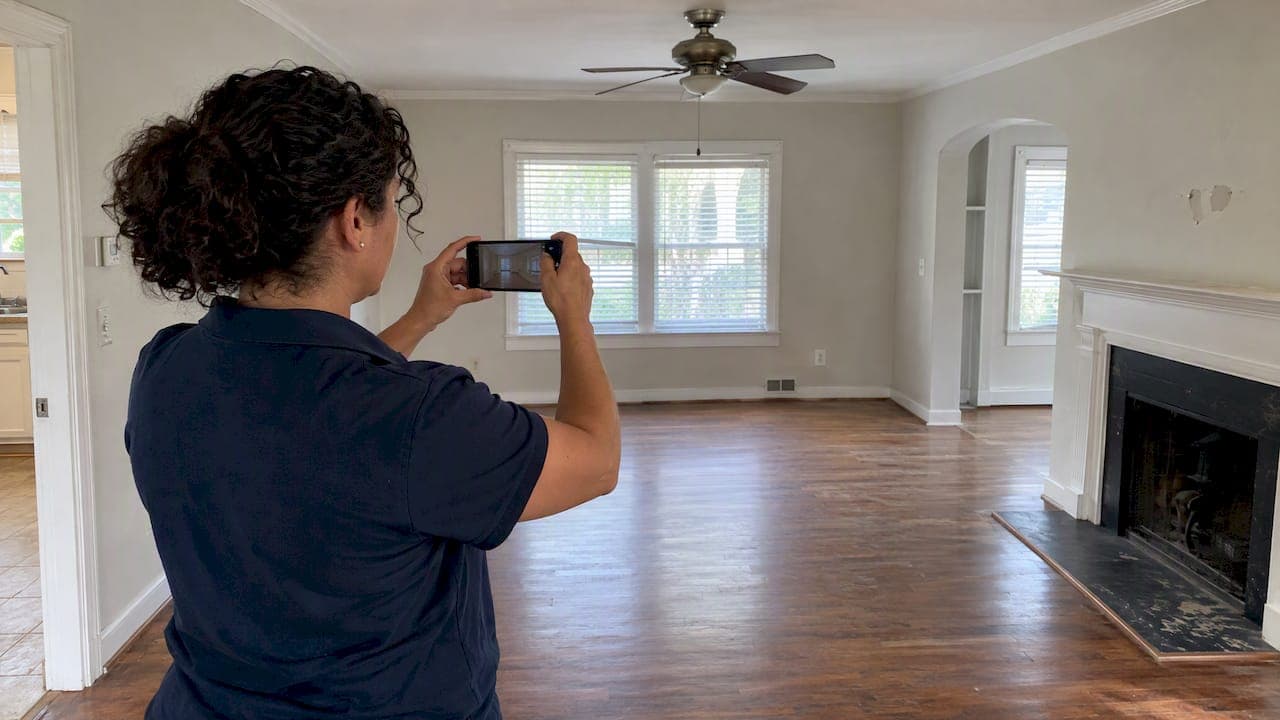
A good rental marketing strategy is a repeatable system, not a burst of effort when a tenant gives notice. Prepare photos, copy and pricing before the unit is vacant. Publish one accurate listing on several major platforms. Answer every inquiry fast. Keep every word of the ad inside Fair Housing rules. Do those four things well and most vacancies stop dragging on.
This guide walks through that system step by step, for landlords and investors with single-family homes, condos or small multifamily in metro Atlanta and similar markets.
TL;DR
- Renters have leverage right now. The national median asking rent fell 1.5% year over year in June 2026, to $1,692, so a weak listing sits.
- Build the asset package (photos, floor plan, description, price) before the unit is empty, so there is no dead time between move-out and launch.
- List on several major rental platforms, add video or a 3D tour, and reply to inquiries within hours, not days.
- Describe the property, never the person. Ads that signal a preference can violate the Fair Housing Act.
- Track days on market, inquiries per listing and showings per inquiry. Change the price or the photos when the numbers say so.
Table of Contents
- Why marketing matters more in a renter-friendly market
- Step 1: Build the asset package before the unit is empty
- Step 2: Price to the market, not to your mortgage
- Step 3: Write a listing that answers questions
- Step 4: Choose where to list
- Step 5: Respond fast and show well
- Step 6: Keep every ad inside Fair Housing rules
- Step 7: Build reputation, not just listings
- Measure it
- Our perspective: marketing is a system, and so is management
- When to hand marketing to a property manager
- FAQ
- Sources
Why marketing matters more in a renter-friendly market
For several years landlords could post a sign and wait. That has changed. Realtor.com reports that the rental vacancy rate averaged 7.6% across the 50 largest metros in 2025, up from 7.2% in 2024, and its June 2026 report marks the 35th straight month of year-over-year decline in the national median asking rent. Its midyear forecast expects rents to slip another 1.2%.
What that means for you: renters compare several listings in one sitting. A dark phone photo, a vague description or a price a little above the comparable homes sends them to the next tab. Every empty month costs a full month of rent, which is usually far more than the cost of professional photos or a price adjustment.
Step 1: Build the asset package before the unit is empty
Marketing experts who focus on rental listings warn that improvising creates expensive vacancies. Their advice is a visual-first approach: photography, staging and pricing are prepared before the listing goes live, so the launch happens the day the unit is ready.
Your asset package should include:
- 20 to 30 photos shot in daylight, wide angle, after cleaning and any touch-ups. Lead with the best room, usually the kitchen or living area.
- A short walkthrough video or 3D tour. Adults under 35 make up more than half of the rental population, according to figures cited in this 2026 playbook, and that group expects to see a home before they visit it.
- A simple floor plan or room dimensions.
- A fact sheet: rent, deposit, lease term, pet policy, utilities, parking, application fee and move-in date.
- Listing copy written once and reused across platforms.
If you give notice to current tenants or know a move-out is coming, schedule photos for the walk-through day. Photographing a home with the previous tenant's furniture is the most common reason listings look tired.
Get the home ready to show
A unit that photographs well but shows poorly wastes the lead. Before launch, deal with deferred repairs, fresh paint on scuffed walls, clean carpets or floors, working lights and a tidy yard. The same logic applies when owners prepare a house for sale: strong visuals, honest pricing and no avoidable delays. This guide to preparing a home for a fast launch covers the thinking, and most of it transfers to a rental turn.

Step 2: Price to the market, not to your mortgage
Pricing is marketing. Your mortgage, taxes and insurance matter for your returns, but renters only see comparable homes.
- Pull 5 to 8 active and recently leased comparables within a mile or two, matching bedrooms, baths, square footage and condition.
- Note how long each one took to lease. A listing that has sat for 45 days is not a comparable you should copy.
- Price at the level where the home competes on its merits. In a soft market, a modest price cut at launch usually costs less than a month of vacancy.
- Decide your trigger in advance: for example, if you get fewer than a handful of inquiries in the first week, revisit price and photos before anything else.
Submarkets in the Atlanta area behave differently. Rent for a renovated three-bedroom in Alpharetta or Johns Creek, with its school and commute appeal, is driven by different factors than a similar home in Austell or Powder Springs. Look at the street, not the metro average.
Step 3: Write a listing that answers questions
The best listing copy is specific. Lead with the three things a renter would pick the home for (a fenced yard, a short walk to a trail, a renovated kitchen), then give the practical facts. Skip adjectives like "charming" and "cozy" unless a detail backs them up.
A solid structure:
- Headline: bedrooms, baths, neighborhood and one standout feature.
- First two sentences: what the home is and why it is a good value.
- Features: appliances, flooring, laundry, parking, outdoor space.
- Terms: rent, deposit, available date, lease length, pet policy.
- Next step: how to schedule a showing or apply.
We keep a library of examples in our post on rental listing description ideas if you want wording to adapt.
Use AI carefully
Generative AI can draft listings and reply templates quickly. The National Association of Realtors notes that such tools can save property managers significant admin time but should complement human oversight, especially on Fair Housing and tenant communication. Read every AI-written line as if it were a public email. AI can invent amenities and can repeat biased phrasing. Software that organizes inquiries and follow-ups helps too, and a CRM and marketing automation example from the mortgage world shows the same principle: automate the routine, keep a person responsible for the content and compliance.

Step 4: Choose where to list
One listing site limits your reach. The major rental networks syndicate listings to partner sites, so one well-built posting can appear in many places. Apartments.com's own guidance describes syndicating across top platforms and adding 3D tours or premium placement for units that are hard to lease, and says premium placement can increase impressions up to ninefold. Treat that as the platform's claim about its own product, and judge it by your own inquiry numbers.
A practical channel mix:
| Channel | Best for | Cost | Notes |
|---|---|---|---|
| Major rental listing networks | Broad reach among active renters | Free to paid | Core of any plan; use the same copy and photos everywhere |
| MLS rental listing through a broker | Agent-driven renters, single-family homes | Broker fee | Reaches renters working with agents |
| Social media posts and local groups | Neighborhood reach, video walkthroughs | Free | Use organic posts; avoid audience filters (see below) |
| Yard sign and flyer | Walk-by and drive-by traffic | Low | Still effective on busy streets and near schools |
| Past applicants and referrals | Quick, pre-qualified leads | Free | Ask current tenants and neighbors |
| Employer and community boards | Hospital, university and corporate relocations | Free | Useful near large employers |
In Atlanta, single-family homes near Marietta, Cumberland and the Battery draw relocating professionals, while homes near Hartsfield-Jackson often draw airport and logistics workers. Mention commute facts (distance to a highway or MARTA, for example) only when they are accurate.
Step 5: Respond fast and show well
Speed of follow-up is one of the main factors in a renter's decision. Roomstage's playbook notes that professional assets and quick replies shape decisions within minutes of viewing a listing. Practical habits:
- Reply to every inquiry the same day, ideally within an hour during daytime.
- Offer two or three showing slots, or a self-guided or open-house window to batch visits.
- Send the application link and the screening criteria with the first reply.
- Follow up the evening after each showing.
Published, consistent screening criteria protect you and speed up decisions. Our tenant screening criteria checklist and guide to rental application questions that stay within HUD and FCRA rules show how to set them before the first showing.
Step 6: Keep every ad inside Fair Housing rules
This is where well-meaning landlords get hurt. The Fair Housing Act prohibits ads that express a preference or limitation based on race, color, religion, sex, disability, familial status or national origin. HUD's guidance says landlords and property managers should not publish an advertisement that expresses a preference or limitation on those protected grounds. The penalties are real: in one 2023 case, a HUD judge ordered landlords to pay $140,649, including for ads asking prospects to state their race.
Rules to follow:
- Describe the property, not the tenant. Say "third-floor walk-up" or "near bike trails." Do not say who should or should not live there. NAR's guidance says to use factual language and avoid describing what type of person might want to rent.
- Be careful with paid social targeting. Audience filters on platforms like Facebook can lead to violations even without bad intent, as NAR explains. Use the housing-ad settings the platform provides and keep targeting broad.
- Watch for source-of-income language. Several states and cities protect it, so lines such as "No Section 8" can create liability where it applies. Check the rules for your city and county, and see NAR's overview of the Housing Choice Voucher program.
- Apply your criteria the same way to everyone. The ad, the showing and the screening should treat every applicant alike.
If you are unsure about a specific phrase or a local ordinance, ask a real estate attorney or your local fair housing agency before you publish.
Step 7: Build reputation, not just listings
Listings fill this vacancy. Reputation fills the next ones. Local marketing specialists point out that prospects increasingly rely on online reviews and a visible, well-managed presence, and that operators who highlight nearby businesses and amenities see better retention and referrals.
Simple ways to do this:
- Ask happy tenants for a review after a smooth move-in or renewal.
- Respond to maintenance requests quickly. Maintenance is the thing tenants mention most in reviews.
- Share local detail in your listings: the coffee shop on the corner, the park, the school zone (verified from the district's site).
- Treat renewals as marketing. Keeping a good tenant is cheaper than any ad; our guide to tenant retention strategies goes through what works.
Measure it
Every rental should have a short scorecard:
| Metric | What it tells you | If it is weak |
|---|---|---|
| Days on market | Overall effectiveness | Review price first |
| Inquiries per week | Visibility and price appeal | Improve photos, headline, add channels |
| Showings per inquiry | Quality of copy and lead response | Clarify terms and reply faster |
| Applications per showing | Condition of the home and price | Fix visible issues, revisit price |
| Approved applicants per application | Screening fit | Tighten the ad's facts, not its audience |
Review the numbers at day 7 and day 14. One variable at a time: change the price, or the photos, or the headline, so you know what worked.
Our perspective: marketing is a system, and so is management
We manage rentals around Atlanta, and the vacancies that drag are almost never about a lack of ideas. They come from skipped steps: the unit was not photographed until a week after move-out, the price was set from the owner's mortgage, the first reply took three days, or the listing quietly said something it should not have.
Our view is that marketing should be a funnel with owners of each stage: preparation, listing, response, showing, screening and lease signing. When one person or team owns the whole funnel, the dead time disappears. That is also why we treat tenant placement and screening as part of marketing, not an afterthought. A well-marketed home attracts more applicants, and consistent criteria then pick the right one. Our walkthrough of what tenant placement involves shows how the steps connect.
If you are an out-of-town investor or simply tired of answering inquiries at 9 p.m., this is the work that is easiest to hand off. If you prefer to do it yourself, use the steps above. They work without us.
— Matt
When to hand marketing to a property manager
Doing it yourself makes sense for one home, a flexible schedule and a market you know. Delegating makes sense when you own several units, live outside Georgia, or have had vacancies that ran past a month.
Our property management services cover vacancy marketing, tenant screening, lease drafting, rent collection, maintenance coordination and eviction support. Published fees: monthly management is 10% per month, onboarding is a $250 one-off fee, lease renewal is a $500 one-off fee, and the optional Owner Benefit Package (OBP™) is $40 per month per unit. Tenant placement and tenant procurement services are quoted on request. If you want a second opinion on your strategy first, a 30-minute consulting call ($300) or 60-minute deep-dive session ($500) lets us review your numbers with you. For a broader view of what a manager does, read our owner's guide to property management services.
FAQ
How do I market a rental property on a small budget?
Spend your money where it counts: good photos and an accurate price. Then post the same listing on the major free or low-cost rental platforms, put a sign in the yard and ask neighbors and current tenants for referrals. A well-prepared free listing beats a poorly prepared paid one.
Where should I list a rental home?
Start with the large rental listing networks that syndicate to partner sites, and add an MLS listing if the home is a single-family rental. Supplement with a yard sign, social media posts and referrals. Using one platform alone limits your visibility, so use several with identical details.
How long should it take to rent a home?
It depends on price, condition and season, so set your own benchmark by checking how long comparable homes near you took to lease. If your listing has had very few inquiries after a week, adjust the price or photos rather than waiting. Tenant placement done well can run in one to four weeks, depending on the unit.
Can I say "no Section 8" in my ad?
Not safely. Source of income is a protected class in many states and cities, and language that excludes voucher holders can create liability where it applies. Check your local rules or ask a real estate attorney before publishing, and apply the same written criteria to every applicant.
Sources
- Realtor.com: June 2026 Rental Report
- Realtor.com: January 2026 Rental Report
- Realtor.com: 2026 Midyear Housing Forecast
- Roomstage: Rental Property Marketing, a 2026 Playbook
- NAR: Generative AI for Property Managers
- Apartments.com: List a Property for Rent
- HUD: 2023 press release on discriminatory advertising
- NAR: Fair Housing Primer, Disability
- NAR: Do Your Facebook Ads Discriminate?
- NAR: Housing Choice Voucher Program
- Podium: Marketing Strategies for Local Rental Businesses