
Tenant placement is a one-time service that markets your rental, screens the applicants, and hands you a signed lease with a move-in date attached. It's built for landlords who want professional vetting but plan to run the day-to-day themselves afterward. If you own one property, know how to handle a maintenance call, and just want the right person in the door fast, this is likely your answer.
TL;DR:
- Tenant placement fees generally range between half and a full month's rent, covering marketing, screening, lease drafting, and move-in documentation.
- The entire tenant placement cycle typically takes one to four weeks, with pre-listing improvements like staging and professional photos significantly reducing vacancy time.
- Relying on placement services makes sense for landlords with one property or those who want professional vetting but handle maintenance and rent collection themselves.
- Red flags during screening include fabricated references, short tenancy histories, and unresolved eviction judgments, which should lead to application rejection.
- Foregoing ongoing management means you maintain control but must handle rent collection, repairs, and disputes yourself afterward.
Table of Contents
- What Does Tenant Placement Involve, and Why Do Landlords Use It?
- What Does the Tenant Placement Process Look Like Step by Step?
- Tenant Placement or Full Property Management: Which Fits You?
- Is Tenant Placement Worth It? Weighing the Pros and Cons
- How Much Does Tenant Placement Cost?
- How Long Does It Take to Place a Tenant?
- What Screening Standards Should You Set, and What Are the Red Flags?
- When Does OneSource Real Estate Recommend Tenant Placement?
- Ready to Fill Your Vacancy the Right Way?
- Sources
- FAQ
What Does Tenant Placement Involve, and Why Do Landlords Use It?
Tenant placement covers everything from the moment your unit sits empty to the moment a tenant signs the lease and gets the keys. It stops there. Ongoing rent collection, maintenance calls, and lease renewals fall back to you unless you've contracted full property management instead.
The appeal is straightforward: these services advertise the vacancy, screen every applicant, and manage the lease paperwork, which saves you the hours most landlords underestimate spending on showings and background checks. A single bad tenant can cause significant unpaid rent and legal fees, so professional screening up front tends to pay for itself.
Here's what a typical tenant placement package actually handles:
- Writing and posting the listing across major rental sites
- Scheduling and running showings or self-tour access
- Running credit, criminal, and eviction checks on every applicant
- Verifying income and contacting previous landlords
- Drafting the lease and collecting the security deposit
- Coordinating the move-in date and documenting unit condition
What Does the Tenant Placement Process Look Like Step by Step?
Most placement providers follow the same sequence, and knowing it helps you spot a provider that's cutting corners.
- Property prep. Minor repairs, decluttering, and a deep clean happen before anything gets photographed.
- Marketing. Your unit gets listed with professional photos on sites like Zillow and Apartments.com, which shortens vacancy time compared to a bare-bones post.
- Showings and intake. Interested renters tour the unit and submit applications, often through an online portal.
- Screening. Credit reports, eviction history, income verification, and landlord references get pulled and reviewed.
- Lease signing. The approved applicant signs the lease and pays the deposit and first month's rent.
- Move-in. A walkthrough inspection documents unit condition before keys change hands.
The whole cycle, start to finish, usually runs one to four weeks for a rent-ready property priced correctly for your market.
Pro Tip: Ask your provider exactly which listing sites they use and whether photos are professionally shot. A phone-camera listing on one site will sit vacant far longer than a well-lit gallery on three or four platforms.
Tenant Placement or Full Property Management: Which Fits You?
Tenant placement is a single transaction. Full management is an ongoing relationship, and the fee models reflect that split.
Placement services charge once, cover marketing through move-in, and leave rent collection, maintenance, and renewals to you. Full management charges monthly, handles everything for the life of the tenancy, and typically includes tenant placement as part of onboarding a new renter. Placement makes financial sense for owners with one property who want expert vetting but are comfortable fielding a maintenance call themselves. Full management fits owners juggling multiple units, living out of state, or simply done with 11 p.m. phone calls about a broken water heater.
A few signals you've outgrown placement-only service:
- You own three or more rental units
- You live more than an hour from the property, or out of state
- You've missed rent deadlines or maintenance requests because you're stretched thin
- You want one monthly bill instead of managing vendors yourself
If any of those sound like you, a full-service property management guide is worth reading before you commit to either option.
Is Tenant Placement Worth It? Weighing the Pros and Cons
The case for hiring out placement is strongest when your time or screening expertise is the bottleneck. The case against it shows up when the fine print doesn't match what you assumed you were buying.
Advantages:
- Faster fill times through professional marketing and wider listing reach
- Screening depth most individual landlords can't replicate on their own
- Lease paperwork and legal documentation handled correctly the first time
- Lower total vacancy cost even after paying the placement fee
Disadvantages:
- You pay again for the next tenant, since it's a one-time fee, not a subscription
- Everything after move-in, rent collection, repairs, disputes, is back on you
- Screening thoroughness varies a lot between providers
Watch for vendor red flags before you sign anything: no verifiable references, vague answers about what screening checks are actually run, or a handoff packet missing signed lease copies and move-in photos.
How Much Does Tenant Placement Cost?
Pricing usually falls into one of three structures: a flat fee, a percentage of the first month's rent, or a tiered package with add-ons like premium photography or expedited screening.
Percentage-based fees are the most common model, and they typically fall between half and a full month's rent, though exact figures vary by market and provider. Flat fees exist too, especially for lower-rent units where a percentage wouldn't cover the provider's actual work.
What's usually included: marketing, showings, screening, and lease drafting. What's usually excluded: lease renewals, rent collection, and maintenance coordination, since those belong to full management contracts.
- Percentage of first month's rent (most common structure)
- Flat fee (common for lower-rent units)
- Tiered packages with optional upgrades
If you see a placement fee that's noticeably below market with vague language about what screening actually covers, that's a red flag, not a bargain. For a market-specific breakdown, this property management fee guide for Marietta walks through real fee ranges.
How Long Does It Take to Place a Tenant?
A well-priced, rent-ready property typically places in one to four weeks. Overpricing, deferred repairs, and listing during the slow winter months are the three biggest reasons that timeline stretches.
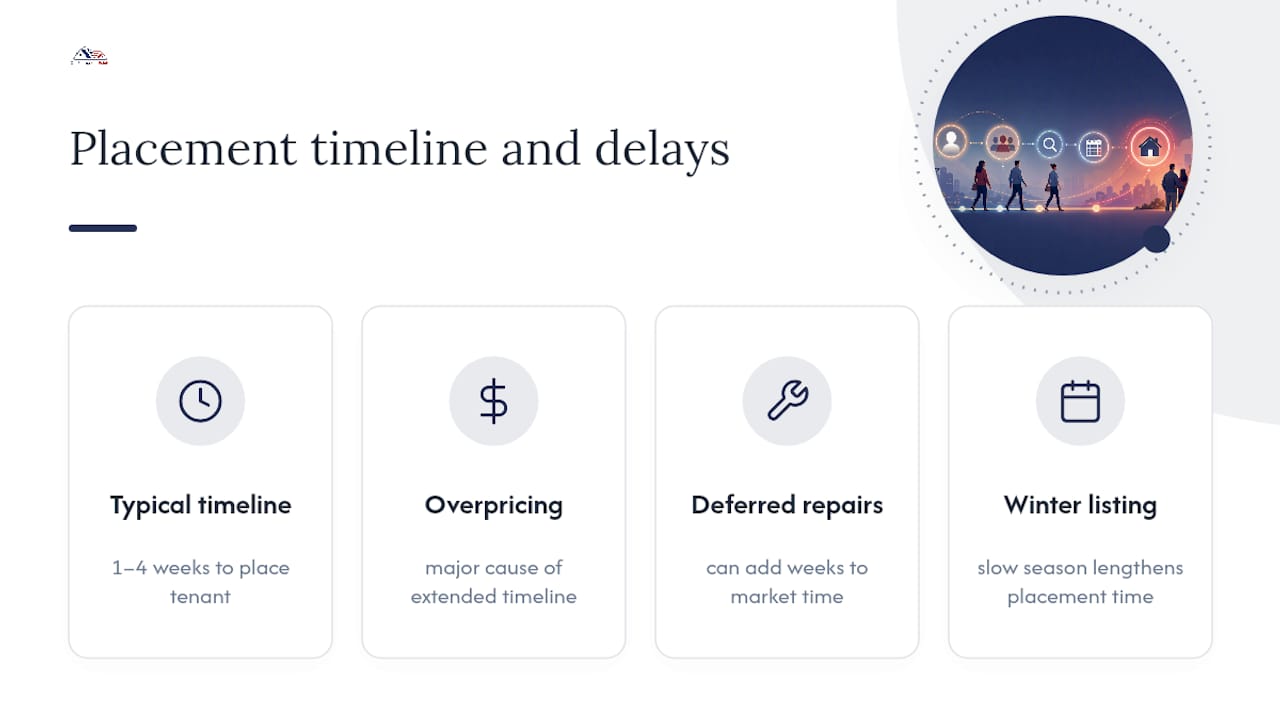
Small pre-listing investments move the needle more than most landlords expect. Staging, a fresh coat of paint, and professional photos consistently attract stronger applicants and cut time on market, sometimes by weeks, compared to a listing that skips the prep work entirely.
What Screening Standards Should You Set, and What Are the Red Flags?
Consistent screening criteria protect you legally and practically. Set the bar once, apply it to every applicant, and document why each decision was made.
A solid screening checklist includes:
- Credit check with a minimum score threshold you apply to everyone
- Eviction history search covering at least the past five to seven years
- Income verification at roughly three times the monthly rent
- Rental history and direct contact with previous landlords
- Personal or professional references
Reject applications with fabricated pay stubs or references, a pattern of tenancies lasting only a few months each, or unpaid judgments from a prior eviction. Those are patterns, not one-off bad luck.
Pro Tip: Write your screening criteria down before your first applicant ever calls. Applying the same standard to everyone, in writing, is your best defense if a rejected applicant ever challenges the decision.
Whatever criteria you set, apply them the same way to every applicant. Uneven standards are exactly what triggers fair housing complaints, and Georgia landlords should review the state's fair housing protections before finalizing any screening policy. For a full checklist you can hand to a screening service, see this tenant screening criteria guide.
When Does OneSource Real Estate Recommend Tenant Placement?
Placement services typically follow this process: prep, marketing, screening, lease, move-in, with documentation at every step. Knowing when placement alone is the right call versus when it may cause issues later adds value.
New landlords renting out a single property who plan to stay hands-on afterward may benefit from standalone placement. Long-distance owners and time-constrained investors often find full management more suitable, due to easier handling of maintenance calls. Our screening checklist reflects the same income and credit thresholds most reputable providers use.
— Matt
Ready to Fill Your Vacancy the Right Way?
OneSource Real Estate's standalone tenant placement package skips the long-term contract that full management requires, making it ideal for landlords who want to sell a rental property with tenants in San Diego without eviction hassles. You pay once, we market the property, screen every applicant against a consistent standard, and hand you a signed lease and a move-in-ready tenant. No monthly management fee attached if that's not what you need right now.

The package covers listing creation, professional photos, showings, full background and income screening, lease drafting, and a documented move-in inspection. If your situation changes later and you want ongoing support, our property management services are there without starting over from scratch. Ready to see what it costs for your property? Request a placement quote and we'll walk you through pricing and timeline based on your specific unit and market.
Sources
This article draws on SmartAsset's overview of tenant placement services, REI Prime's placement process breakdown, DoorLoop's move-in inspection guidance, TRG Management's screening standards, and San Diego Property Management's scope comparison.
- How Tenant Placement Services Work for Rental Properties
- Tenant Placement Process for Rental Investors | REI Prime
- What are tenant placement services?
FAQ
What Are Red Flags for Tenants?
Fabricated pay stubs or references, a pattern of tenancies lasting only a few months each, and unresolved past evictions are the clearest warning signs during screening.
Is It Good to Rent to Section 8 Tenants?
Tenants with housing assistance come with guaranteed partial rent payments from a housing authority, which reduces payment risk, though landlords should still verify income for the tenant's portion and follow the same screening standard applied to every applicant.
How Much Do Property Managers Get Paid Per House?
Full property management typically charges a monthly percentage of collected rent, while standalone tenant placement usually runs a flat fee or a percentage of the first month's rent, check current ranges before comparing quotes.
Can My Boyfriend Live With Me Without Being on the Tenancy?
Most leases require any adult occupant to be disclosed and often added to the lease, since unauthorized occupants can violate lease terms and complicate liability if something goes wrong in the unit.