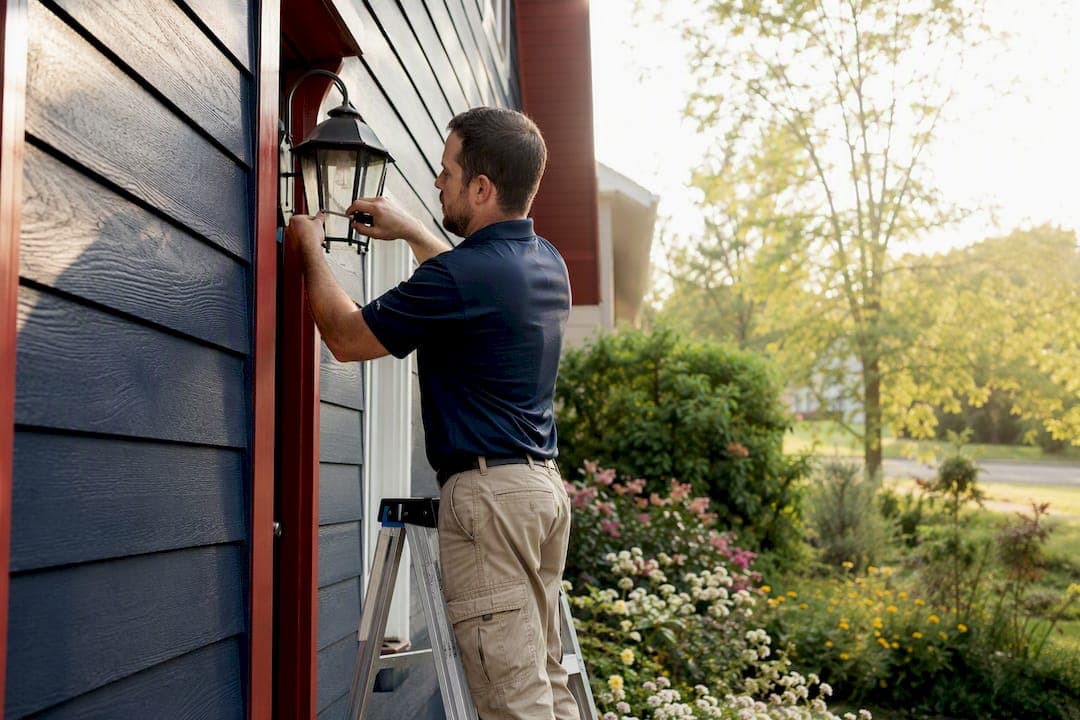
The fastest way to improve tenant retention is to treat resident experience as an operating system, not a series of one-off fixes. That means prioritizing maintenance response times, proactive communication, fair and transparent rent increases, renewal incentives, digital convenience, and a strong first impression at move-in. Get those six right and you address the reasons most tenants actually leave.
Here's a checklist you can start on this week:
- Set a maintenance response SLA (24 hours for urgent, 72 hours for routine) and post it where tenants can see it.
- Schedule check-ins at day 30, day 90, and 90 to 120 days before lease expiration.
- Turn on online rent payment if you haven't already.
- Pick one low-cost upgrade (lighting, locks, landscaping) to complete this quarter.
- Draft a renewal incentive: a rent credit, a small upgrade, or a referral bonus.
- Start collecting exit-survey data from every tenant who leaves.
The urgency is real: residents satisfied with their rental experience are 73% more likely to renew their lease, and vacancy rates hit seven-year highs in mid-2026. Every unit sitting empty is lost income you can't get back.
Key Takeaways
Tenant retention improves fastest when maintenance response, proactive communication, and fair pricing work together as one system rather than isolated fixes.
| Point | Details |
|---|---|
| Speed on maintenance matters most | Set tiered SLAs (4-hour emergency, 24 to 48-hour urgent) since slow repairs drive the most complaints. |
| Communicate on a fixed schedule | Reach out at day 30, day 90, and 90 to 120 days before lease expiration, not just when problems arise. |
| Price increases transparently | Anchor increases to market data since hikes above 8% or around $90 commonly trigger reconsideration. |
| Track your real retention number | Calculate renewals divided by renewals-eligible and aim above the 57–60% industry average. |
| Consider a managed alternative | OneSource Real Estate runs SLA, communication, and renewal systems for Atlanta-area landlords who want this handled for them. |
Table of Contents
- Tenant Retention Strategies Ranked by Impact
- How Do You Calculate Tenant Retention Rate?
- Building a 90-Day Retention Rollout
- OneSource's Retention Toolkit for Landlords
- Handling Tenant Complaints and Conflict Resolution
- Flexible Lease Terms That Keep Good Tenants
- Managing Difficult Tenants and Preventing Eviction
- Why Curb Appeal Still Drives Renewal Decisions
- Sources
- FAQ
Tenant Retention Strategies Ranked by Impact
Not every tactic deserves equal attention. Some move the needle immediately; others matter but take longer to pay off. Here's the priority order, with the reasoning and the first step for each.
1. Fix response times before anything else. Maintenance complaints are the single most common reason tenants disengage. Set a tiered SLA: emergencies (no heat, flooding, no working locks) within hours, urgent issues within 24 to 48 hours, routine requests within a week. Pair that with seasonal preventive rounds. HVAC filter delivery programs alone have been shown to cut HVAC-related work orders by roughly 38%, which means fewer complaints and fewer emergency calls in the first place. Build a short vendor roster (plumber, electrician, HVAC tech) you can call same-day so a single vacation doesn't stall your response time.
2. Build a communication cadence, not just reactive replies. Residents who feel well-informed are 25% less likely to plan a move and nearly four times more likely to recommend their property manager. Set three fixed touchpoints: a 30-day settling-in check, a 90-day satisfaction check, and outreach starting 90 to 120 days before lease expiration. Send status updates on open maintenance tickets even when there's no news yet. Silence, more than delay, is what erodes trust.
3. Make move-in feel effortless. A digital, guided move-in packet that spells out fees, utility setup, trash schedules, and who to call for what removes the ambiguity that causes early frustration. Follow up at day 30 with a short check-in, not a survey buried in an email footer.
4. Design a renewal incentive with real mechanics. Nearly 69% of residents say a rewards program would make them more likely to renew, and referral bonuses and rent credits rank among the top incentives tenants actually want. A $100 rent credit for signing a renewal 60 days early, or a $50 referral bonus when a friend leases a vacant unit, costs far less than a turnover.
5. Handle rent increases like a negotiation, not an announcement. Residents start reconsidering renewal around an average increase of 8%, and increases within a certain monthly range commonly trigger hesitation. Anchor increases to market comparables, give ample written notice, and consider staging a large increase over two renewal cycles instead of one shock.
6. Invest in upgrades tenants actually notice. In-unit laundry, upgraded internet wiring, and better exterior security lighting consistently rank above cosmetic changes in tenant priority surveys.
7. Give tenants a portal and use it. Online rent payment and maintenance tracking reduce the ambiguity that fuels dissatisfaction. Tenants who can see a ticket move from "received" to "scheduled" complain less, even when the fix takes the same amount of time.
8. Screen for fit, not just for approval. A tenant who's a poor match for the property churns fast regardless of how well you run it. A consistent tenant screening process reduces mismatch-driven turnover before it starts.
9. Create small reasons for tenants to know each other. A seasonal gathering, a shared bulletin board, or a simple welcome basket builds the kind of social buy-in that makes moving feel like a bigger decision.
10. Run exit interviews and actually read them. Ask departing tenants what would have kept them. Patterns across a dozen exits tell you more than any single complaint.
Pro Tip: Trigger short surveys at transactional moments, not once a year. A two-question survey right after a maintenance ticket closes captures far more honest feedback than an annual satisfaction email nobody opens.
How Do You Calculate Tenant Retention Rate?
The tenant retention rate formula is simple: divide the number of leases renewed by the number of leases eligible for renewal in that period, then multiply by 100. If 60 leases came up for renewal this year and 38 tenants renewed, your retention rate is 38 ÷ 60 = 63.3%.
Where does that put you? Industry reporting for 2026 shows average retention drifting down toward the 57% to 60% range, with well-run portfolios targeting above 70% where local market conditions allow. Anything meaningfully below 57% signals a systemic problem worth auditing, not just bad luck.
A few operational numbers worth tracking alongside your headline rate:
- Time-to-repair: average days from ticket opened to ticket closed, by urgency tier.
- Renewal conversion rate: percentage of renewal offers accepted versus sent.
- Maintenance satisfaction score: a quick post-repair rating (customer effort score works well here).
- Days vacant per turnover: directly tied to lost rent and marketing cost.
| Metric | 2026 Benchmark |
|---|---|
| Average tenant retention rate | 57–60% |
| Target retention rate (well-managed portfolios) | 70%+ |
| Rent increase sensitivity threshold | ~8% or around $90/month |
| Vacancy rate trend | 7-year highs |
Building a 90-Day Retention Rollout
You don't need to fix everything at once. Rank actions by an impact-versus-effort matrix: maintenance SLAs and communication templates sit in the high-impact, low-effort quadrant and should go first. Amenity upgrades and rewards programs take more setup but pay off over multiple renewal cycles.
For a single-owner landlord with a handful of units:
- Weeks 1 to 2: Set and post your maintenance SLA, build a two-vendor backup list.
- Weeks 3 to 6: Send 30/90-day check-in messages to current tenants, turn on online rent payment.
- Weeks 7 to 12: Draft a renewal incentive and send your first pre-renewal outreach 90 to 120 days ahead of the earliest upcoming lease expiration.
For a manager overseeing 100 to 500 units:
- Weeks 1 to 3: Standardize SLA tiers across the portfolio, audit vendor response times.
- Weeks 4 to 8: Roll out renewal workflow templates and staff communication scripts.
- Weeks 9 to 12: Launch a rewards program pilot on a subset of properties before full rollout.
Pro Tip: Model the payback before you spend. Cutting average vacancy from 30 days to 10 on a $1,500/month unit recovers roughly $1,000 in rent per turnover avoided, often more than the cost of the incentive that kept the tenant in place.
OneSource's Retention Toolkit for Landlords
You don't need to build these from scratch. Here's a starting SLA table and outreach framework OneSource Real Estate uses across managed properties, adaptable to your own portfolio.
| Issue Tier | Response Target | Example |
|---|---|---|
| Emergency | Within 4 hours | No heat, flooding, lockout |
| Urgent | Within 24–48 hours | Appliance failure, minor leak |
| Routine | Within 5–7 business days | Cosmetic repairs, filter swaps |
For outreach, a simple three-touch script works: a day-30 message asking "How's everything settling in?", a day-90 message asking "Any repairs or concerns we should know about?", and a pre-renewal message sent 90 to 120 days out that opens with appreciation before mentioning renewal terms.
- Keep a written renewal incentive menu (rent credit, referral bonus, small upgrade) ready to offer.
- Log every maintenance status update, even a one-line "parts ordered, ETA Friday."
- Track exit-survey answers in one spreadsheet so patterns surface after a handful of departures.
Handling Tenant Complaints and Conflict Resolution
Most tenant complaints escalate because of delay, not because the underlying issue is unreasonable. A noise complaint that gets acknowledged within a day rarely turns into a lease dispute. One left unanswered for two weeks often does.
Start every complaint with acknowledgment, even before you have a solution. "I got your message about the upstairs noise, checking into it today" costs nothing and buys you time to investigate properly. Separate facts from frustration: a tenant angry about a slow repair and a tenant angry about another tenant's behavior need different responses, but both need a documented timeline.
For neighbor-to-neighbor disputes, avoid taking sides in writing. Mediate a conversation or issue a neutral written reminder of lease terms (quiet hours, shared space rules) rather than naming either party as at fault unless a lease violation is clear.
Document everything. A complaint log with dates, actions taken, and outcomes protects you if a dispute ever escalates to a habitability claim or, in rare cases, legal action. It also reveals patterns, like a unit that generates the same complaint three times, which usually points to a maintenance issue rather than a personality conflict.
The tenants most likely to renew are the ones who feel heard even when the answer is "no" or "not yet." A clear explanation of why a request can't be granted immediately beats silence every time.
Flexible Lease Terms That Keep Good Tenants
Rigid 12-month-only lease structures push out tenants whose circumstances shift, even when they'd otherwise stay. Offering a mix of lease lengths, including 15 or 18-month terms that stagger renewal dates away from peak moving season, gives tenants options without adding real risk to your portfolio.

Month-to-month conversions after an initial term, priced with a modest premium, keep tenants who are in transition (a pending home purchase, a job change) instead of forcing them to choose between an awkward long lease and moving out early. Small accommodations matter too: allowing a short lease extension during a life event, or permitting an authorized subletter under supervision, often costs a landlord nothing but goodwill.
Pet policies deserve particular attention here. A blanket no-pets rule filters out a large share of otherwise qualified renters. A clearly written pet policy with breed and weight guidelines, a reasonable pet deposit, and renewal-friendly terms often retains tenants who'd otherwise leave the moment they adopt a dog.
Flexibility isn't the same as saying yes to everything. It means building a small menu of pre-approved accommodations (lease term options, guest policies, minor unit modifications) so you can say yes quickly to reasonable requests instead of treating every one as a special case that needs a week of deliberation.
Managing Difficult Tenants and Preventing Eviction
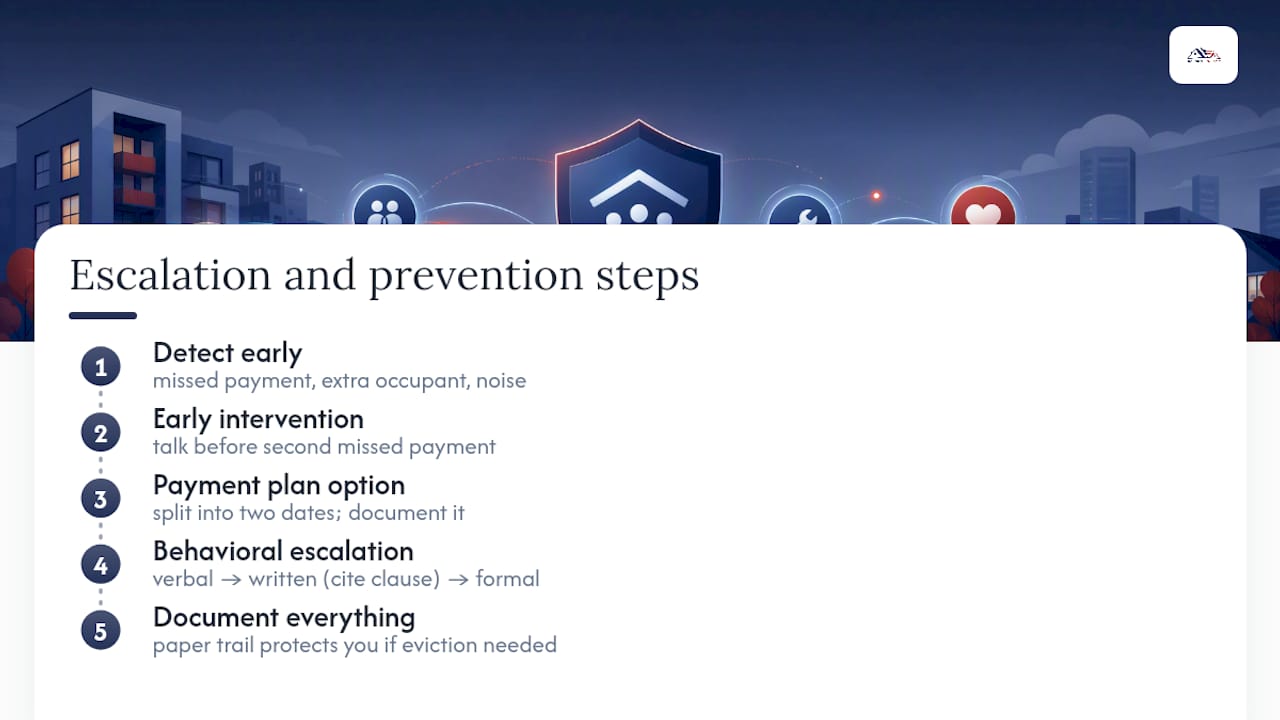
Most landlord-tenant conflicts don't start as eviction cases. They start as a missed payment, an unreported second occupant, or noise complaints that pile up. Catching the pattern early is cheaper than any legal process.
For payment issues, a direct conversation before the second missed payment often resolves more than a formal notice. Ask what's going on. A short-term payment plan, split across two dates instead of one lump sum, keeps a struggling tenant in place and keeps your cash flow intact. Document the arrangement in writing regardless of outcome.
For behavioral issues, escalate in stages: a verbal reminder, then a written notice citing the specific lease clause, then formal notice only if the pattern continues. Skipping straight to formal notice on a first offense damages the relationship and often the reputation of the property.
Eviction should be the last resort, both because it's costly (lost rent, legal fees, turnover costs, and a vacant unit during the process) and because most disputes are recoverable with early intervention. That said, document every step from the first missed payment or first complaint. If eviction does become necessary, that paper trail is what protects you legally.
Fair, consistent enforcement matters as much as leniency. Tenants who see rules applied evenly, even when it's inconvenient for the landlord, trust the system more and are less likely to test its limits.
Why Curb Appeal Still Drives Renewal Decisions
A tenant's decision to renew starts before they open their front door. Overgrown landscaping, a broken mailbox, or a dim, poorly lit entryway signal neglect, even if the interior of the unit is well maintained. Perception shapes satisfaction as much as actual maintenance quality does.
Small, low-cost fixes carry outsized weight: fresh mulch, working exterior lights, a clean and clearly marked parking area, and prompt snow or leaf removal in common areas. These aren't renovations. They're maintenance items that tell a tenant someone is paying attention to the property as a whole, not just responding to individual complaints.
Curb appeal also affects how tenants perceive fairness during a rent increase conversation. A property that visibly reinvests in shared spaces makes an 8% increase feel earned. The same increase on a property with peeling paint and a cracked walkway feels like a shakedown, regardless of the actual math behind it.
For multi-unit properties, seasonal walkthroughs of common areas (hallways, parking lots, mailrooms, laundry rooms) catch small issues before they become the kind of complaint that shows up in an exit survey. A five-minute walk once a month is cheap insurance against the slow erosion of a property's reputation.
An Operator's View on Retention
OneSource Real Estate treats retention as a system to run, not a problem to react to: SLAs, scheduled check-ins, and renewal outreach that starts months early and is applied consistently across every managed property, leveraging local property management in Milwaukee expertise to boost retention. The pattern holds across the portfolios we manage: properties with a documented maintenance SLA and a pre-renewal outreach cadence retain tenants at meaningfully higher rates than properties running on ad hoc response.
Two things we've seen work reliably: acknowledging every complaint within hours, even before a fix is scheduled, and giving departing tenants a real exit survey instead of a formality. If you want a property-specific retention review, reach out and we'll walk through where your biggest gaps are.
A Turnkey Option for Landlords Who'd Rather Not Run This Alone
Building your own SLA system, renewal calendar, and rewards program takes real time, time most landlords running a handful of units or a growing portfolio don't have to spare. OneSource Real Estate runs full-service property management for owners across Atlanta and the surrounding area, including Marietta, Alpharetta, and Johns Creek, handling the maintenance coordination, tenant communication, rent collection, and renewal workflow this article just walked through.
That means the 30/90/pre-renewal cadence, the SLA tiers, the renewal incentive structure, all of it gets built and run for you instead of sitting on your to-do list. If you're managing property yourself and losing tenants you didn't need to lose, request a property management consultation and we'll walk through what a retention-focused management plan looks like for your specific units.
Sources
- 2026 Renter Preferences Report: Resident Impact & Business Performance
- 2026 Resident Experience Management Report (Zego)
- Tenant Satisfaction: What You Don’t Know May Be Costing You
FAQ
What Is a Good Tenant Retention Rate?
A good tenant retention rate sits above 70%, though the 2026 industry average has slipped closer to 57–60% amid rising vacancy pressure. Calculate yours by dividing renewed leases by renewal-eligible leases.
What Are the Levels of Tenant Retention Strategy?
Retention strategies generally break into four levels: operational (maintenance, responsiveness), financial (fair pricing, incentives), relational (communication, community building), and experiential (digital tools, amenities, curb appeal). The strongest programs address all four together.
What Is the Tenant Retention Ratio?
The tenant retention ratio is the same calculation as the retention rate: leases renewed divided by leases eligible for renewal, expressed as a percentage.
How Often Should I Contact Tenants to Improve Retention?
A minimum cadence of three touchpoints per lease term works well: a 30-day settling-in check, a 90-day satisfaction check, and outreach starting 90 to 120 days before lease expiration.
Can a Property Manager Improve My Retention Rate Faster Than I Can Alone?
A property manager with established SLA systems, renewal workflows, and vendor relationships can often improve retention faster than a self-managed approach. OneSource Real Estate builds these systems into its management contracts for landlords across the Atlanta area.