
What Georgia fair housing laws actually protect
Georgia fair housing laws prohibit discrimination in housing transactions based on seven protected classes: race, color, religion, sex, national origin, familial status, and disability. That protection covers the full arc of a housing transaction, from the first rental inquiry to the final sale closing, and it applies to landlords, sellers, real estate agents, lenders, and property managers alike.
The legal foundation is the Georgia Fair Housing Act, codified at O.C.G.A. Section 8-3-200 et seq., which mirrors the federal Fair Housing Act (Title VIII of the Civil Rights Act of 1968, as amended by the Fair Housing Amendments Act of 1988). Georgia's law runs parallel to federal protections, so residents can pursue relief at the state level through the Georgia Commission on Equal Opportunity (GCEO) or federally through the U.S. Department of Housing and Urban Development (HUD).
The seven protected classes under Georgia law:
- Race and color — no person can be denied housing based on race or skin color
- Religion — religious affiliation or practice cannot factor into housing decisions
- Sex — includes protections against gender-based discrimination
- National origin — covers birthplace, ancestry, and ethnicity
- Familial status — households with children under 18, pregnant women, and people in the process of adopting or gaining custody of a minor
- Disability — physical or mental impairments that substantially limit a major life activity
The familial status category is broader than most people realize. It covers not just parents with minor children but also pregnant women and anyone in a legal custody or adoption process, which expands the conventional definition of "family" considerably.
Key point: Georgia's fair housing protections apply to the sale, rental, advertising, financing, and brokerage of residential real estate. No part of the transaction is exempt.
What counts as illegal discrimination under Georgia housing law
The Georgia Fair Housing Act spells out specific prohibited acts, and some of them are subtler than a flat-out refusal to rent. Knowing the full list matters whether you're a tenant, a buyer, or a property owner.
Clearly prohibited conduct includes:
- Refusing to rent or sell after a bona fide offer has been made
- Falsely claiming a unit is unavailable when it is not
- Offering different lease terms, conditions, or privileges based on a protected class
- Advertising or posting notices that express a preference, limitation, or exclusion
- Intimidating, threatening, or coercing someone to prevent them from exercising fair housing rights
- Discriminating in financing, appraisal, or brokerage services
- "Steering" clients toward or away from neighborhoods based on protected characteristics
Steering deserves special attention. A real estate agent who consistently shows Black buyers homes only in certain zip codes, or who discourages a Latino family from a particular neighborhood without a legitimate reason, is engaging in illegal steering. It's one of the hardest violations to catch because it often looks like ordinary market guidance.
Pro Tip: If you suspect steering, request a written list of all properties that match your stated criteria and budget. Comparing what you were shown against what was available is the clearest way to document the pattern.
Lawful exceptions you should know
Not every restriction on housing is discriminatory. Senior housing communities designated as 55+ or 62+ are the primary legal exception to familial status protections. A 55+ community must have at least 80% of its occupied units housing at least one person who is 55 or older, and it must publish and follow policies demonstrating its intent to operate as senior housing.
Landlords also retain the right to apply objective screening criteria, including credit history and rental history, as long as those standards are applied consistently to every applicant. A landlord who runs credit checks on some applicants but not others, or who sets different income thresholds by race, crosses the line from lawful screening into discrimination.
Occupancy standards are another gray area. A policy more restrictive than two persons per bedroom can disproportionately affect families with children and may be deemed discriminatory under HUD guidance. Average bedroom size and other physical factors can be considered, but a blanket "one person per bedroom" rule for a standard apartment is likely to draw scrutiny.
How to file a fair housing complaint in Georgia
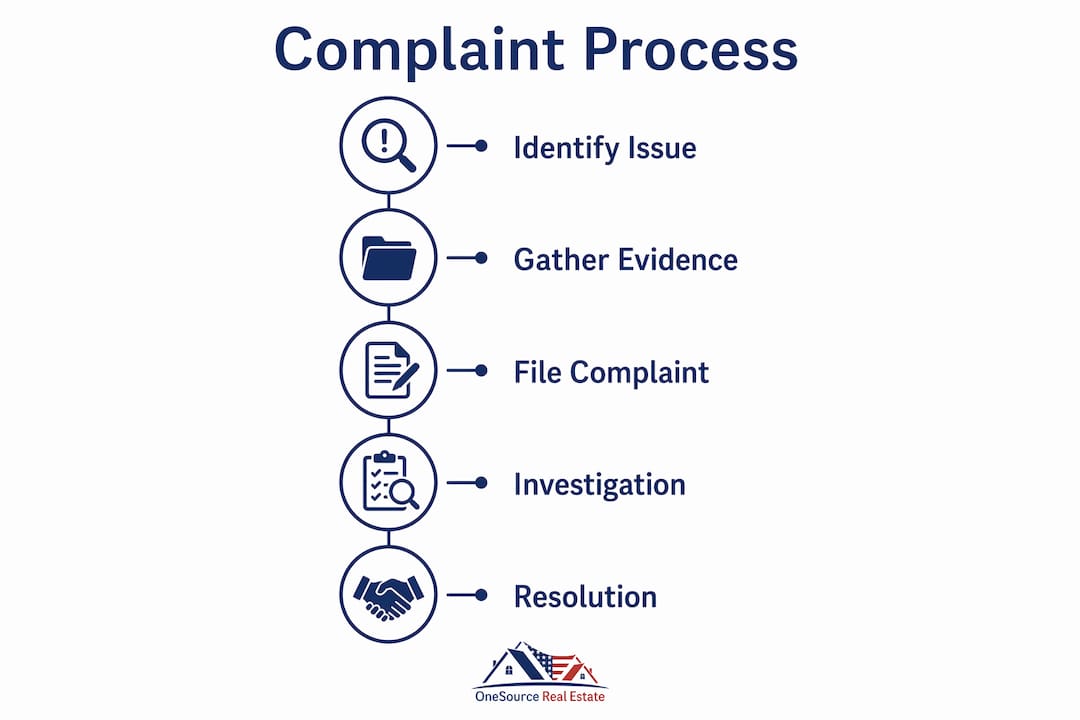
Filing a complaint is more straightforward than most people expect, and the one-year deadline is firm. You must submit your complaint to the GCEO or HUD within one year of the alleged discriminatory act. Filing sooner is always better, both because memories fade and because some relief options narrow over time.
Step-by-step complaint process
- Document everything first. Before you file, gather dates, names, addresses, written communications, and any witnesses. A text message where a landlord says "I don't rent to families with kids" is powerful evidence. A vague recollection of a phone call is much harder to act on.
- Choose your filing agency. You can file with the GCEO's Fair Housing Division or directly with HUD. Filing with one does not prevent you from later pursuing the other, though coordination between agencies is common.
- Submit your complaint. The GCEO accepts complaints by mail, fax, or phone. HUD accepts online submissions at HUD.gov. Both agencies provide intake staff who can help you frame the complaint correctly.
- Investigation begins. Once a complaint is filed, investigators will collect facts and interview all parties and witnesses. This phase can take weeks to months depending on complexity.
- Conciliation attempt. The agency will try to help both parties reach a voluntary agreement. Many complaints resolve at this stage without a formal hearing.
- Cause determination. If conciliation fails, the GCEO makes a formal finding. If there is reasonable cause to believe discrimination occurred, the case can proceed to a civil rights hearing or be referred to the U.S. Department of Justice.
What to gather before you file:
- Dates and times of each incident
- Names and contact information of any witnesses
- Copies of written communications (emails, texts, letters)
- Photos of any relevant property conditions
- Records of any payments, applications, or lease documents
- Notes written immediately after verbal conversations
The Georgia Department of Community Affairs Fair Housing Coordinator can also provide guidance if you're unsure whether your experience qualifies as a violation.
Which agencies enforce fair housing in Georgia and where to get help
Two agencies carry the primary enforcement load, and they operate at different levels of government with overlapping jurisdiction.
Georgia Commission on Equal Opportunity (GCEO)
The GCEO's Fair Housing Division is the state-level body responsible for investigating housing discrimination complaints under O.C.G.A. Section 8-3-200 et seq. Its mission goes beyond enforcement. The Division also provides educational outreach and training to promote voluntary compliance, with a stated goal of encouraging integrated communities across Georgia. You can reach the GCEO at:
- Website: gceo.georgia.gov
- Phone: (404) 656-1736
- Address: 2 Martin Luther King Jr. Drive SE, Suite 1002, Atlanta, GA 30334
U.S. Department of Housing and Urban Development (HUD)
HUD enforces the federal Fair Housing Act and accepts complaints from Georgia residents when state remedies are unavailable or when the complainant prefers federal review. HUD's online complaint portal at HUD.gov is available 24/7. HUD also funds local fair housing organizations that provide free counseling and legal referrals.
Legal assistance and advocacy resources:
- Georgia Legal Aid (georgialegalaid.org) provides free legal information and referrals for low-income residents facing housing discrimination
- Atlanta Legal Aid Society offers direct representation in fair housing cases for qualifying individuals in the metro Atlanta area
- Georgia Department of Community Affairs coordinates the Housing Choice Voucher program and can connect residents with fair housing coordinators
- U.S. Department of Justice Civil Rights Division (civilrights.justice.gov) accepts referrals in cases involving patterns of discrimination or systemic violations
The GCEO's educational mission is worth emphasizing. Beyond resolving individual complaints, the agency works proactively with landlords, property managers, and real estate professionals to prevent violations before they happen. Attending a GCEO fair housing training session is one of the most practical steps a Georgia landlord can take.
Tenant rights and landlord obligations under Georgia fair housing law
Tenants in Georgia have the right to compete for housing without discrimination, to receive the same terms and services as any other similarly situated applicant, and to request reasonable accommodations for disabilities.
Core tenant protections:
- The right to apply for any available unit without being steered or discouraged based on a protected class
- The right to the same lease terms offered to comparable applicants
- The right to request a reasonable accommodation (for example, a reserved parking space close to the unit for a mobility-impaired tenant)
- The right to request a reasonable modification to the physical unit (for example, installing grab bars in a bathroom), typically at the tenant's expense in private housing
- Protection from retaliation for filing a fair housing complaint
On the landlord side, the obligations are equally clear. Landlords must apply screening criteria consistently across all applicants. Running a credit check on one applicant and skipping it for another, or setting different income requirements by neighborhood, creates legal exposure even if the intent was not discriminatory.
Repair responsibilities are also defined under Georgia law. A landlord cannot charge tenants for repairs unless the tenant, a family member, or a guest caused the damage. Normal wear and tear is the landlord's responsibility. A landlord who withholds repairs from tenants of a particular background while maintaining units for others may face both fair housing and landlord-tenant claims simultaneously.
Pro Tip: Landlords should document every maintenance request and repair in writing, with dates. A consistent paper trail protects against both fair housing complaints and security deposit disputes.
Senior housing operators have additional obligations. A landlord who wants to qualify for the 55+ exemption must actively verify and document resident ages, publish policies demonstrating senior housing intent, and meet the 80% occupancy threshold. Claiming the exemption without meeting those requirements leaves the landlord fully exposed to familial status claims.
For landlords managing residential leases in Georgia, understanding how fair housing obligations intersect with lease terms is not optional. Every clause in a lease that treats applicants differently based on a protected class is potentially unenforceable and legally risky.
How property management companies stay compliant with Georgia fair housing laws
Property managers sit at the intersection of every fair housing risk. They write the ads, screen the applicants, set the lease terms, and handle maintenance requests. A single misstep in any of those areas can generate a complaint, and a pattern of missteps can trigger a systemic investigation.
Best practices for property managers and landlords in Georgia:
- Write rental ads that describe the property, not the preferred tenant. Phrases like "perfect for young professionals" or "ideal for couples" signal a preference that may exclude protected classes.
- Use a written, standardized screening checklist applied identically to every applicant. Document the criteria before the first application arrives, not after.
- Train all staff who interact with applicants on fair housing basics. A leasing agent who says the wrong thing on a phone call can create liability for the entire company.
- Respond to reasonable accommodation requests in writing and within a reasonable time. Ignoring or delaying a request is treated the same as denying it.
- Audit your occupancy policies annually. A "two per bedroom" standard is generally defensible; anything more restrictive needs a documented, non-discriminatory justification.
- Keep records of every application, screening decision, and the reason for any denial for at least three years.
Local context matters in Georgia. The Atlanta metro area is one of the most diverse housing markets in the Southeast, with significant variation in demographics across counties like Gwinnett, DeKalb, Fulton, and Clayton. Property managers operating across multiple counties need to apply the same standards everywhere, not adjust practices based on neighborhood demographics. Landlords in areas like Gwinnett County face the same federal and state fair housing obligations as those in Midtown Atlanta.
OneSource Real Estate builds fair housing compliance into every stage of its property management process, from how vacancies are marketed to how tenant screening decisions are documented. For investors and landlords who want the legal exposure managed professionally, that kind of systematic approach is what separates a well-run portfolio from a liability waiting to happen.
Recent updates and developments in Georgia fair housing law
Georgia's fair housing framework has remained largely stable in its core protected classes since the state adopted its law in 1988, aligned with the federal Fair Housing Amendments Act of the same year. That said, several developments at the federal and state level have shaped how the law is applied in practice.
At the federal level, HUD has periodically updated its guidance on disparate impact, which is the legal theory that a policy can be discriminatory even without discriminatory intent if it disproportionately harms a protected class. Landlords and property managers in Georgia need to be aware that neutral-seeming policies, such as blanket criminal background exclusions, can still generate fair housing liability if they produce a disparate impact on a protected group without a legitimate, proportionate justification.
The GCEO has also expanded its educational outreach in recent years, offering more training programs for real estate professionals, property managers, and housing providers. This reflects a broader national trend toward prevention-focused enforcement rather than purely reactive complaint investigation.
Source 8 housing compliance is another evolving area. While Georgia does not currently require landlords to accept Housing Choice Vouchers, some local jurisdictions have explored source-of-income protections. Landlords operating in the Atlanta area should monitor local ordinance changes, as the legal landscape around voucher acceptance continues to shift. For a detailed look at how Section 8 intersects with landlord obligations, the rules around advertising and tenant selection are particularly relevant.
Disability accommodation standards have also received increased attention. HUD guidance clarifies that landlords must engage in an "interactive process" when a tenant requests a reasonable accommodation, meaning a landlord cannot simply deny the request without discussion. Documenting that dialogue is now considered a baseline compliance practice.
Penalties and legal consequences for fair housing violations
The consequences for violating Georgia fair housing laws are serious, and they compound quickly when a pattern of discrimination is established.
Under the Georgia Fair Housing Act, the GCEO can pursue civil penalties, require payment of actual damages to the complainant, and mandate injunctive relief, meaning a court order requiring the violator to stop the discriminatory practice and take corrective action. Federal enforcement through HUD can result in additional civil penalties, with amounts that increase for repeat violations.
Private lawsuits are also available. A person who has been discriminated against can file suit in federal or state court independently of any agency complaint. Courts can award compensatory damages for emotional distress and financial losses, punitive damages in cases of intentional discrimination, and attorney's fees. The combination of agency penalties and private litigation means that a single fair housing violation can become extremely costly.
The GCEO's investigation process, as outlined under O.C.G.A. Section 8-3-208 through 8-3-211, includes a conciliation phase where the parties can reach a settlement. Settlements often include monetary compensation, policy changes, fair housing training requirements, and ongoing monitoring. Respondents who refuse conciliation and are found liable after a full hearing face the full range of penalties without the benefit of a negotiated resolution.
Retaliation is its own violation. A landlord who raises rent, refuses to renew a lease, or threatens a tenant after that tenant files a fair housing complaint has committed a separate, independent violation. Courts treat retaliation claims seriously, and the evidentiary bar is lower than for the underlying discrimination claim.
Key Takeaways
Georgia fair housing laws protect seven classes of residents from discrimination across every stage of a housing transaction, with enforcement available through both the GCEO and HUD.
| Point | Details |
|---|---|
| Seven protected classes | Race, color, religion, sex, national origin, familial status, and disability are all covered under Georgia law. |
| One-year filing deadline | Complaints must reach the GCEO or HUD within one year of the discriminatory act. |
| Steering is illegal | Guiding buyers or tenants toward or away from neighborhoods based on protected characteristics violates the law. |
| Occupancy limits matter | Policies more restrictive than two persons per bedroom may be deemed discriminatory against families with children. |
| Consistent screening required | Credit checks and rental history reviews must be applied identically to every applicant to remain lawful. |
FAQ
What is not protected under Georgia fair housing law?
Georgia fair housing law does not protect income source, occupation, age (outside of senior housing contexts), or sexual orientation at the state level. The seven protected classes are race, color, religion, sex, national origin, familial status, and disability.
What must be proved in a fair housing complaint?
A complainant generally must show that a discriminatory act occurred, that it was based on a protected class, and that it caused harm. The GCEO investigates by gathering facts, interviewing parties and witnesses, and making a reasonable cause determination.
What can a landlord not do in Georgia?
A landlord cannot refuse to rent, offer different lease terms, falsely claim a unit is unavailable, or charge tenants for repairs caused by normal wear and tear. Screening criteria must be applied consistently to all applicants regardless of protected class.
Where can I file a complaint against my landlord in Georgia?
You can file with the Georgia Commission on Equal Opportunity at gceo.georgia.gov or with HUD online at HUD.gov. Both agencies accept complaints within one year of the alleged discriminatory act, and filing with one does not prevent you from also contacting the other.
Managing rental property in Atlanta and the surrounding metro area means navigating fair housing obligations every day, from how you word a listing to how you document a denial. OneSource Real Estate handles that compliance burden as part of its full-service property management offering, covering tenant screening, lease drafting, maintenance coordination, and legal compliance so you don't have to track every regulatory update yourself. If you own rental property in Georgia and want a management partner who treats compliance as a baseline, not an add-on, reach out to OneSource Real Estate today.