
TL;DR:
- A licensed Georgia realtor specializes in residential leasing to ensure compliance with state law and proper lease formation.
- They help protect landlords and tenants by drafting enforceable leases, managing security deposits, and guiding eviction processes.
A Georgia realtor specializing in residential property leasing is a licensed professional who facilitates rental agreements, ensuring landlords and tenants comply with state law and sign legally binding contracts. Working with one is not optional if you want to avoid costly mistakes. Georgia's landlord-tenant law is a hybrid of common law and statutes, which makes local expertise critical for any residential lease transaction. The Georgia Association of REALTORS (GAR) standardized lease forms and the 2024 Safe at Home Act are two frameworks every qualified realtor must know cold.
What are the essentials of Georgia residential lease agreements?
A Georgia residential lease agreement is a legally enforceable contract that defines the rights and duties of both landlord and tenant. Getting the core elements right from the start prevents disputes that cost time and money.
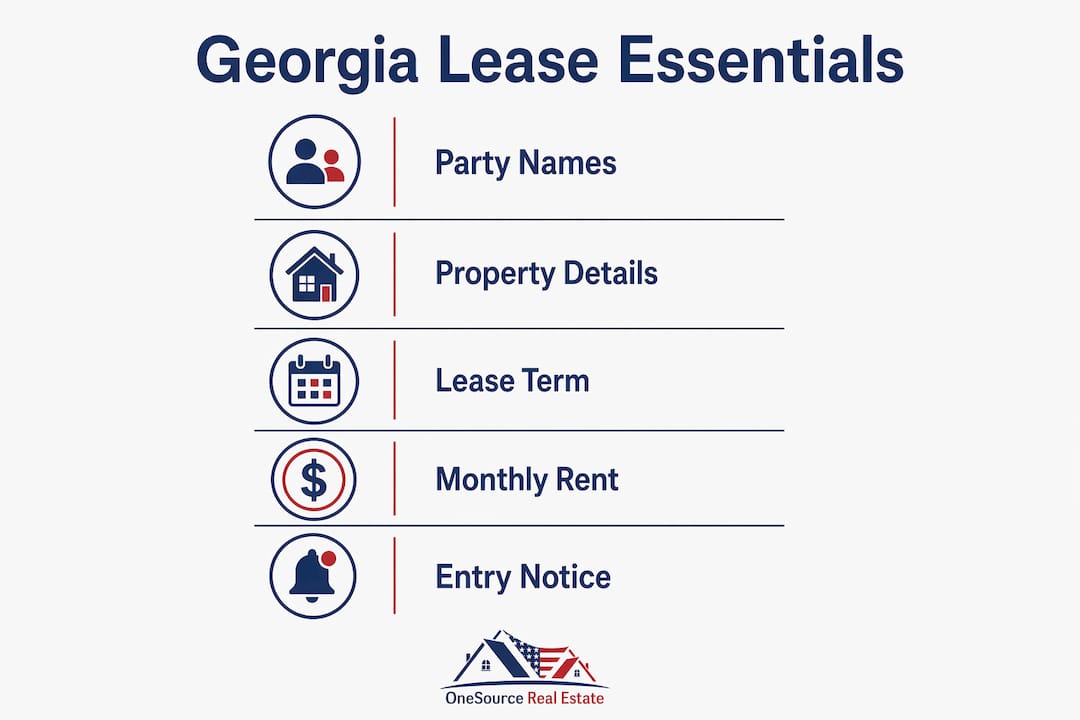
Every valid lease must include the names of all parties, a clear property description, the lease term, the monthly rent amount, security deposit terms, and each party's maintenance responsibilities. Missing any of these elements creates ambiguity that courts resolve against the party who drafted the agreement, which is almost always the landlord.
Written leases are required for any rental term exceeding one year under Georgia's Statute of Frauds. Oral leases are technically valid for terms of one year or less, but they are extremely difficult to enforce in court. Experienced brokers strongly recommend written agreements for every tenancy, regardless of length.
GAR standardized lease forms are updated annually to reflect changes in state law, including the 2024 Safe at Home Act. Most licensed Georgia realtors use these forms precisely because they eliminate guesswork and reduce the risk of including unenforceable clauses. A lease that waives a tenant's right to a habitable unit, for example, is void under Georgia law regardless of what both parties signed.
Key required lease elements include:
- Names and signatures of all adult tenants and the landlord or property manager
- Property address and description, including any included appliances or parking
- Lease term with clear start and end dates
- Rent amount, due date, and accepted payment methods
- Security deposit amount and conditions for its return
- Late fee terms, which Georgia law allows without a statutory cap but requires the lease to specify clearly to be enforceable
- Maintenance and repair responsibilities for both parties
- Entry notice terms, since Georgia imposes no statutory minimum for landlord entry and relies entirely on what the lease states
Pro Tip: Always include a 24-hour entry notice clause in your lease. Georgia law sets no statutory minimum, so without a written provision, landlords and tenants have no clear standard to follow.
How do Georgia realtors help with security deposits and tenant protections?
Security deposit rules are one of the most disputed areas in Georgia residential leasing. A qualified realtor knows exactly what the law requires and protects both sides from costly errors.

The 2024 Safe at Home Act (HB 404), effective july 1, 2024, caps security deposits at a maximum of two months' rent for leases entered or renewed on or after that date. This is a hard ceiling. Landlords who collect more than two months' rent as a deposit on a qualifying lease expose themselves to legal liability.
Landlords who hold deposits from more than ten tenants must keep those funds in an escrow account. Realtors managing multiple properties track this requirement carefully, since commingling deposit funds with operating accounts is a compliance violation. The 30-day deadline to return deposits or provide an itemized list of deductions after tenancy ends is equally firm. Miss that window and the landlord loses the right to make any deductions.
One detail that surprises many landlords: a move-in condition list must be completed and signed before the tenant pays the deposit. If the landlord skips this step, Georgia law strips away any right to withhold deposit funds for damages. Realtors routinely conduct move-in inspections and document property condition with photos and written checklists to protect their clients.
Practical steps realtors take to protect both parties on security deposits:
- Confirm the deposit amount does not exceed two months' rent before the lease is signed
- Complete and co-sign a detailed move-in condition checklist with the tenant
- Verify deposit funds are held in the correct account type based on portfolio size
- Calendar the 30-day return deadline and prepare itemized deduction documentation in advance
- Advise landlords to keep receipts for all repair work claimed against the deposit
What notice and eviction procedures must Georgia realtors ensure are followed?
Eviction in Georgia follows a specific legal sequence. Skipping any step voids the process and forces the landlord to start over, which costs weeks and money.
Before a landlord can file a dispossessory action (Georgia's term for an eviction lawsuit) for nonpayment of rent, the law requires a written notice giving the tenant three business days to pay or vacate. The 3-business-day pay-or-quit notice must be posted in a sealed envelope on the property door and delivered by at least one additional approved method, such as certified mail. Realtors document delivery carefully because improper service is the most common reason eviction filings get dismissed.
Georgia also gives tenants a "pay and stay" defense. A tenant who pays all overdue rent plus court costs within seven days of being served with the eviction case can stop the process entirely. Realtors explain this option to landlord clients upfront so they are not caught off guard when a tenant exercises it.
Notice periods for ending a month-to-month tenancy are not equal between parties. Landlords must give 60 days' written notice to terminate a month-to-month lease, while tenants are only required to give 30 days. This asymmetry surprises many landlords who assume the notice period is the same for both sides.
Georgia sets no statutory grace period for rent. The lease must specify any grace period explicitly, or the rent is legally due on the date stated in the contract. Realtors advise landlords to define grace period terms clearly in the lease to avoid confusion and disputes.
The correct sequence for handling nonpayment looks like this:
- Confirm rent is past due with no grace period remaining under the lease terms
- Prepare and deliver the written 3-business-day pay-or-quit notice by approved methods
- Document delivery with photos, certified mail receipts, or process server confirmation
- Wait the full three business days before filing a dispossessory action with the magistrate court
- Prepare for the possibility that the tenant exercises the 7-day pay-and-stay defense after service
Pro Tip: Keep a paper trail for every notice you deliver. Georgia courts require proof of proper service, and a photo of the posted notice plus a certified mail receipt is the minimum documentation a realtor should maintain.
How can you find and work effectively with Georgia realtors specializing in residential leases?
Finding the right realtor for a Georgia residential lease is not just about checking a license. The best realtors in Georgia for leasing bring specific knowledge of landlord-tenant law, local market conditions, and GAR lease forms.
Georgia's landlord-tenant law does not follow the Uniform Residential Landlord and Tenant Act (URLTA), which most other states use as a baseline. That means a realtor licensed in another state may not understand Georgia's specific rules on deposits, notices, or lease formation. Local expertise is not a bonus. It is a requirement.
When evaluating a realtor for residential leasing, look for:
- Active Georgia real estate license verified through the Georgia Real Estate Commission
- Demonstrated experience with residential lease transactions, not just sales
- Familiarity with GAR lease forms and their annual updates
- Knowledge of the Safe at Home Act and its deposit cap provisions
- References from landlord or tenant clients in similar property types or neighborhoods
Realtors add value at every stage of the leasing process. They screen prospective tenants using consistent, legally compliant criteria. They negotiate lease terms that protect their client's interests. They coordinate move-in inspections and ensure the condition checklist is completed before any deposit changes hands. For landlords managing rental properties in Atlanta and surrounding areas, a realtor who also offers property management services provides continuity from lease signing through the full tenancy.
Tenants benefit from realtor guidance too. A realtor can flag lease clauses that are unenforceable under Georgia law, explain what the deposit cap means for their specific situation, and clarify notice rights before they sign anything. Preparing for your first meeting with a realtor means gathering your income documentation, rental history, and a list of questions about the property and lease terms.
Key Takeaways
Working with a licensed Georgia realtor who knows state-specific lease law is the single most effective way to avoid costly disputes in residential leasing.
| Point | Details |
|---|---|
| Written leases are required for terms over one year | Oral leases are valid for short terms but nearly impossible to enforce in court. |
| Safe at Home Act caps deposits at two months' rent | Any deposit exceeding two months' rent on leases signed after july 1, 2024 exposes landlords to liability. |
| Move-in condition list is mandatory | Skipping this document forfeits the landlord's right to withhold any deposit for damages. |
| Notice periods are not equal | Landlords must give 60 days' notice to end a month-to-month lease; tenants need only give 30 days. |
| GAR forms reflect current law | Using annually updated GAR lease forms reduces the risk of including unenforceable clauses. |
Why I always push clients toward written leases, even for short terms
Georgia technically allows oral leases for tenancies under one year. I have seen landlords rely on that flexibility and regret it every single time. When a dispute lands in magistrate court, a handshake agreement becomes a memory contest. The judge has no document to reference, and the outcome is unpredictable for both sides.
The other thing I see constantly is landlords using outdated lease forms they downloaded years ago. Georgia's leasing laws changed meaningfully with the Safe at Home Act in 2024. A lease that does not reflect the current deposit cap or the correct notice periods is a liability waiting to surface. GAR updates its forms annually for exactly this reason, and any realtor worth hiring uses the current version.
Tenants often come to me not knowing they have a "pay and stay" defense if an eviction case is filed against them. That seven-day window to pay overdue rent and stop the process is a real protection, and most tenants never hear about it until it is too late to use it. A good realtor explains these rights before the lease is signed, not after a problem develops.
My advice for anyone searching for Georgia property management or leasing help: ask the realtor directly whether they use current GAR forms and whether they have handled a dispossessory filing in the past year. Those two questions separate professionals who know Georgia law from those who are guessing.
— Matt
Residential leasing in Georgia, handled by professionals who know the law
Navigating Georgia residential leases without professional help is a real risk. The deposit cap, the move-in checklist requirement, the asymmetric notice periods, and the eviction filing sequence all create opportunities for costly errors that a qualified realtor prevents.
OneSource Real Estate is a full-service brokerage serving Atlanta and the surrounding areas, specializing in residential leasing and property management. Their team knows Georgia's current lease laws, uses updated GAR forms, and handles every step from tenant screening to lease execution. Families and landlords looking for trusted leasing support in Georgia can connect with OneSource Real Estate to get the process right from the start.
FAQ
What does a Georgia realtor do in a residential lease?
A Georgia realtor facilitates the entire leasing process, from marketing the property and screening tenants to drafting a legally compliant lease using GAR standardized forms and managing move-in inspections.
What is the security deposit limit in Georgia?
Georgia's Safe at Home Act caps security deposits at two months' rent for leases entered or renewed on or after july 1, 2024. Landlords who collect more than this amount face legal liability.
How much notice does a landlord need to give to end a month-to-month lease in Georgia?
A landlord must give 60 days' written notice to terminate a month-to-month tenancy in Georgia. Tenants are only required to give 30 days' notice.
Is a written lease required in Georgia?
A written lease is legally required for any rental term exceeding one year under Georgia's Statute of Frauds. Oral leases are valid for shorter terms but are difficult to enforce in court.
What happens if a landlord misses the deposit return deadline?
A landlord who fails to return the security deposit or provide an itemized list of deductions within 30 days after the tenancy ends loses the legal right to withhold any portion of the deposit.