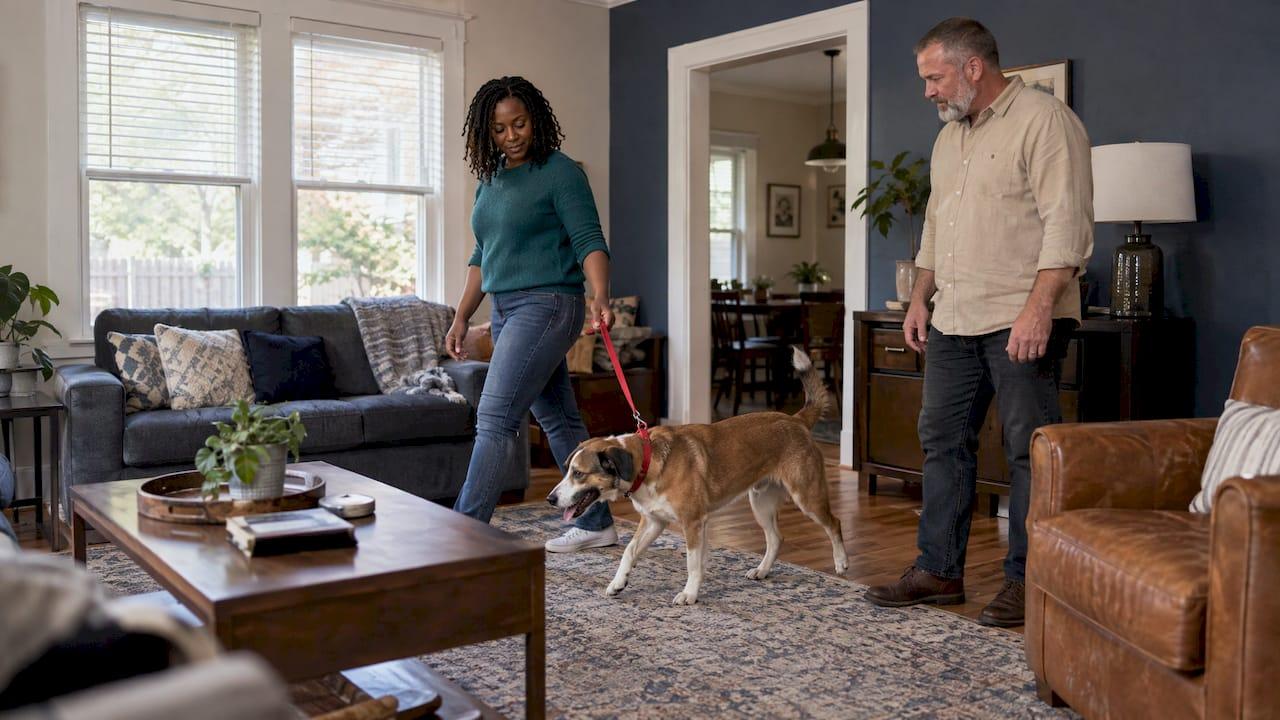
Pet screening is a background check on a tenant's animal. Before approving a pet, a landlord or property manager collects the pet's breed, age, weight, vaccination records and behavior history. They compare it against the property's pet policy and then set any fees. Assistance animals are the exception. Under fair housing law they are not pets and cannot be screened like pets. This guide covers both sides of the process, for landlords who want a consistent system and for applicants who want to know what to expect.
TL;DR
- Pet screening means reviewing a pet's profile, vaccination records and behavioral history against a written pet policy before approval.
- Apply the same steps and ask the same questions for every applicant. That consistency is what protects you from discrimination claims.
- Service animals and emotional support animals are not pets. HUD says breed, size and weight limits and pet deposits generally cannot be applied to them.
- Keep assistance-animal requests in a separate process from standard pet applications, and never put "pet" on that paperwork.
- Deposit, fee and pet rent rules differ by state. Check your state's rules before you publish a pet policy.
Table of Contents
- What pet screening is and what counts as a pet
- How the pet screening process works, step by step
- What landlords can ask about a pet
- Why a landlord approves or denies a pet
- Assistance animals are not pets
- Pet deposits, fees and rent: what varies
- Our perspective: screening is a policy, not a favor
- Let us handle screening for your rental
- Building a pet screening checklist
- FAQ
- Sources
What pet screening is and what counts as a pet
Pet screening works like a tenant background check, only the subject is the animal. The landlord gathers facts about a dog, cat or other animal and decides whether it fits the property. DREDF describes it as a check used to gather information about a prospective tenant's pet before approval. It also applies when an existing tenant wants to get a new pet.
The goal is practical. A landlord wants to know the animal will not damage the unit, disturb neighbors or break house rules. The tenant wants a clear yes or no and a clear price.
Pets versus assistance animals
This distinction decides everything that follows. A pet is an animal kept for companionship that falls under your pet policy. An assistance animal is different. HUD's FHEO notice states that an assistance animal is not a pet. It describes such an animal as one that does work or tasks for a person with a disability, or provides emotional support that eases the symptoms or effects of a disability.
So "what counts as a pet when renting?" has a simple answer. A dog, cat, bird, rabbit or similar companion animal is a pet. A service animal or emotional support animal supporting a disability is not, and the pet screening process does not apply to it in the same way. We cover that in detail below.

How the pet screening process works, step by step
Most rental pet screening follows the same four stages. The details change from one property to the next, but the order rarely does.
- The policy comes first. The landlord states in writing whether pets are allowed, which animals and sizes are accepted, and what charges apply. Publishing this up front means every applicant sees the same rules.
- The applicant submits a pet application. It lists the type of animal, breed, age, weight and often a recent photo. Some properties call this a pet resume or pet profile.
- Supporting documents come in. Typically that means vaccination records and, where relevant, licensing or rabies documentation. It can also include a letter from a veterinarian or a reference from a previous landlord.
- The landlord reviews and decides. The information is checked against the policy. An approved pet is added to the lease through a pet addendum, and any deposit, fee or monthly pet rent is set.
Some landlords also meet the pet in person. That is common with dogs, where temperament is hard to judge on paper.
Keep every applicant on the same track
The most useful rule in the whole process is consistency. Ask every applicant the same questions, apply the same standards, and write down the reason for each decision. If a decision is ever challenged, a documented, repeatable process is your best defense. It also protects you from accidentally treating one applicant differently from another.
That same principle runs through our guides on tenant screening criteria and rental application questions that stay within HUD and FCRA rules. Pet questions belong inside the same fair, uniform system as the rest of the application.
What landlords can ask about a pet
Landlords generally look at health, behavior and fit with the property. The categories below are the ones that come up most often in screening applications and in the information DREDF says tenants are commonly asked to provide.
| Category | What the landlord typically asks | Why it matters |
|---|---|---|
| Basic profile | Type, breed, age, weight, sex, current photo | Checks fit with the pet policy and size limits |
| How long owned | Length of ownership, whether housebroken | Indicates training and stability |
| Health | Vaccination records, vet name, health issues | Confirms vaccines are current and the animal is cared for |
| Behavior | History of aggression, excessive barking, complaints | Predicts neighbor disturbance and safety risk |
| Daily routine | Time spent home alone | Helps gauge noise and damage risk |
| References | Previous landlord's feedback on the pet | Shows real-world behavior in a rental |
For landlords, a few notes on using this information well:
- Verify, don't assume. Official vet records carry more weight than a tenant's description. A previous landlord's direct number is often the fastest way to learn how a pet really behaved.
- Ask only what you will use. Every question should connect to a written policy standard.
- Handle personal data carefully. Collect records through the application and store them with the tenant file.
Our guide to landlord reference checks walks through what to ask a previous landlord, including pet-related questions.
What applicants should prepare
If you are the one renting with a pet, gather these before you apply:
- Current vaccination records, including rabies where applicable
- Your veterinarian's name and contact details
- Recent, clear photos of the animal
- Breed, weight and age as listed on vet paperwork
- Any training certificates
- A reference from a prior landlord who can speak to the pet's behavior
A complete, honest packet speeds up a decision. Mismatches, such as a weight that differs from the vet record, slow things down and raise questions.
Why a landlord approves or denies a pet
Decisions usually turn on a short list of factors. Landlords commonly weigh:
- Vaccinations that are current or missing
- Fit with the breed, size and weight policy
- Documented behavior problems such as aggression, bites or destructive behavior
- Poor feedback from a prior landlord about damage or disturbance
- The pet's age and general health
A consistent approach helps. Rather than a gut call, some landlords assign each pet a risk level based on the same checklist. Missing paperwork alone is often fixable, since an applicant can get updated vaccination records from the vet. A documented bite history is more serious.
Whatever the outcome, decisions must follow state law and fair housing rules. The reason for a denial should tie back to the policy and to evidence, not to a hunch.
Common issues and how to handle them
- Incomplete records: Give a clear deadline and a written list of what is missing.
- Breed restrictions: If your policy limits breeds, apply it to every ordinary pet. Remember it does not apply to a legitimate assistance animal.
- Several pets: Screen each animal separately and note the total number your policy permits.
- Conflicting information: Ask the applicant to clarify in writing and check against vet records.
Assistance animals are not pets
This is where landlords most often go wrong, and where applicants most need to know their rights.
HUD's notice explains that housing providers must generally make an exception to a no-pets rule as a reasonable accommodation. There are limits. The exception does not apply if it would impose an undue burden, fundamentally alter the services provided, or if the specific animal poses a direct threat or risk of substantial property damage that cannot be reduced. HUD also says that breed, size and weight limits and pet conditions, including deposits, may not be applied to these animals.
The fair housing guide published by NCHFA says the same thing. Under the Fair Housing Act and Section 504, service and assistance animals are not pets, so pet fees, deposits and size or breed restrictions do not apply. A request can be denied only if the individual animal poses a direct threat or would cause substantial physical damage, based on objective evidence.
DREDF goes a step further: it states landlords cannot require pet screening for an assistance animal, because doing so treats it as a pet and violates fair housing law.

Run a separate process for accommodation requests
The cleanest approach is two tracks:
- Track one: the standard pet application, with the policy, documents and fees described above.
- Track two: a reasonable accommodation request, handled on its own. The NCHFA guide outlines three questions for the landlord. Is the disability obvious or known? Is the accommodation necessary? Is it reasonable?
Keep the word "pet" off accommodation paperwork. And once a request is approved as reasonable, the landlord cannot pass the cost on to the tenant. NCHFA gives a pet deposit as the example of what you cannot charge.
For applicants who were turned away, this guide on steps to take when a service animal is denied explains how to document what happened and what options exist.
A note on recent federal changes
Federal guidance on assistance animals has shifted in recent years, and landlords hear conflicting claims about it. The underlying law is what matters most. The Fair Housing Act and its implementing regulations still require reasonable accommodations. Because the practical enforcement picture can change, confirm the current position on HUD's own site before you write or update a policy, and talk to a fair housing attorney about specific requests.
In Georgia, state-level questions about emotional support animals add another layer. Our Georgia emotional support animal guide covers how those requests are handled locally.
Pet deposits, fees and rent: what varies
Pet charges come in three forms:
- Pet deposit: refundable, minus documented damage, and usually counted against state security-deposit rules.
- Pet fee: a one-time, nonrefundable charge where state law allows it.
- Pet rent: a monthly charge added to the rent.
State rules differ a lot. Some states cap total security deposits, which can fold a pet deposit into the cap. Others limit or ban nonrefundable fees. Some restrict application fees entirely. Before you set a charge, read your state's landlord-tenant statute. Do not copy a policy from a landlord in another state.
Three rules hold everywhere:
- Spell out every charge in the lease or pet addendum.
- Never charge pet deposits, fees or pet rent for an approved assistance animal.
- Use a pet addendum that names the animal, its weight and breed, the charges, and what happens if a different animal moves in.
Some landlords use third-party platforms that collect pet profiles and charge the renter a small annual fee per pet. If you use one, make sure the platform offers a no-fee route for assistance animal requests, and that your policy tells applicants about it.
We lay out the full legal framework for policies in our pet policy playbook for landlords.
Our perspective: screening is a policy, not a favor
Landlords who struggle with pets in rentals usually don't have a pet problem. They have a process problem. A rule is applied to one tenant and skipped for another, a decision is made on a phone call, and nothing is written down.
We build pet screening into the same system as everything else we do for owners. The pet policy goes in writing before the listing goes live. Every applicant gets the same questions, the same documents list and the same timeline. Assistance animal requests go to a separate track, because we know the law treats them differently, and mixing them in is how owners end up with fair housing exposure.
That is why our property management service is designed as a full suite: tenant screening, placement, lease drafting and renewal, legal compliance and eviction support, handled by one team. Our dedicated team communicates clearly with owners at each stage, so you know why a pet was approved or declined. Our optional Owner Benefit Package is built to add a layer of protection for owners on top of that process.
The best pet policy is boring. It's clear, consistent and documented. That is exactly what protects an investor's property and keeps good tenants, and their animals, in place.
Matt
Let us handle screening for your rental
If you own rental property in Atlanta or the surrounding area, you don't have to build a pet screening system yourself. Our property management service covers tenant screening and placement, lease drafting and renewal, rent collection, maintenance coordination, legal compliance and eviction support. Management is a 10% monthly fee, onboarding is a $250 one-off fee, and a lease renewal is a $500 one-off fee. The optional Owner Benefit Package is $40 per month per unit. Tenant placement is also available on its own, and you can see more on how it works in our tenant placement guide.

If you are weighing how to structure your rentals or your portfolio first, our consulting calls are available as a 30-minute session at $300 or a 60-minute deep dive at $500. Read how the protection package works in our guide to eviction protection for landlords.
Building a pet screening checklist
Here is a working checklist you can adapt to your own rentals:
- Write the pet policy: allowed species, any size or breed limits for ordinary pets, number of pets, and every charge.
- Publish it in the listing so applicants know before they apply.
- Use one pet application form with identical questions for everyone.
- Require vaccination records and, where you ask for it, a recent photo and vet contact.
- Contact a previous landlord when the applicant lists one.
- Review against the policy and record the reason for the decision.
- Add a pet addendum to the lease for each approved animal.
- Keep a separate, written procedure for assistance animal requests.
- Review the policy once a year against state law.
If you want to see where pet questions sit within the larger application, our list of documents Georgia landlords expect on rental applications is a useful companion. For vacancies, a clear pet policy also helps you market the rental faster, since many renters search specifically for pet-friendly homes. If you are comparing ways to run the whole screening process, our tenant screening service guide explains the options.
FAQ
What is the pet screening process for renters?
You submit a pet application with your animal's type, breed, age and weight. Then you provide documents such as vaccination records, and sometimes a vet letter or landlord reference. The landlord reviews everything against the pet policy, may meet the animal, and approves it with any agreed charges in a pet addendum.
What counts as a pet when renting?
A companion animal such as a dog, cat or small caged animal counts as a pet and falls under the landlord's pet policy. Service animals and emotional support animals do not. HUD's notice says an assistance animal is not a pet.
Can a landlord screen or charge fees for a service animal or ESA?
Generally no. HUD says pet conditions, including deposits, and breed, size and weight limits cannot be applied to assistance animals. A landlord may deny a request only if that specific animal poses a direct threat or would cause substantial property damage, based on objective evidence.
What can get a pet denied?
Common reasons include missing or expired vaccination records, a breed or size outside the written policy, a documented history of aggression or destructive behavior, and negative feedback from a previous landlord. The decision must follow your state's law and fair housing rules.
Can landlords charge a pet deposit, fee and pet rent?
In many states, yes, but the rules vary. Deposits often count toward state security-deposit caps, and some states limit or ban nonrefundable fees. Check your state's statute and put every charge in writing in the lease.
Sources
- HUD FHEO Notice FHEO-2013-01 on assistance animals
- Fair Housing for Tenants with Disabilities, NCHFA guide
- Know Your Rights! Pet Screening and Assistance Animals, DREDF
- 6 Steps to Take When a Service Animal Is Denied in the U.S.