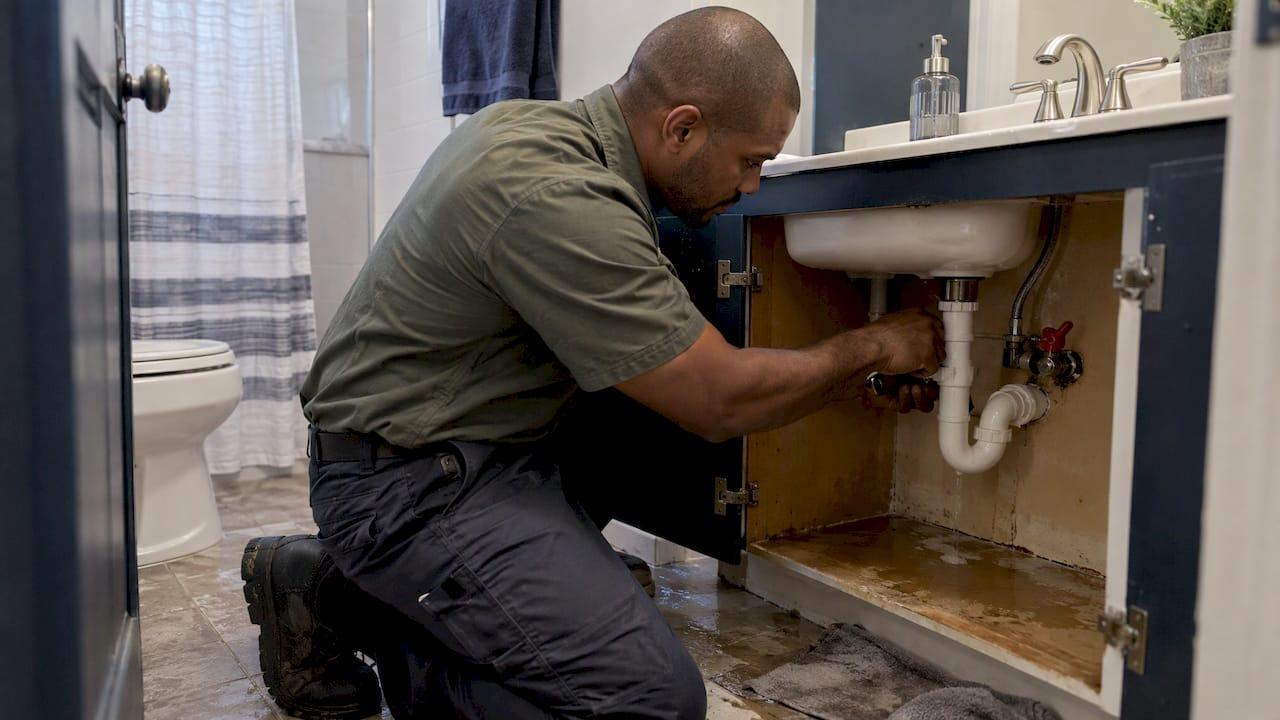
A good maintenance response time for a rental is a fast first reply and a fixed target for each urgency level. Emergencies get action immediately, urgent repairs get a reply the same day and a fix within a day or two, and routine requests get a reply within one business day and a fix within about a week. Owners who set these targets in writing, and hand the coordination to a team that works to them, lose fewer tenants and face fewer surprise repair bills.
This guide is for Atlanta-area owners and investors. It explains what the clock measures, the targets worth adopting, what Georgia law expects, and how the coordination process works from request to closed work order.
TL;DR
- Response time is the gap between a tenant's request and the first real action. Resolution time is a separate clock.
- Use four tiers: life safety, emergency, urgent and routine. Each gets its own reply and repair target.
- Georgia sets no fixed number of hours. The law asks for repairs within a reasonable time after notice, and a reasonable time depends on the problem.
- Slow responses usually come from vague requests, vendor scheduling and owner approval delays, all of which a written process can fix.
- Our property management service covers maintenance coordination, so you don't have to run the clock yourself.
Table of Contents
- What "response time" actually measures
- Response time targets by urgency
- The emergency-or-routine test
- What Georgia law expects
- Why response times slip
- The coordination process, step by step
- What a faster response time is worth
- Perspective
- Hand the coordination to a team
- FAQ
- Sources
What "response time" actually measures
Most owners use one phrase for three different clocks, and mixing them up hides where a repair is stalling.
- Acknowledgment time: how long until the tenant hears that someone has the request.
- Response time: how long until the first meaningful action, such as a vendor assigned, a technician dispatched or a utility shut off.
- Resolution time: how long until the repair is finished, verified and documented.
For true emergencies there is a fourth clock: time to make safe. Shutting off the water to a burst line within the first hour matters more than the final plumbing repair that happens the next day.
Tenants judge you on the first clock. A tenant who gets a reply in an hour and a repair in four days is usually calmer than one who hears nothing for a day and then gets a repair on day two. Silence reads as neglect, even when work is underway.
Response time targets by urgency
There is no single national standard. Public housing agencies publish theirs, and they make a useful reference point. The Marin Housing Authority's maintenance plan sets a goal of responding to routine requests within 5 days. For emergencies, it aims for the same day when possible and 24 hours at most. It also requires every work order to be classified by priority.
For private single-family and small multifamily rentals, a practical four-tier table looks like this:
| Tier | Examples | First reply | Action or repair target |
|---|---|---|---|
| Life safety | Gas smell, fire, carbon monoxide alarm, sparking wiring | Immediate. The tenant calls 911 or the gas utility first | Hazard made safe right away |
| Emergency | Burst pipe, flooding, sewage backup, no heat in freezing weather, no water, broken exterior door lock | Within 1 hour | Vendor on site or damage stopped within hours, unit safe within 24 hours |
| Urgent | No hot water, refrigerator down, AC out in summer heat | Same day | Repair within 24 to 72 hours |
| Routine | Dripping faucet, running toilet, slow drain, cosmetic items | Within 1 business day | Repair within about 3 to 7 days, scheduled work batched |
These figures are a working framework built from public housing standards and common management practice, not a legal requirement. Adjust them to the property. A broken AC in an Atlanta July is not the same problem as one in October. A clogged toilet in a one-bathroom unit moves up a tier.
The Marin plan lists the same kinds of conditions as emergencies: fire, gas leaks, broken water supply lines, sewer backup, flooding, total power loss and a clogged toilet in a one-bathroom unit. It places items like a broken window or a dead refrigerator in the 48-hour urgent tier.
The emergency-or-routine test
When a request is borderline, four questions sort it quickly:
- Is anyone in danger? Think gas, fire, carbon monoxide, exposed live wiring or a broken stair railing.
- Is damage spreading right now? Think water through a ceiling, a burst pipe or sewage backup.
- Can the tenant live there tonight? Think no heat in winter, no water, no working toilet or a door that won't lock.
- Will waiting until morning make it much worse or more expensive?
If every answer is no, the request can wait for business hours. If any answer is yes, treat it as an emergency.
The fourth question is where money is saved. A slow drip and a leaking supply line look alike in a one-line message. Waiting a day on the second can turn a small repair into a major one with drywall, flooring and possibly mold. After a leak, the first 48 hours decide how much damage you end up paying for, which is why water cleanup in the first 48 hours is worth understanding before it happens to you.
What Georgia law expects
Georgia does not publish a statewide hour count for repairs. Under O.C.G.A. § 44-7-13, once a landlord is notified that the premises are out of repair, the landlord has a duty to inspect and investigate. Failing to repair within a reasonable time after notice can make the landlord liable for damage the tenant suffers. Georgia courts read "reasonable time" according to the character of the repair and the facts around it.
In practice, that means three things for an owner:
- The clock starts at notice. A text, email, portal ticket or phone call the manager knew about all count as practical notice. A request that sits unread still counts against you.
- Reasonable shrinks as risk grows. A week for a dripping faucet may be fine. A week with no heat is not.
- Your records are your defense. If a dispute arises, a time-stamped log showing acknowledgment, dispatch and completion is the strongest evidence you acted reasonably.
Our guide on Georgia landlord repair duties and retaliation risks covers the state-specific rules in more depth.
Other states do set numbers. Under Colorado Revised Statutes § 38-12-503, a landlord breaches the warranty of habitability if it fails, after notice, to begin remedial action within 24 hours for conditions that materially interfere with life, health or safety, or within 72 hours where the premises are uninhabitable. A bill introduced in Michigan, Senate Bill 19, would set 48 hours for imminently hazardous conditions and 7 days for most others, if it becomes law alongside companion bills. If you own across state lines, check each state separately. These numbers don't apply in Georgia, but they show where lawmakers are heading and make sensible internal targets.
If a property is in a federally assisted program, the program's own inspection rules may set deadlines on top of state law. Ask your attorney which rules apply to your units.

Why response times slip
Three bottlenecks account for most delays, and none of them is "the vendor was lazy."
Vague intake
A message that says "sink broken" tells you nothing about the tier. Someone has to call the tenant, leave a voicemail and wait, and a day is gone before triage starts. A structured request fixes this. It captures the location, a description in the tenant's words, whether water is actively running, when it started, a photo or short video and access instructions. A photo alone often settles the urgency question and prevents wasted trips.
Scheduling friction
A vendor can be ready on Tuesday while the tenant works until 6 p.m. and the lockbox code is wrong. The repair then slips to the following week. Appointment windows, access permission and a named contact for changes of plan need to be settled at dispatch, not at the door.
Owner approval delays
A plumber quotes $600 and the owner's pre-approved limit is $500. The job now waits on a reply that may take two days. Setting a spending threshold, and pre-approving known repair categories below it, removes the most avoidable stall. Our post on maintenance reserves explains how a funded reserve keeps small repairs moving.
The coordination process, step by step
Here is how a request should travel from tenant to closed work order. Our guide to maintenance coordination for managers goes deeper on the cost side.
- Log it in one place. Phone, text, email and portal requests all become one record with the property, tenant, description, date and time, photos and access details. Where this goes wrong: requests living in three inboxes, so one is missed. Our full-service management includes maintenance coordination, so the logging and routing are handled for you.
- Triage it. Assign a tier using the four questions above. Where this goes wrong: a first-in, first-out queue that treats a dripping faucet and a leaking supply line as equals.
- Turn it into a work order. Name the vendor, the scope, the not-to-exceed amount and the access plan. Where this goes wrong: a verbal assignment nobody can track.
- Confirm the visit. Lock in the appointment window and tenant access, and tell the tenant who is coming and when.
- Track delays out loud. If a part is on backorder or a vendor misses a window, the tenant hears about it that day. A short call or message explaining what you are waiting for and when you expect it keeps the tenant from assuming the request was forgotten.
- Verify and close. Confirm the work is done properly. Record the completion date, final cost, vendor notes and before-and-after photos. Follow up with the tenant a day or two later. Where this goes wrong: closing the ticket when the vendor leaves, not when the problem is actually fixed.
Steps 1 and 6 are the ones owners skip when they self-manage, and they are the ones that protect you in a dispute. For after-hours events, our emergency protocol for rental owners lays out what happens in the first hours.
What a faster response time is worth
Slow maintenance is a leading reason tenants don't renew. A vacancy costs you rent, turnover work, marketing and a new placement fee. A repair done in two days rather than ten costs far less than a lost tenant. That is why response targets belong in your management agreement, not only in your intentions.
If you do lose a tenant, our guides on tenant placement and the make-ready checklist show how to shorten the gap before the next lease.
Perspective
Owners ask us what response time to expect, and the honest answer is that speed comes from a system, not from heroics. A tenant's request should become a logged, classified work order the same hour it arrives, with a named vendor and a spending limit already agreed.
We built our management service for investors who want that off their desk. Maintenance coordination, tenant screening and placement, rent collection, financial reporting, legal compliance, lease drafting and renewal, and eviction support sit together under one team, so a repair request is never a stand-alone problem. The tenant, the vendor and the owner all deal with the same people.
The owners who get the best results decide the rules before the leak: tiers, thresholds and who gets called. Write those down once and every repair after that gets easier.
Matt
Hand the coordination to a team
Our property management service is built for Atlanta-area investors and landlords. Monthly management is 10% per month, onboarding is a one-off $250 and a lease renewal is a one-off $500. Tenant placement is part of the service as well. For owners who want extra protection, the Owner Benefit Package (OBP™) is $40 per month per unit. See the details on the property management page.
If you are still deciding how to structure your rental portfolio, a 30-minute consulting call is $300 and a 60-minute deep-dive session is $500. You can book on the investment consulting page.
FAQ
How long should a landlord take to respond to a maintenance request?
Acknowledge every request within one business day, and emergencies within an hour. For repairs, aim for immediate action on emergencies, 24 to 72 hours on urgent items and about a week on routine ones. Georgia law asks for repairs within a reasonable time after notice, so faster is safer.
What counts as a maintenance emergency?
An emergency is a condition that threatens safety, is causing damage that spreads, or makes the unit unlivable tonight. Gas odors, fire, flooding, sewage backup, no heat in freezing weather and total power loss are typical examples. For gas, fire or carbon monoxide, the tenant should call 911 or the gas utility first.
Does Georgia have a legal deadline for repairs?
No fixed number of hours is set in the statute. O.C.G.A. § 44-7-13 turns on whether the landlord acted within a reasonable time after notice. For legal questions about a specific dispute, talk to a Georgia attorney.
What should be documented for each repair?
Keep the request date and time, photos, urgency tier, every message to the tenant and vendor, any delays and their causes, the completion date, the final cost and the tenant's confirmation. This record shows that you acted reasonably if a dispute arises.
Sources
- Maintenance Plan, Marin Housing Authority
- O.C.G.A. § 44-7-13, Landlord's duties as to repairs and improvements
- Colorado Revised Statutes § 38-12-503
- Michigan Senate Bill 19, 2025-2026 session