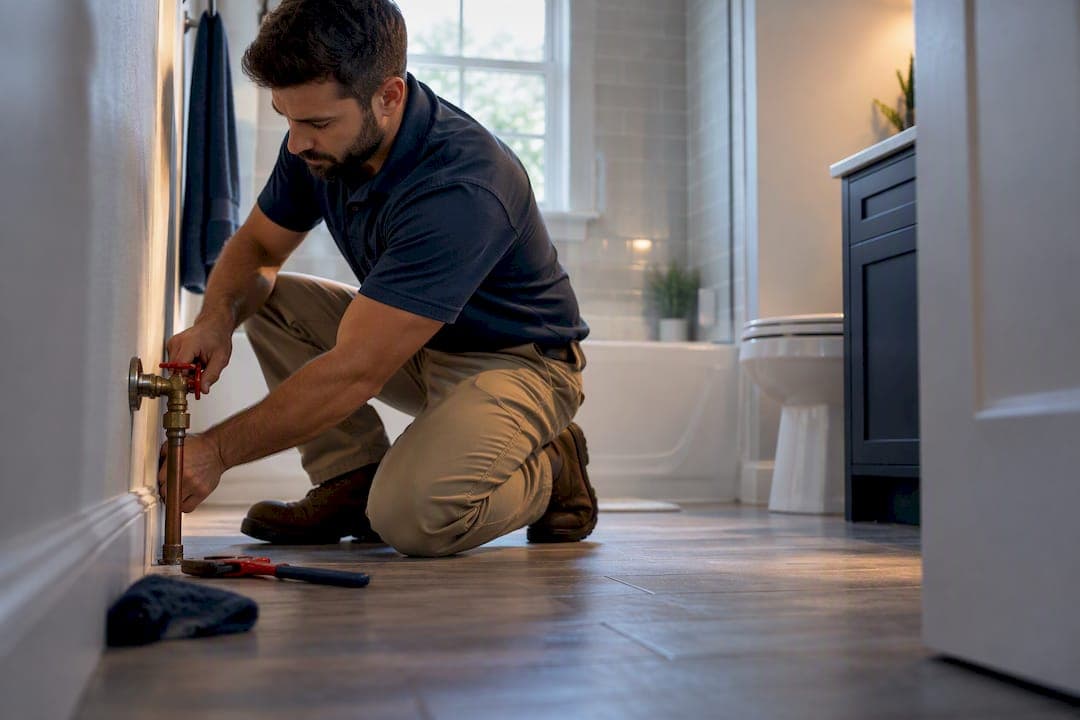
An emergency maintenance issue is any condition that threatens life, damages habitability, or causes active property damage. The first action isn't calling a plumber. It's securing tenant safety and stopping the damage from spreading, then dispatching the right contractor. Everything else, including paperwork and insurance calls, comes after.
TL;DR:
- Response times should align with the severity, with immediate issues like gas leaks and flooding requiring action within one hour.
- A written emergency protocol covering acknowledgment, triage, containment, dispatch, and follow-up ensures faster repairs and legal protection.
- Maintaining a vetted vendor roster with clear after-hours response commitments minimizes delays during crises.
- Document every step of the emergency response to support insurance claims and defend against legal disputes.
- Building and reviewing a standardized protocol annually saves time, reduces chaos, and improves tenant relations during emergencies.
Table of Contents
- What Qualifies as Emergency Maintenance Rentals Owners Must Act On
- How Fast Should You Respond to a Maintenance Emergency?
- What Is the Step-by-Step Emergency Response Protocol?
- Building a Vendor Roster You Can Actually Call at 2 a.m.
- Documentation and Insurance: Protecting Yourself Legally
- Tenant Communication: What to Say in the First Hour
- Preventing Emergencies Before They Start
- OneSource Real Estate's Emergency Protocol Checklist for Owners
- What Legal Rules Govern Emergency Repairs?
- When Should You Relocate a Tenant During Repairs?
- Turning Each Incident Into a Better Protocol
- Why a Written Protocol Pays for Itself
- How OneSource Real Estate Handles Emergencies for You
- Resources Worth Bookmarking
- Sources
- FAQ
What Qualifies as Emergency Maintenance Rentals Owners Must Act On
Not every 10 p.m. call is an emergency. A dripping faucet can wait until morning. A gas smell cannot. Drawing that line correctly protects tenants and keeps you from burning after-hours vendor rates on issues that could have waited for a scheduled visit.
The clearest emergencies fall into a handful of categories that landlord resources and property management guides consistently flag as requiring immediate response:
- Gas leaks or carbon monoxide alarms
- Active flooding or a burst pipe
- Exposed wiring, sparking outlets, or other electrical hazards
- Total loss of heat during freezing weather or loss of AC during extreme heat
- Sewage backups affecting a unit
- Structural failures (collapsed ceiling, failing support beam)
- Lock or security failures that leave a unit unsecured
Quick Checklist: Does the condition threaten someone's safety right now? Is water, fire, or electricity actively spreading damage? Would a reasonable person consider the unit unlivable without immediate action? If you answered yes to any of those, treat it as an emergency and dispatch accordingly.
Borderline cases trip up even experienced managers. A single dead AC unit in October is an inconvenience. The same failure during a heat advisory in Georgia in July is a habitability issue that needs same-day attention. Context changes the classification, so build weather and season into your triage decisions rather than applying a fixed rulebook. Consumer guides like Zillow's landlord resource recommend erring toward faster response whenever a tenant reports something you can't verify remotely, like a gas odor or standing water behind a wall.
How Fast Should You Respond to a Maintenance Emergency?
Response time policy is where most landlord liability gets decided, long before a lawsuit ever gets filed. Vague promises like "we'll get to it soon" don't hold up when a tenant's ceiling has been leaking for six hours. Written time bands do.
A workable structure looks like this:
- Immediate (0 to 1 hour): Gas leaks, active fire risk, no heat below freezing, flooding actively spreading
- Urgent (1 to 4 hours): Sewage backup, partial electrical outage, broken exterior lock at night
- Same-day (up to 24 hours): No hot water, minor leaks contained by tenant, AC failure in moderate weather
- Routine (3 to 7 days): Cosmetic issues, non-urgent appliance repairs, slow drains
Local and state landlord-tenant codes vary on what counts as a habitability failure and how fast you're legally required to respond, so check your jurisdiction's specific language rather than assuming these bands satisfy every code. When in doubt, respond faster than the minimum. A missed four-hour window on a sewage backup costs far less in vendor overtime than the mold remediation bill that follows a slow response, since mold can begin forming within 24 to 48 hours of water exposure.
Pro Tip: Log every response time stamp, including the minute the tenant first reported the issue and the minute a vendor arrived. That log becomes your best evidence if a dispute over habitability or negligence ever reaches a housing court.
What Is the Step-by-Step Emergency Response Protocol?
Every emergency call should move through the same five stages, whether it's 2 p.m. or 2 a.m. A written protocol that acknowledges, triages, contains, dispatches, and documents consistently produces faster repairs and fewer disputes than ad hoc handling.
- Acknowledge. Confirm receipt of the report immediately, even with an automated text, and timestamp it.
- Triage. Ask targeted questions: is anyone in danger, is water or gas actively flowing, is the area accessible?
- Contain. Walk the tenant through safe steps: shutting off the water valve under a sink, flipping a breaker, or evacuating if there's a gas smell.
- Dispatch. Call 911 or the utility company first for life-safety issues, then send the appropriate vendor from your roster.
- Follow up. Inspect the repair, collect the invoice, notify your insurer if the damage is significant, and log the full incident for your records.
Practical guidance to build into this flow:
- Never ask a tenant to touch anything electrical near water.
- If there's a gas smell, tell tenants to leave without flipping any switches, including light switches.
- Keep a backup contact for every trade in case your first call doesn't answer within 15 minutes.
Building a Vendor Roster You Can Actually Call at 2 a.m.
The worst time to find a plumber is during the flood. Every owner needs a pre-vetted roster covering plumbing, electrical, HVAC, locksmith, and water restoration, contracted and confirmed before anything goes wrong.
When vetting vendors, confirm four things in writing: active license and insurance, genuine 24/7 availability (not just a voicemail that says so), a guaranteed response window, and a locked after-hours rate. Property management playbooks consistently recommend keeping at least two vendors per trade, since a single-vendor roster leaves you stuck when your one plumber is already on another job.
Push for a written clause that spells out "after-hours response within X hours" with a defined penalty or escalation path if that window gets missed. Store every vendor's contact card in your property management portal and a physical binder at the property itself. Digital systems fail during power outages; a laminated card taped inside a utility closet doesn't.
- Plumbing: burst pipes, sewage backups, water heater failures
- Electrical: exposed wiring, panel failures, sparking outlets
- HVAC: no heat or AC during extreme weather
- Locksmith: broken locks, lockouts, security compromises
- Water restoration: standing water, mold risk, structural drying
Pro Tip: Ask each vendor for their after-hours rate card upfront. Vendors without a written cap are a signal to find a different provider, or at least a second option for that trade.
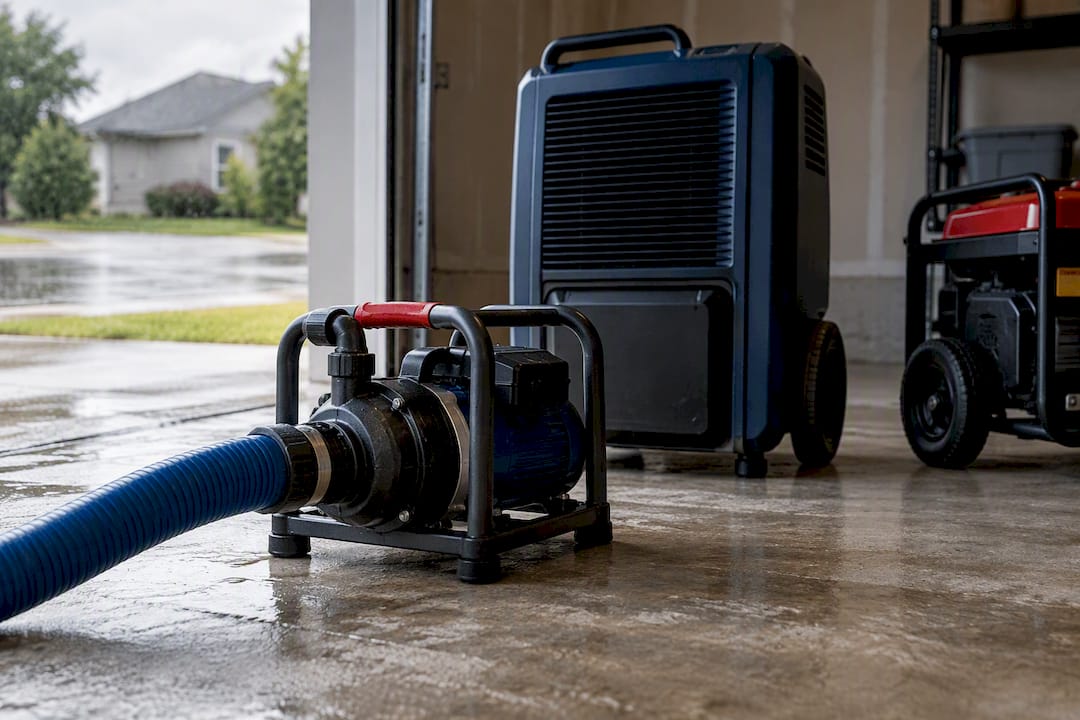
For large-scale water or HVAC failures, restoration equipment providers offer rapid-response fleets of generators, pumps, and dehumidifiers that can stage faster than a full repair crew, buying time while the actual fix gets scheduled.
Documentation and Insurance: Protecting Yourself Legally
Insurers and courts both expect the same basic paper trail after an emergency, and skipping it is the single most common way owners lose coverage they should have kept.
Build a documentation habit around these items every time:
- Photos and video of the damage, taken immediately and again after mitigation
- Timestamps on the initial tenant report and every subsequent action
- Copies of all tenant and vendor text or email exchanges
- Itemized vendor invoices and any repair authorization signed
- A written record of who approved emergency dispatch and when
Quick mitigation, like shutting off water or isolating power to the affected area, combined with documentation within the first 24 hours, materially improves your insurance outcome. Insurers expect landlords to actively limit further damage, not just report it after the fact.
Whether a repair bill lands on you or the tenant depends on cause. Damage from a tenant's negligence, like an overflowing tub left unattended, typically shifts financial responsibility to them, while structural or systems failures almost always fall on the owner. That distinction varies by state landlord-tenant law, so treat any ambiguous case, especially one involving a security deposit deduction, as a conversation for a local attorney rather than a guess.
Tenant Communication: What to Say in the First Hour
The words you send a tenant in the first five minutes of an emergency call often determine how much damage happens before help arrives. Keep short, scenario-specific scripts ready to copy and send by text.
- Gas smell: "Leave the unit now. Do not flip any switches. Call 911 once you're outside, then call us."
- Active flooding: "Shut off the water valve under the sink or toilet if it's safe to reach. Move valuables away from the water and call us immediately."
- Electrical hazard: "Stay away from the affected outlet or panel. Do not touch anything wet near it. We're dispatching an electrician."
- Lock or security failure: "Stay with a neighbor or in a public area until our locksmith arrives. Do not attempt to force the lock yourself."
- Sewage backup: "Avoid the affected bathroom or drain. Do not run water in nearby fixtures. We're sending a plumber now."
A concise emergency card taped inside a tenant's kitchen cabinet, listing shutoff locations and emergency numbers, speeds containment more than any phone script ever will.
If a repair will leave a unit uninhabitable overnight, such as no heat in freezing temperatures or a flooded bedroom, offer temporary hotel accommodation and document that offer in writing, including the date, the hotel, and who approved the cost.
Preventing Emergencies Before They Start
The cheapest emergency repair is the one that never happens. A basic preventative schedule catches most of the failures that turn into midnight calls.
- Service HVAC systems regularly, especially before seasonal peaks
- Flush and inspect water heaters annually
- Insulate exposed pipes before the first freeze
- Clean gutters and inspect roofs twice a year for leak points
Reserve funds matter as much as the schedule itself. A common guideline is setting aside 10 to 15% of monthly rent per unit for maintenance, with a larger contingency line for older properties or units with aging HVAC and plumbing systems. For isolated large events, like a single flooded unit, stop-gap equipment rentals such as pumps and dehumidifiers are often cheaper than accelerating a full restoration crew, and they buy time to schedule the permanent fix properly.
OneSource Real Estate's Emergency Protocol Checklist for Owners
A written protocol only works if it's actually in front of the tenant and the manager when a crisis hits. Two documents cover that.
- A lease-packet card listing emergency contacts, shutoff valve locations, and the exact steps for gas, water, and electrical incidents.
- An internal owner checklist covering your after-hours hotline number, your vendor roster with locked rates, your documentation workflow, and your reserve fund balance.
| Checklist item | Where it lives |
|---|---|
| Emergency contact card | Lease packet, tenant unit |
| Vendor roster with rates | Property manager portal |
| Documentation log | Owner records, insurer file |
| Reserve fund tracking | Owner financial statements |
Both documents take an afternoon to build and save hours of chaos the next time a pipe bursts at midnight.
What Legal Rules Govern Emergency Repairs?
Habitability law, not lease language, sets the floor for how fast you're required to act. Most states require landlords to maintain functioning heat, water, electricity, and structural safety, and a failure in any of those areas typically triggers a legal duty to repair within a "reasonable" time, a phrase that courts interpret differently depending on severity and local code.
Some cities and counties layer additional rules on top of state law, including specific response-time requirements for no-heat complaints during cold months or mandatory notice periods before entering a unit. Because these rules shift by jurisdiction, and because the penalty for getting it wrong can include rent withholding, repair-and-deduct claims, or habitability lawsuits, your lease should reference your local code directly rather than relying on generic language borrowed from another state.
Lease clarity also prevents disputes over after-hours charges. Community discussions among tenants and landlords show that after-hours emergency fees frequently get disputed when the lease never defined what counts as an emergency or who pays for it. Spelling out the definition, the response window, and the fee structure in the lease itself, not just in a policy binder, removes most of that ambiguity before it becomes a fight.
None of this replaces a conversation with a local attorney when a case involves tenant injury, extended displacement, or a disputed security deposit deduction. The stakes in those situations are too high for a generic checklist to cover every variable.
When Should You Relocate a Tenant During Repairs?
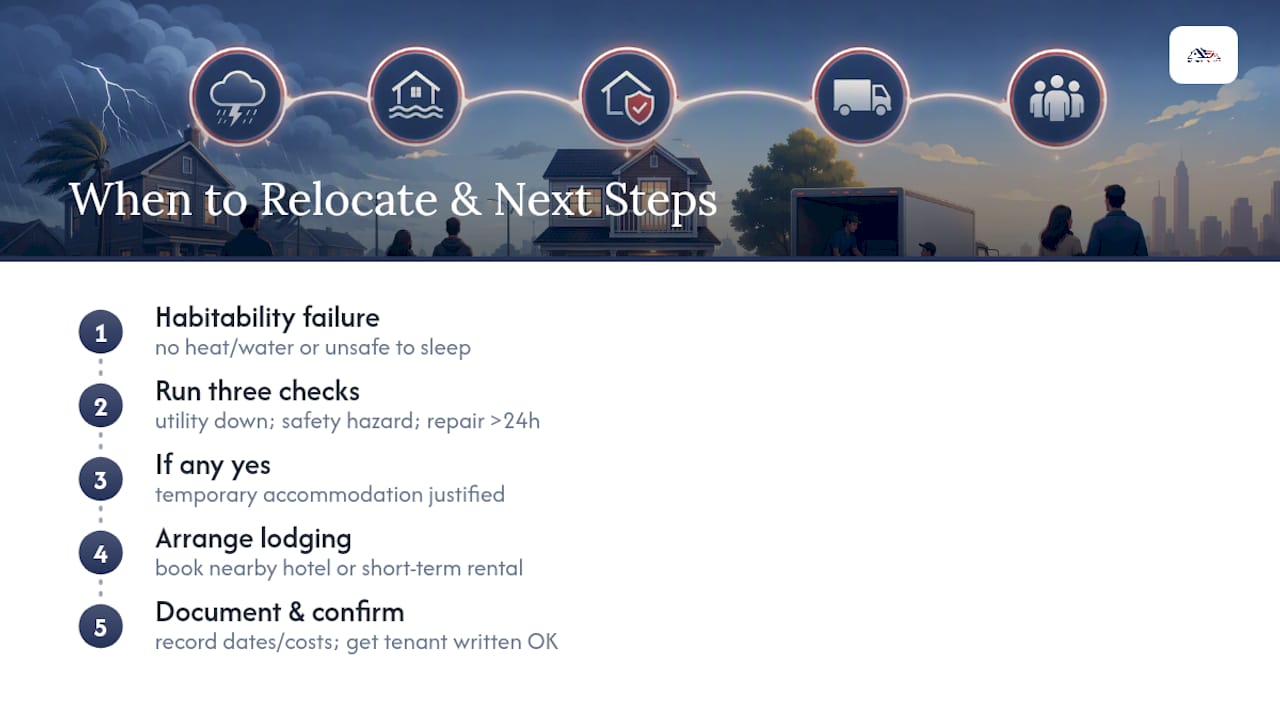
Relocation becomes necessary the moment a unit fails a basic habitability test: no functioning heat in freezing weather, no water service, or damage severe enough that the space is unsafe to occupy overnight. The test isn't comfort, it's whether a reasonable person could sleep there safely.
Run through three questions before deciding: Is the primary utility (heat, water, electricity) fully down with no same-day fix available? Is there a safety hazard, like exposed wiring or standing sewage, that makes the unit unsafe to enter? Will the repair timeline extend past 24 hours? A yes to any of these usually justifies temporary accommodation.
When relocation is warranted, book a nearby hotel or short-term rental, document the booking with dates and cost, and get the tenant's acknowledgment of the arrangement in writing, even if it's just a text confirmation. Keep receipts for every relocation expense since some of that cost may be recoverable through insurance, depending on your policy's loss-of-use coverage.
Skipping this step when it's clearly warranted is one of the fastest ways to turn a repair issue into a legal one. Tenants who feel ignored during a habitability failure are far more likely to pursue rent withholding or a formal complaint than tenants who were offered a hotel room and kept informed throughout the process.
Turning Each Incident Into a Better Protocol
Every emergency call is a data point. Owners who treat each incident as a one-off keep making the same mistakes; owners who log and review them get faster and cheaper over time.
After each emergency, run a short debrief: How long did acknowledgment take versus your policy window? Did the assigned vendor respond within the promised time, or should that vendor get replaced? Was the documentation complete enough to support an insurance claim without follow-up questions? Did the tenant need information they didn't get quickly enough?
Patterns matter more than individual incidents. If your HVAC vendor consistently misses the four-hour window during heat waves, that's a signal to renegotiate the contract or add a second vendor for that trade before the next summer, not after another failed call. If the same property keeps generating sewage backups, that's a plumbing infrastructure problem masquerading as a maintenance ticket, and it belongs in your capital improvement budget, not your emergency line.
Update your written protocol at least once a year, and immediately after any incident that exposed a gap, whether that gap was a missing vendor contact, an unclear lease clause, or a tenant who didn't know where the water shutoff was located. A protocol that never changes isn't a protocol. It's a document you wrote once and forgot about.
Why a Written Protocol Pays for Itself
Owners without a written protocol tend to make the same mistake twice: scrambling for a vendor mid-crisis, then discovering months later that the tenant relationship soured because nobody explained what was happening. A one-page plan, reviewed and adjusted after each incident, consistently produces faster repairs and calmer tenants than winging it every time.
Build the checklist once. Adapt it as your properties and vendors change. The version that matters is the one taped inside the utility closet, not the one saved in a folder nobody opens.
— Matt
How OneSource Real Estate Handles Emergencies for You
Building and maintaining everything covered here, the vendor roster, the response windows, the documentation workflow, takes real time most owners don't have lying around. OneSource Real Estate's Monthly Management service handles after-hours tenant contact and maintenance coordination directly, so a 2 a.m. call about a burst pipe reaches a manager, not your voicemail.
Some management packages add proactive reserve tracking and vendor management on top of standard management, so the funding and contractor relationships are established in advance rather than assembled during emergencies. If you'd rather build your own protocol with expert input first, a 30-Minute Consulting Call for $300 walks through your specific properties, current vendor gaps, and lease language.
Whether you want professional management of the emergency process or help reviewing an existing protocol, resources on property management services' websites are a helpful place to start.
Resources Worth Bookmarking
A few external and internal references round out the protocol covered above:
- The Emergency Maintenance Protocol Every Rental Owner Needs, for a broader breakdown of emergency categories
- The Make Ready Checklist Rental Owners and Tenants Actually Need, for reducing emergency risk before move-in
- Lead Paint Disclosure Rentals: What Landlords Must Provide, for compliance documentation adjacent to safety hazards
Sources
- The Emergency Maintenance Protocol Every Rental Owner Needs — Northpoint
- Emergency Maintenance Protocol: A 24/7 Response Plan for Landlords — Rentalot
- How to Handle Emergency Maintenance Requests as a Landlord — Rentlane
- What is considered emergency maintenance in an apartment? — Zillow
FAQ
What Qualifies as a Maintenance Emergency?
A maintenance emergency is any issue threatening safety, habitability, or causing active property damage, such as gas leaks, flooding, electrical hazards, sewage backups, or total loss of heat in freezing weather. If the condition is actively worsening or dangerous, it qualifies as an emergency requiring immediate response.
What Is the 50% Rule for Rental Maintenance Costs?
It's a rough planning tool rather than a fixed formula, and actual maintenance costs vary widely by property age and condition.
What Counts as Emergency Repairs Versus Routine Repairs?
Emergency repairs address conditions threatening safety or habitability right now, like a burst pipe or no heat in winter, while routine repairs cover non-urgent issues like a slow drain or a cosmetic fix that can wait days without causing further damage. The distinction determines your response-time obligation, not just your repair priority.
Is Mold a Maintenance Emergency?
Active mold growth tied to an ongoing water leak is a maintenance emergency because it worsens rapidly, sometimes starting within 24 to 48 hours of water exposure. Existing mold with no active water source is still serious but typically gets handled as an urgent rather than immediate repair.
Does OneSource Real Estate Handle Emergency Maintenance for Owners?
Yes. OneSource Real Estate's Monthly Management service coordinates after-hours maintenance response and vendor dispatch as part of full-service property management. Pricing and package details, including the Owner Benefit Package, are listed on the property management page.