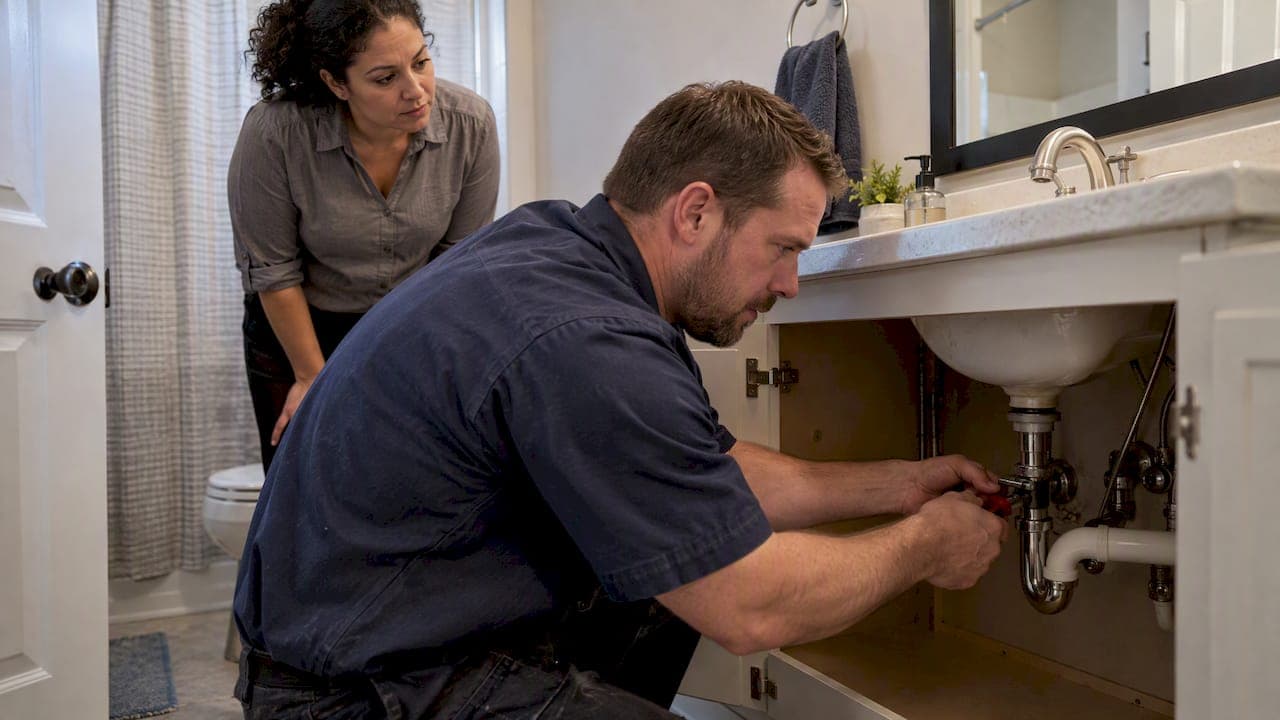
Maintenance coordination is the discipline of managing a property's work orders, vendors, and preventive schedules so that repairs happen before they become emergencies. Owners get predictable costs, tenants get faster fixes, and operations teams get a system instead of a daily scramble. Done well, it cuts reactive spending and keeps small issues from turning into after-hours calls.
TL;DR:
- Set tiers: life safety emergencies need same day action, urgent jobs need 24 to 48 hours, and routine requests need three to five working days.
- Choose a CMMS that tracks each work order through closeout, automates preventive schedules, supports field updates and photos, and links invoices to the original job.
- Prequalify emergency vendors before trouble starts, verifying insurance, rates, and 24 hour availability; document who can approve after hours spending above set limits.
- Hire coordinators with one to three years of maintenance experience and CMMS familiarity; target independent triage by day 60 and vendor authority by day 90.
Table of Contents
- What does a maintenance coordinator actually do?
- Skills, traits, and qualifications that make a coordinator effective
- The core workflow: intake, triage, scheduling, closeout
- Tools, CMMS, and integrations that cut manual work
- Emergency response, escalation, and vendor networks
- Metrics and reporting that prove the coordinator's value
- Hiring, training, and scaling the role
- A best-practice checklist for maintenance coordination
- How OneSource Real Estate runs maintenance coordination in practice
- What I'd prioritize first
- How we help owners simplify maintenance coordination
- FAQ
- Sources
What does a maintenance coordinator actually do?
A maintenance coordinator owns the daily mechanics of keeping a property running: logging incoming work orders, assigning priority, scheduling technicians or vendors, tracking parts, and confirming the job closed out correctly. Representative job descriptions list coordinating HVAC, plumbing, electrical, and fire safety inspections alongside vendor management, recordkeeping, and basic procurement support.
The coordinator usually reports to a maintenance or property manager and hands off anything beyond routine scope, major capital repairs, legal disputes, or large emergency spend, to that manager for approval. Day to day, the coordinator handles intake calls, dispatches a plumber for a leaking faucet, and updates the work-order log. They escalate when a tenant reports no heat in winter, when a vendor flags a structural issue, or when a repair estimate exceeds their spending authority.
Clear handoff rules matter more than job titles. A coordinator who knows exactly which five situations require a manager's sign-off moves faster on everything else.

Skills, traits, and qualifications that make a coordinator effective
The strongest coordinators combine a technical baseline (how HVAC, plumbing, and electrical systems normally behave, plus basic safety awareness) with comfort navigating a CMMS or work-order platform. Neither alone is enough.
Soft skills carry equal weight: clear communication with tenants and vendors, the ability to negotiate vendor rates and timelines, and sound judgment about what's urgent versus what can wait a week. Employers typically look for one to three years of maintenance or facilities experience, familiarity with a work-order system, and sometimes a trade certificate or OSHA safety training. A CMMS coordinator position often adds data-integrity oversight, making sure the system itself stays accurate and usable for reporting.
The core workflow: intake, triage, scheduling, closeout
Every reliable maintenance program runs on the same four-step loop, regardless of portfolio size.
Intake should funnel through one or two channels (a tenant portal and a phone line for emergencies) and capture location, contact information, a hazard flag, and a photo whenever possible. Skipping any of these fields usually means a second call to get the details right.
Triage sorts requests into priority tiers. HUD's maintenance manual for public housing recommends standardized categories and documented time standards, such as resolving emergencies within 24 hours, preparing vacant units within a few weeks, and answering routine requests within three working days. A workable tier system looks like: emergency (life safety, same day), urgent (24 to 48 hours), routine (three to five business days), and planned (scheduled around preventive calendars).
Scheduling should group jobs by location and trade to cut vendor windshield time and avoid paying for multiple trips to the same building; for practical cleaning and maintenance coordination tips, facility managers can refer to commercial property maintenance advice. Closeout means the technician documents what was done, the coordinator confirms the fix with the tenant or site visit, and the record locks with photos, cost, and time to repair attached. Skipping closeout documentation is the single most common reason reporting breaks down later.

Tools, CMMS, and integrations that cut manual work
A computerized maintenance management system is the backbone of coordination at any scale beyond a handful of units. The right platform centralizes work orders, runs preventive schedules automatically, tracks parts inventory, and gives technicians mobile access in the field.
Look for these capabilities before committing to a platform:
- Work-order lifecycle tracking from intake through closeout with timestamps at each stage.
- Preventive maintenance scheduling that triggers recurring tasks automatically rather than relying on memory.
- Mobile access so technicians can update status, add photos, and close jobs from the field.
- Vendor portals that let outside contractors receive, accept, and update work orders directly.
- Integration with procurement or accounts payable so invoices tie back to the original work order.
A coordinator who spends more time re-entering data across systems than managing actual repairs is a sign the CMMS setup needs a second look.
Emergency response, escalation, and vendor networks
Life-safety issues, fires, gas leaks, sewage backups, loss of heat, demand immediate or same-day action in many jurisdictions under the implied warranty of habitability. Non-life-safety issues (a slow drain, a cosmetic repair) can wait on a normal routine schedule.
Meeting those windows requires a pre-qualified network of vendors with verified insurance and confirmed 24/7 availability, negotiated before an emergency, not during one. Trying to find a contractor mid-crisis almost always costs more and takes longer than working from a vetted list. Our guide to vendor network management covers how to build and maintain that list across a portfolio.
Escalation authority should be written down: who can approve emergency spend above a set dollar threshold, and who gets notified after hours. A shared, regularly updated emergency directory, not a spreadsheet one person keeps on a personal laptop, keeps response times consistent as a portfolio grows.
Metrics and reporting that prove the coordinator's value
A handful of KPIs tell the whole story: emergency response time, mean time to repair, the ratio of preventive to reactive work orders, cost per work order, and vendor SLA adherence. The Department of Energy's FEMP operations and maintenance guide recommends tracking metrics beyond simple reliability, framing effective maintenance as a coordinated program across operations, maintenance, engineering, training, and administration.
HUD's manual and FEMP's guide both serve as useful benchmarks when setting internal targets, since they publish sample time standards rather than vague goals. Report operational detail to on-site staff weekly and a summarized trend view (cost, response time, PM compliance) to leadership monthly.
Hiring, training, and scaling the role
Hire for CMMS familiarity, one to three years of maintenance or facilities experience, and clear communication skills; add licenses only where local trade work requires them. A solid onboarding plan covers system access and shadowing in the first 30 days, independent triage by day 60, and vendor negotiation authority by day 90.
Add headcount when response times slip despite a working system. Add a third-party service or better software when the bottleneck is process, not people.
A best-practice checklist for maintenance coordination
Keep this list close to the SOP a new coordinator receives on day one:
- Standard intake fields: location, contact, hazard flag, photo, access constraints.
- Priority tiers defined in writing: emergency, urgent, routine, planned, each with a response window.
- Vendor pre-qualification: verified insurance, confirmed rates, 24/7 availability on file.
- Preventive maintenance cadence scheduled and reviewed quarterly.
- Emergency directory updated whenever a vendor relationship changes.
- Invoice controls tying every payment to a closed, documented work order.
How OneSource Real Estate runs maintenance coordination in practice
We build our vendor networks around the same pre-qualification standard outlined above: verified insurance, confirmed emergency availability, and negotiated rates before anything breaks. We pair that with maintenance reserve planning so repairs draw from a predictable fund rather than surprise owner bills, and standardized make-ready procedures between tenants.
Pro Tip: Build your emergency directory with these fields at minimum: vendor name, trade, phone, insurance expiration date, confirmed hourly rate, and average response time.
What I'd prioritize first
If you fix one thing, pre-qualify your emergency vendors before you need them. If you fix two, write down your triage rules so every coordinator applies the same standard. Tie whatever KPIs you track back to what the owner actually cares about: cost, uptime, tenant retention.
— Matt
How we help owners simplify maintenance coordination
Running vendor networks, tracking preventive schedules, and handling after-hours calls takes a dedicated system, which is exactly what our Monthly Management service covers for a 10% monthly fee. We also handle Tenant Placement to fill vacancies with qualified renters, and our Owner Benefit Package (OBP™) adds further protection for $40 per month per unit.
If your current setup means tracking vendors yourself or waiting on reports that never quite add up, see what full-service management covers on our property management page.
FAQ
What does a maintenance coordinator do?
A maintenance coordinator logs and triages incoming work orders, schedules technicians or vendors, tracks parts and costs, and confirms each job closes out properly. They typically report to a property or maintenance manager and escalate anything beyond their approval authority.
What are the 5 basic maintenance skills?
Core skills generally include basic knowledge of building systems (HVAC, plumbing, electrical), safety awareness, CMMS or work-order software literacy, clear communication with tenants and vendors, and the judgment to prioritize competing requests. Employers typically look for a mix of hands-on experience and systems comfort rather than deep expertise in every trade.
What are the 3 P's of maintenance?
Definitions vary across industries, but a common version refers to planning, prioritizing, and performing: scheduling work in advance, ranking it by urgency, and then completing and documenting the job. The exact framing differs by organization, so check how your own maintenance program defines it.
What are the 5 basic functions of maintenance?
A maintenance program generally functions through intake, triage or prioritization, scheduling, execution, and closeout documentation. The Department of Energy's FEMP guide frames this more broadly as operations, maintenance, engineering, training, and administration working together as one coordinated program.
Sources
- Implied warranty of habitability — Cornell Law School Legal Information Institute
- Managing maintenance in public housing: a guide for administrators and supervisors — HUD
- Operations & Maintenance Best Practices Guide: Release 3.0 — U.S. Department of Energy (FEMP)
- Job description: Maintenance Coordinator — Second Harvest (example job description PDF)
- Position: Computerized Maintenance Management Systems Coordinator — PGCPS