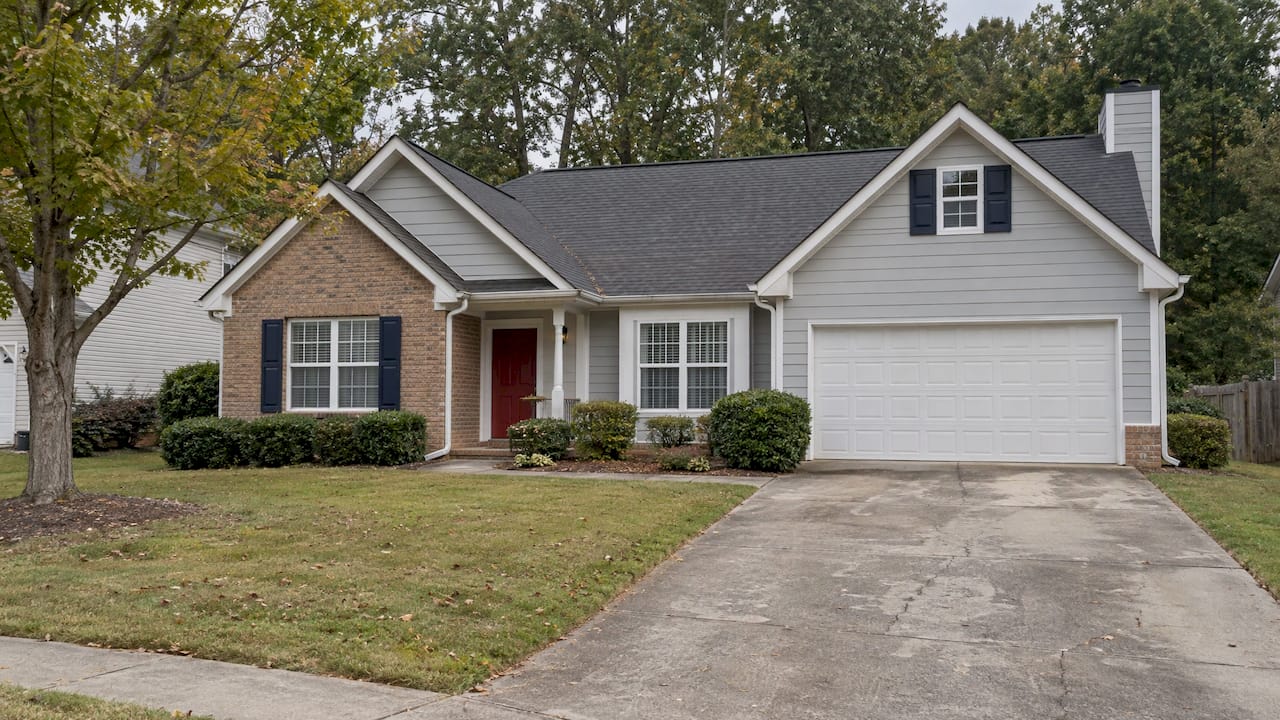
A vacancy marketing plan is a written sequence for filling an empty rental: set the rent from real comparables, start marketing before the old tenant leaves, publish a listing with strong photos, answer every inquiry fast, and track where prospects drop off. The goal is the fewest vacant days at the right rent, not a signed lease at any price. Every empty day is lost income: 15 extra vacant days on a $2,000 rental cost about $1,000. For investors in Atlanta who would rather not run this routine themselves, our property management team handles vacancy marketing, tenant screening and placement as part of full-service management.
TL;DR
- Start marketing during the current tenant's notice period, not after the keys come back.
- Price from nearby comparable rentals and the season, and adjust if you see no qualified interest after about two weeks.
- Use 10 to 20 bright photos, a front-loaded headline and a listing that describes the property, never the tenant.
- Reply to leads within minutes, apply the same written screening criteria to everyone, and track days vacant, show-to-application and application-to-approval rates.
- Fair housing rules cover ad copy and ad targeting, so build compliance into the plan from day one.
Table of Contents
- What a vacancy marketing plan should achieve
- Step 1: Start before the unit is empty
- Step 2: Identify the target renter and set the asking rent
- Step 3: Prepare the unit and shoot the photos
- Step 4: Write a listing that converts
- Step 5: Choose your channels
- Step 6: Handle inquiries, showings and applications
- Step 7: Measure what the plan produces
- Fair housing: keep the plan lawful
- Beyond one vacancy: build a repeatable plan
- Our perspective
- Let us run your vacancy plan
- FAQ
- Sources
What a vacancy marketing plan should achieve
Think of the plan as a timeline with one job: shorten the gap between one tenant's last day and the next tenant's first rent payment. Rent is the one number that drives everything else. Price too high and the unit sits. Price too low and you leave money on the table for the whole lease term.
The plan has seven parts:
- Pre-marketing during the notice period
- Target renter and asking rent
- Unit preparation and photos
- The listing itself
- Channels
- Inquiry, showing and application handling
- Measurement and fair housing checks
The sections below follow that order. If you manage one house in Marietta or a small portfolio across Alpharetta, Johns Creek and Powder Springs, the sequence is the same.
Step 1: Start before the unit is empty
The cheapest vacancy day is the one that never happens. When a tenant gives notice, your plan starts that week.
- Confirm the move-out date in writing. Everything else counts back from it.
- Ask for access for photos or a walk-through. Many tenants will agree to a short visit with notice, which lets you list the unit with an accurate available date.
- Schedule the turn. Book cleaning, paint touch-ups and repairs for the day after move-out so work does not stall the listing.
- Start the listing early. Publishing with a future available date lets prospects inquire and book tours while the current tenant is still there. Whether you show an occupied unit depends on your lease and local notice rules, so confirm what your lease allows.
A related question is whether the current tenant would simply stay. A renewal needs no marketing and no turnover work. We cover the renewal side in our work for owners, where lease drafting and renewal sits alongside placement.
Step 2: Identify the target renter and set the asking rent
Know who the unit fits
Start with the property, not a stereotype. Location, bed and bath count and the amenities set the pool of likely renters. Apartments.com's guidance on target markets suggests looking at the area, the architecture and the patterns in your previous tenants. A quiet suburban street near good schools draws a different applicant pool than a downtown studio.
A practical shortcut: look at your last three to five good tenants. What did they value? Commute, a fenced yard, in-unit laundry, pet policy? Those answers decide what goes in your headline and which photos lead.
There is one limit. You use that knowledge to decide what to feature, but you cannot name a preferred type of tenant in the ad. More on that in the fair housing section.
Price from comparables and season
Pull five to ten comparable rentals nearby, matched on size, condition, bed and bath count and amenities. Compare asking rents, and note how long each has been listed. A comparable that has sat for six weeks tells you where the ceiling is.
Season matters too. Realtor.com's rental listing advice quotes a property manager who prices slightly lower in December and aims for the higher end in June, while warning that cutting rent too aggressively in slow months can backfire. Renters can see detailed market data, so they spot an over- or under-priced unit quickly.
For Atlanta specifically, we lay out how to price within a tight band and account for concessions in our Atlanta rental pricing guide.
Worked example. Say comparables run from $1,850 to $2,000. Your unit has an updated kitchen and a garage, so you list at $1,975. If you get several inquiries but few applications, the price may be fine and the photos or listing copy may be the issue. If you get almost no inquiries after about two weeks in a busy season, the rent is the first thing to revisit. Do not wait a month to react: at $1,975 a month, each week costs you roughly $460.

Step 3: Prepare the unit and shoot the photos
Photos decide whether a prospect clicks. Prepare the unit first, then shoot.
- Clean and declutter. Fresh paint, spotless kitchens and bathrooms, working fixtures and clear closets photograph far better than any editing can fix. If the previous tenant left furniture or debris, getting a unit show-ready quickly before the camera comes out saves reshoots.
- Shoot in daylight. Open the blinds, turn on every light and keep the camera level.
- Shoot from corners. It shows the true size of each room.
- Cover everything. Aim for 10 to 20 photos: the exterior, living areas, the kitchen from more than one angle, every bedroom and bathroom, closets, outdoor space, parking and any standout feature such as a fireplace or a screened porch.
- Add a short walk-through video if you can. It filters out prospects who would not like the layout.
Bare rooms can look cold, so light staging, such as a plant or a rug, helps. For the full routine, see our rental listing photo guide.
Step 4: Write a listing that converts
The listing is your first showing. Prospects scan, so put the facts they filter on at the top.
Headline. Bed and bath count, one standout feature, the area, and the rent. Example: "3 bed, 2 bath with fenced yard near Marietta Square, $1,975."
Body. Short blocks, not one long paragraph. Put deal-breakers where nobody can miss them: parking, pet policy, laundry, lease length and available date. List utilities and who pays them.
Amenity checkboxes. Fill in every field on the listing form. Searches are filtered by those boxes, and an unchecked box can hide your unit from renters who would love it.
Screening criteria. State them: income requirement, credit expectations, pet policy and move-in timing. Published criteria save time, because unqualified prospects screen themselves out.
Clear way to apply. One link, one next step.
If you want wording to start from, we collected rental listing description ideas that landlords can adapt.
Step 5: Choose your channels
Most landlords get the best return from broad free distribution plus strong photos and correct pricing, not from paid boosts. In practice that means:
- Major rental listing sites. One listing is usually syndicated to many. How that works, and the mistakes that create duplicate or stale listings, is explained in our listing syndication guide.
- Social media. Realtor.com's advice includes posting in local Facebook groups, LinkedIn and Instagram, and reaching out to past applicants who may still be searching.
- A yard sign for single-family homes and small buildings. It costs little and catches neighborhood traffic.
- Targeted ads in competitive stretches, with the fair housing caution below.
Keep a single source of truth for price and availability. When you change the rent, change it everywhere on the same day.
Step 6: Handle inquiries, showings and applications
A well-built listing can still fail if replies are slow. Zillow's Multifamily Rentals Conversion Playbook reports that properties responding within the first one to two minutes are 40% more likely to engage a prospect than those that wait a day or longer. It also suggests qualifying each lead on location, price, motivation and appointment.
A workable routine:
- Reply fast with an automatic acknowledgment and a personal follow-up the same day.
- Ask every prospect the same screening questions before booking a tour: move-in date, number of occupants, income and pets.
- Offer showing slots in blocks, such as two evenings and one weekend morning, to batch tours.
- Send the application link right after the tour while interest is high.
- Screen against your written criteria and document the decision. Our tenant screening criteria checklist lays out what to include, and our guide to legal rental application questions covers consent and what you can ask.
- Sign the lease and collect the deposit and first month's rent to take the unit off the market.
Each step has a drop-off point. Tracking them tells you what to fix.
Step 7: Measure what the plan produces
You do not need a dashboard. A simple weekly note per unit is enough. Track:
| Metric | What it tells you | If it is weak |
|---|---|---|
| Days vacant | Overall plan performance | Review every step below |
| Inquiries per week | Reach and price attraction | Check price, photos, headline |
| Inquiry-to-tour rate | Response speed and qualifying | Reply faster, tighten screening questions |
| Tour-to-application rate | Whether the unit and rent appeal in person | Review rent, condition, presentation |
| Application-to-approval rate | Whether you attract qualified applicants | Clarify criteria in the listing |
| Lead source | Which channels work | Drop the ones that produce nothing |
Write down why leads were lost: price, location, pets, timing. After two or three vacancies, patterns appear, and the next plan starts from evidence instead of guesses.
Fair housing: keep the plan lawful
The federal Fair Housing Act prohibits discrimination in housing based on race, color, national origin, religion, sex, disability and familial status. That includes ads. On May 2, 2024, HUD issued guidance on advertising with AI and online targeted ads, explaining that the Act applies there as well, and that targeting which unlawfully denies housing information based on protected characteristics may violate it.
In practice:
- Describe the property, not the tenant. "Two-bedroom with fenced yard, near parks and transit" is fine. "Perfect for young professionals" or "ideal for a single person" expresses a preference touching on age and familial status.
- Check ad settings, not only the words. Audience choices on social platforms are part of the ad.
- Apply identical criteria to every applicant, in the same order, with the same documentation.
- Review anything a vendor or tool writes for you. Responsibility stays with the housing provider.
Fair housing and landlord-tenant law vary by state and city. For a specific question about an ad or a denied application, ask a Georgia real estate attorney.
Beyond one vacancy: build a repeatable plan
Once a unit is filled, keep the plan alive:
- Reuse the assets. Photos, a description template and your screening criteria carry over to the next turn with small updates.
- Protect the next renewal. Contact tenants well before the lease end window, respond visibly to maintenance requests and make renewal simple to sign.
- Keep a one-sentence value proposition for the property, such as "quiet, pet-friendly, close to the Alpharetta greenway." It keeps your photos, copy and pricing pointed the same way.
- Review after each lease. Note days vacant, rent achieved versus first asking rent, and the channel that produced the tenant.
Our broader walk-through of the same ground is in the rental marketing strategy guide, and what tenant placement involves shows how the process runs end to end.
Our perspective
A vacancy plan is only as good as the person who runs it on the day the notice arrives. Most owners know what to do. The trouble is doing it all at once: photos, pricing, replies within minutes, showings, screening, lease drafting, while holding down another job.
That is why we build vacancy marketing into full-service management for Atlanta investors. Our approach covers vacancy marketing, tenant screening and placement, lease drafting and renewal, and maintenance coordination, so the unit's next tenant is lined up while you do something else.
Pricing is transparent: a 10% monthly management fee, a $250 onboarding fee and a $500 lease renewal fee. Owners who want extra cover can add our Owner Benefit Package at $40 per month per unit. We would rather you see the whole fee structure up front than discover it later.
If you are an investor weighing a purchase or planning your first rental in Atlanta, our consulting sessions help you map the numbers, including expected vacancy, before you commit.
Matt
Let us run your vacancy plan
If you own rental property in Atlanta, Marietta, Johns Creek, Alpharetta, Powder Springs or Austell and want the plan above handled for you, our property management service covers vacancy marketing, tenant screening and placement, rent collection, financial reporting, maintenance coordination, legal compliance, eviction support and lease renewal. Management is 10% monthly, onboarding is $250 one-off and lease renewal is $500. Tenant placement and tenant procurement are also available as standalone services. See the details on our property management page.
If you are still deciding whether a rental fits your portfolio, book a consulting session: $300 for 30 minutes or $500 for a 60-minute deep dive.
FAQ
How early should I start marketing a vacancy?
As soon as the tenant gives notice. Confirm the move-out date, schedule cleaning and repairs for the day after, and publish the listing with a future available date. That way tours and applications can happen before the unit is empty.
How do I know if my rent is too high?
Compare against five to ten similar nearby rentals and watch your own results. If a listing draws almost no qualified interest after about two weeks, especially in a busy season, review the price first, then the photos and headline. Adjust in measured steps rather than a single deep cut.
What should a rental listing never say?
It should not state a preference for or against any protected group, such as age, family status, religion, national origin or disability. Describe the home and the neighborhood instead, for example "fenced yard near parks and transit" rather than "great for singles."
What is the difference between a vacancy marketing plan and a rental marketing plan?
They are used almost interchangeably. A vacancy plan focuses on one empty unit and the days it sits. A rental marketing plan is the reusable version, with templates, channels, criteria and tracking you apply to every turnover across your portfolio.
Sources
- Understanding Your Target Market, Apartments.com
- How To List Your Rental Property for Success, Realtor.com
- Multifamily Rentals Conversion Playbook, Zillow
- HUD Issues Fair Housing Act Guidance on Applications of Artificial Intelligence, May 2024