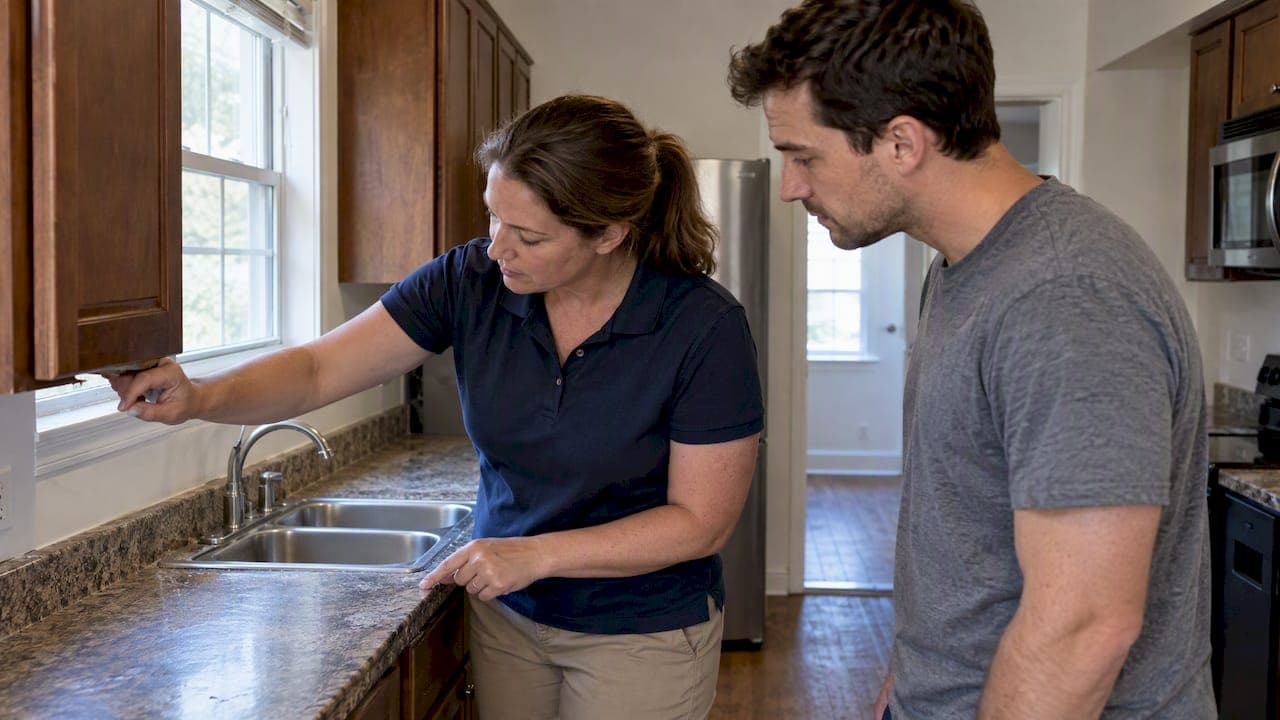
A good tenant move-in process runs in a fixed order: sign the lease, collect the money, confirm the unit is truly ready, document its condition together with the tenant, hand over keys and information, and keep every record. In Georgia, that order matters. For many landlords, the signed list of existing damage must reach the tenant before the deposit is paid and the tenant moves in. Below is the sequence we use for Atlanta-area rentals, what to give the tenant on day one, and where owners most often get caught.
TL;DR
- Build the process around a signed, room-by-room condition report, backed by dated photos or video, not around the key handoff.
- In Georgia, landlords who own more than 10 rental units, or who use a management agent, must follow a statutory inspection procedure. Smaller self-managing owners should still document everything.
- Release keys only after the lease is signed, the money is received, the unit is vacant and clean, and safety work orders are closed.
- Give the tenant a complete handoff packet: signed condition list, lease and addenda, keys, utility and payment instructions, and maintenance and emergency contacts.
Table of Contents
- Why the move-in process decides how the tenancy ends
- The tenant move-in process, step by step
- Before move-in: make the unit ready
- The move-in condition report
- What Georgia law says about the move-in inspection
- What to give the tenant on move-in day
- Questions that come up on move-in day
- How long should the walkthrough take?
- Our perspective on move-in
- Let us run move-in for you
- FAQ
- Sources
Why the move-in process decides how the tenancy ends
Most deposit disputes are decided on the first day, not the last. When a tenant moves out, the question is always the same: was this damage here before, or did it happen during the lease? Without a dated baseline, the answer is one person's word against another's.
A signed move-in record turns that argument into a comparison. HUD's sample move-in/move-out inspection form is built exactly this way, with a move-in condition column, a move-out condition column and a cost-to-correct column side by side. The form works only if the first column was filled in honestly and signed.
The second reason is simpler. A tenant who receives a clean, safe, well-documented home and a clear packet of information starts the lease trusting you. That tends to show up later in how repair requests are reported and how rent is paid.
The tenant move-in process, step by step
This is the sequence we recommend for an Atlanta-area rental. It follows Georgia guidance and the Georgia REALTORS® residential lease form, which ties possession to payment and vacancy.
- Approve the applicant and execute the lease. Screening is finished before anyone signs. If you want to know what applicants should submit, see our guide to rental application documents Georgia landlords expect. For lease terms, our 2026 guide to the Georgia REALTORS® residential lease walks through the form.
- Collect the security deposit and first month's rent. If the lease starts mid-month, collect the prorated amount the lease specifies. Record the amount, date and method.
- Confirm the prior occupant is gone and the unit is ready. Do not promise a date to the new tenant until you have seen the unit empty.
- Finish make-ready work. Cleaning, repairs, lock changes and safety checks happen before the walkthrough, not after.
- Provide the pre-occupancy damage list. Where the statute applies, this goes to the tenant before the deposit is paid and the tenant moves in.
- Let the tenant inspect and write down disagreements. The tenant's notes become part of the record.
- Sign, and deliver a copy. Both parties sign the condition report. The tenant keeps a copy.
- Verify utilities and insurance requirements. Confirm accounts are in the tenant's name from the start date, and that any renter's insurance the lease requires is in place.
- Release keys and access devices on the agreed start date.
Notice that keys come last. A key handed over before payment clears or before the unit is ready is the most common way a move-in goes wrong.
Before move-in: make the unit ready
Cleaning is the part everyone remembers. It is also the smallest part of readiness. HUD's counseling training lists what landlords are typically responsible for: safe locks and windows, working plumbing and heating, maintained major systems and appliances, housing-code compliance, adequate fire protection, and a home in good condition at move-in.
Turn that into a pre-move-in checklist:
- Rekey or change locks, and test every door and window latch.
- Run the furnace and air conditioning, and confirm the water heater produces hot water.
- Run every faucet, flush every toilet, and check under sinks for leaks.
- Test smoke alarms and any carbon monoxide detectors, and replace batteries.
- Test every outlet, light switch, garbage disposal and appliance.
- Check for pests, mold and water stains on ceilings.
- Professionally clean, including inside appliances and cabinets, and clean or replace HVAC filters.
- Close every open work order that touches habitability or safety before you schedule key release.
Doors and hardware deserve more attention than they usually get, since they are the first thing a tenant touches and a basic part of safe occupancy. A door and hardware checklist written for commercial project managers is a useful model for inspecting closers, locks and latches systematically, even though a house is a simpler job.
We cover this stage in more depth in the make-ready checklist rental owners and tenants actually need. If your unit has repair issues outstanding, read our piece on Georgia landlord repair duties first.
The move-in condition report
A move-in condition report is a dated baseline of every room, fixture, appliance and safety item at the moment the tenant takes possession. Its job is to separate pre-existing defects from damage and from ordinary wear.
HUD's sample form is a good professional structure. It covers entrances and halls, living and dining areas, kitchen, bedrooms, bathrooms, heating and air conditioning, hot-water equipment, thermostats, doorbells, outlets and fire alarms. It also tells the inspector to check water pressure and hot water at plumbing fixtures. That means testing, not just looking.
What to record in each room
| Room or system | What to check and note |
|---|---|
| Entrance and halls | Door, lock, doorbell, flooring, walls, ceiling, closet |
| Living and dining | Floors, walls, windows and screens, outlets, light fixtures |
| Kitchen | Every appliance operating, sink and faucet, cabinets, countertops, disposal |
| Bedrooms | Windows and locks, closets, flooring, smoke alarm |
| Bathrooms | Toilet, tub or shower, water pressure, hot water, caulk, exhaust fan |
| Mechanical | Heating, air conditioning, thermostat, water heater, filters |
| Safety | Smoke and CO detectors, window locks, exterior lighting |
Photos, video and signatures
The checklist is the baseline. Photos and video are the evidence behind it. Take timestamped photos of each room from more than one angle, close-ups of existing marks, and a slow walkthrough video narrating the condition. Store the files with the signed report under the tenant's name and lease date.
Then have the tenant walk the unit and add their own notes. A tenant who found a stained carpet on day one and wrote it down protects you as much as themselves, because the disagreement is settled in writing while it is fresh.
What Georgia law says about the move-in inspection
Georgia's inspection procedure sits inside the security deposit statute, O.C.G.A. § 44-7-33. According to the Georgia landlord-tenant handbook, its purpose is for landlord and tenant to agree on the condition of the home before occupancy. For covered landlords, that means a complete list of existing damage must be given to the tenant before the tenant pays the deposit and moves in. The tenant may inspect, note disagreements in writing, and must receive a copy.

Who is covered
The handbook applies the procedure to landlords who own more than 10 rental units (including units owned by a spouse or minor children), or who use a management agent regardless of unit count. A self-managing owner with fewer units is not required to follow it. We still advise doing so, since a signed baseline is your best evidence if a deduction is challenged.
This is where investors get surprised. Hiring a manager can change which workflow applies to a single-house owner. If you invest in Georgia rentals through a manager, ask two questions: which statutory process applies to my portfolio, and who keeps the signed evidence?
The deposit clock
The same handbook states that the deposit balance is generally due back within 30 days after the tenant vacates when the statutory conditions apply. Facts and lease terms matter, so treat that as the general rule rather than a guarantee. For a fuller treatment, see our guide to Georgia security deposit law. Thirty days is short when you also need to find the baseline report, photos, payment record and key inventory. Keep them together from day one.
For questions about your specific situation, such as a deposit dispute or a portfolio near the unit threshold, talk to a Georgia real estate attorney. This article is a process guide, not legal advice.
What to give the tenant on move-in day
The state handbook specifically supports the signed existing-damage list and the tenant's copy. The rest of this list is best practice for a complete handoff, and each item should be checked against your lease and any local requirements.
- The signed condition report, with the tenant's notes and a copy
- The fully executed lease and every addendum
- All keys, mailbox keys, garage openers, fobs and building access devices, logged on an inventory with quantities
- Utility responsibility and setup information, including which providers serve the address
- Payment instructions: how, where and when rent is due, and what late fees the lease sets
- Maintenance request instructions and emergency contacts, with a clear line between an emergency and a routine request
- Parking and storage rules
- Any HOA or community rules incorporated into the lease
If the home is in an HOA community, check the association's rental rules before the tenant arrives. Our article on Georgia HOA rental restrictions explains what owners and boards can require.
A short welcome letter
A welcome letter is not a legal document, but it is the tenant's first impression of how you operate. Keep it to one page: thank them, state the move-in date, name who to call for repairs and emergencies, say how to submit rent, and tell them when you will next be in touch. Avoid repeating lease terms in different words, since inconsistencies between a letter and a lease cause arguments. Point to the lease instead.
Questions that come up on move-in day
Can the tenant bring in another person?
Not automatically. The signed lease's occupancy, guest, assignment and subletting clauses control. If the lease requires written approval, require it. Screen the additional adult, and add them through a written addendum. Do not treat a long-term unapproved occupant as a casual guest. Fair housing rules still apply, so base any occupancy limit on legitimate standards you apply consistently, never on assumptions about families or protected classes.
What if the tenant disputes something on the report?
Write it on the report, and fix it or agree on how it will be treated. Do not argue the tenant out of a visible defect. A recorded disagreement is cheaper than a deposit fight a year later.
What if the tenant reports a problem a week later?
HUD's guidance treats move-in as shared responsibility: tenants should inspect and report problems, and landlords must deliver a safe, code-compliant home. A written channel for reporting, set up on day one, keeps this from depending on anyone's memory of a verbal promise.
How long should the walkthrough take?
There is no official U.S. or Georgia standard for duration, and HUD does not prescribe one. The right measure is completeness. Do the inspection while the unit is empty, so furniture does not hide defects. Test systems rather than just looking at them. Record exceptions and get signatures. Schedule enough time for a room-by-room review instead of promising a fixed number of minutes. A small condo and a five-bedroom house in Alpharetta need very different blocks of time.
Our perspective on move-in
We manage residential rentals in Atlanta and surrounding areas, and we see the same pattern again and again. Owners put their energy into marketing the vacancy and screening the applicant, then treat move-in as a key exchange. That is backwards. The move-in file is the document you will reach for when something goes wrong, and it is the only part of the tenancy you fully control.

Our view is simple. Do the make-ready work first, close safety items before you set a date, document with the tenant in the room, and keep the evidence in one place. When an investor tells us they are self-managing a few houses and skipping the formal report because the statute does not require it, we ask them to do it anyway. The cost is an hour. The benefit is a deposit decision that rests on facts.
If you hire a manager, ask what their move-in file actually contains and who holds it. A checklist is easy to promise. A signed, photo-backed baseline you can retrieve 30 days after move-out is the real test.
— Matt
Let us run move-in for you
If you own rental property in Atlanta, Marietta, Johns Creek, Alpharetta or nearby, our property management service covers tenant screening and placement, lease drafting, rent collection, maintenance coordination and legal compliance. The published fees are 10% per month for management, a one-time $250 onboarding fee and a $500 lease renewal fee. The optional Owner Benefit Package (OBP™) is $40 per month per unit. If you are weighing whether to rent out or sell a property, you can also book a consulting session to talk through your numbers.
FAQ
What is the first step in the tenant move-in process?
The first step is a fully executed lease, followed by collection of the security deposit and first month's rent. Before that, you should already have approved the applicant and confirmed the unit will be vacant and ready. Keys come last.
What should a landlord give a tenant when they move in?
Give the signed condition report with a copy, the executed lease and addenda, all keys and access devices, utility and payment instructions, maintenance and emergency contacts, and parking or community rules. Georgia's handbook specifically supports the signed damage list and the tenant's copy. The remaining items are good practice to confirm against your lease.
What is a move-in property condition checklist?
It is a dated record of the condition of every room, fixture, appliance and safety item when the tenant takes possession. Later, it lets you tell pre-existing defects from damage and normal wear. HUD publishes a sample form with matching move-in and move-out columns.
Do all Georgia landlords have to do a move-in inspection?
The statutory procedure applies to landlords who own more than 10 rental units or who use a management agent. Smaller self-managing owners are not required to follow it, but documenting condition is still prudent. Check with a Georgia attorney if your situation is close to the line.
How long do I have to return a Georgia security deposit?
The state handbook says the balance is generally due within 30 days after the tenant vacates, when the statutory conditions apply. Specific facts and lease terms can change the answer, so confirm before making deductions.
Sources
- Georgia Landlord-Tenant Handbook (2025)
- HUD Appendix 5: Sample Move-In/Move-Out Inspection Form
- HUD Housing Counselors Training, Module 6.1