
Under Georgia law, security deposits are governed by Title 44, Chapter 7, Article 2 of the Georgia Code. Landlords must hold deposits in a dedicated escrow account or post a surety bond, return the deposit within 30 days of regaining possession, and mail an itemized statement for any deductions. Fail to follow the procedure, and landlords risk owing three times the withheld amount plus attorney fees.
The first move matters. Tenants should photograph every room at move-in, provide a written forwarding address when they leave, and send a formal demand letter if the deposit is not returned within 30 days. Landlords should disclose the escrow account location or bond details in writing before the tenant moves in, conduct a documented move-in inspection, and keep every receipt.
Key statutes at a glance:
- § 44-7-31: Escrow account requirement and written disclosure of account location
- § 44-7-33: Move-in damage list, tenant inspection rights, and dissent procedures
- § 44-7-34: 30-day return deadline and itemized statement requirement
- § 44-7-35: Treble damages and attorney fees for qualifying landlords who improperly withhold
Table of Contents
- What does Georgia security deposit law actually require?
- What landlords must do to stay compliant
- How tenants can document, demand, and recover a deposit
- What landlords can legally deduct from a security deposit
- Are there limits on how much a landlord can charge?
- What penalties apply when a landlord breaks the rules?
- Edge cases: property sales, unclaimed deposits, and out-of-state landlords
- Key Takeaways
- What most landlords get wrong about deposit disputes
- How professional property management reduces deposit disputes
- Useful sources
- FAQ
What does Georgia security deposit law actually require?
Georgia Code §§ 44-7-30 through 44-7-37 lay out a complete procedural framework. Each section assigns a specific duty, and missing any one of them can shift the legal outcome significantly.
§ 44-7-30 — Definitions and scope. This section defines "security deposit" broadly. It covers any advance payment intended to protect the landlord against damage, unpaid rent, or lease violations. That breadth matters, because it pulls in pet deposits, damage deposits, and advance rent under the same rules unless the lease explicitly designates a payment as a nonrefundable fee.
§§ 44-7-31 and 44-7-32 — Escrow or surety bond. Landlords who own a landlord with a larger portfolio of units, or who use a management agent, must place the deposit in a dedicated escrow account held in trust at a bank or similar institution. The landlord must give the tenant written notice of the account's location. Alternatively, under § 44-7-32, a landlord may post a surety bond with the clerk of the superior court in the county where the property sits.
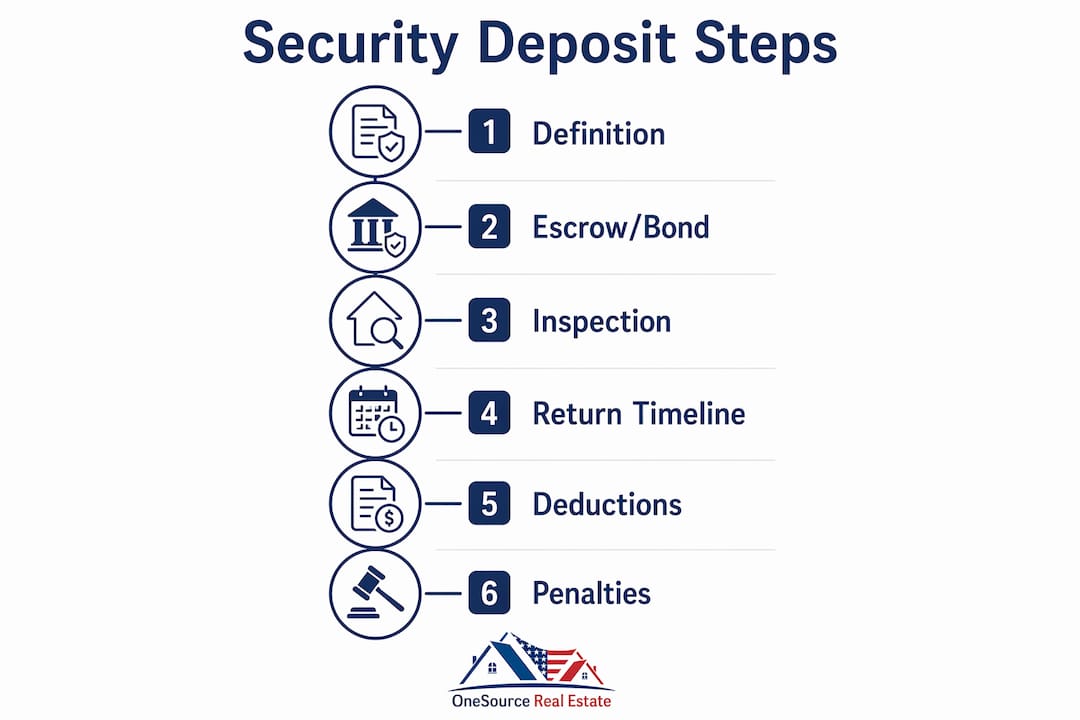
§ 44-7-33 — Move-in inspection and damage list. Landlords subject to the escrow requirement must provide a written list of existing defects before the tenant takes possession. The tenant has the right to inspect and either sign the list or note disagreements in writing. A landlord who skips this step loses significant leverage: failure to provide the damage list can forfeit the right to withhold deposit funds for damage later.
§ 44-7-34 — The 30-day return rule. After regaining possession of the unit, the landlord has 30 days to either return the full deposit or mail an itemized statement of deductions along with any remaining balance. The statement must go out by first-class mail to the tenant's last known address. If the mail is returned undelivered, the landlord must make reasonable efforts to locate the tenant. If those efforts fail, the funds become the landlord's property 90 days after the original mailing date.
§ 44-7-35 — Treble damages and attorney fees. When a landlord who owns more than ten units improperly withholds a deposit, the tenant may recover three times the wrongfully withheld amount plus attorney fees. The landlord can avoid treble damages by proving the withholding was a bona fide error made despite reasonable procedures to prevent mistakes.
§§ 44-7-36 and 44-7-37 address procedural details including how landlords handle deposits when a property is sold and how disputes are resolved when the tenant cannot be located.
What landlords must do to stay compliant
The Georgia Landlord-Tenant Handbook published by the Georgia Department of Community Affairs is the clearest plain-English guide to these obligations. Compliance is mostly a paperwork problem, not a judgment call.
Escrow and bond requirements:
- Owners of more than ten units and any landlord using a management agent must use a dedicated escrow account at a licensed financial institution.
- The account must be held in trust, separate from operating funds.
- As an alternative, post a surety bond with the clerk of the superior court in the property's county.
- Give the tenant written notice of the escrow account's location or the bond details before or at move-in.
Move-in inspection duties:
- Prepare a written list of all existing defects before the tenant takes possession.
- Walk through the unit with the tenant and obtain a signed acknowledgment.
- If the tenant disagrees with any item on the list, note the dissent in writing and keep a copy.
- Conduct a move-out inspection and document new damage with dated photos and written notes.
Recordkeeping:
- Keep copies of all signed inspection lists, lease agreements, and deposit receipts.
- Retain proof of mailing for the itemized statement (certified mail or a mailing receipt).
- Store repair invoices and contractor receipts for any amounts withheld.
Pro Tip: Mail the itemized statement by certified mail with return receipt requested. That postmark is your proof of the 30-day deadline, and the return receipt is your evidence of delivery. Without it, a tenant can credibly claim they never received the statement.
How tenants can document, demand, and recover a deposit
Most deposit disputes are won or lost before anyone files a court claim. The documentation you create at move-in is the evidence you rely on at move-out.
Step-by-step recovery process:
- Document condition at move-in. Photograph every room, every wall, every appliance. Date-stamp the photos. Review the landlord's damage list carefully and note any item you disagree with in writing before signing.
- Keep your copy of the move-in list. If the landlord never provided one, write a letter to the landlord describing the unit's condition and send it by certified mail within the first week.
- Provide a written forwarding address. Do this before or on the day you vacate. Without a forwarding address, the landlord's obligation to mail the refund is triggered by your last known address, which may delay or complicate the return.
- Document condition at move-out. Photograph the same areas you shot at move-in. Clean the unit thoroughly and remove all belongings.
- Wait for the 30-day window. Under § 44-7-34, the landlord has within a month after regaining possession to return the deposit or mail an itemized statement.
- Send a written demand letter if the deadline passes. Address it to the landlord by name, state the amount owed, cite § 44-7-34, and set a reasonable response deadline (typically 10 days). Send it by certified mail.
- File in magistrate court if the landlord does not respond. Georgia's magistrate courts handle small claims up to $15,000. Filing fees are modest, and you do not need an attorney.
What to include in a demand letter:
| Element | What to write |
|---|---|
| Your name and address | Full legal name and current mailing address |
| Property address | The rental unit address and lease dates |
| Deposit amount | Exact dollar amount paid and date paid |
| Legal basis | Reference § 44-7-34 and the 30-day deadline |
| Demand | Full return of deposit (or specific disputed amount) |
| Response deadline | Date by which you expect a response (10 days is standard) |
| Signature and date | Sign and date the letter; keep a copy |
For tenants in Atlanta, renter resources and local legal aid offices can help you draft and send a demand letter if you are unsure how to proceed.
What landlords can legally deduct from a security deposit
The line between deductible damage and normal wear and tear is where most disputes actually live. Georgia law allows deductions for unpaid rent, unpaid utilities, and physical damage beyond normal wear and tear. It does not allow deductions for ordinary aging.

Normal wear and tear vs. deductible damage:
| Scenario | Normal Wear and Tear | Deductible Damage |
|---|---|---|
| Carpet | Light traffic wear, minor fading | Burns, large stains, pet urine damage |
| Walls | Small nail holes, minor scuffs | Large holes, unauthorized paint colors |
| Appliances | Normal use marks | Broken parts from misuse |
| Doors | Sticky latch from humidity | Broken door frame from forced entry |
| Blinds | Slight discoloration from sun | Broken slats, missing sections |
Lawful deductions include:
- Unpaid rent through the end of the lease or until the unit is re-rented
- Unpaid utility bills the tenant was responsible for under the lease
- Cleaning costs if the unit was left in substantially worse condition than at move-in
- Repair costs for damage beyond normal wear and tear
How to calculate repair charges. The Georgia Landlord-Tenant Handbook is direct on this: charge for the depreciated value of the damaged item, not the cost of a brand-new replacement. A carpet that was eight years old when the tenant moved in should not be billed at full replacement cost. Courts look at the item's remaining useful life and adjust accordingly.
Pet deposits vs. pet fees. Under Georgia law, a "pet deposit" is treated as a security deposit and must be refunded if no pet-related damage occurred. A "pet fee," by contrast, is typically nonrefundable if the lease explicitly states it is a fee and not a deposit. The distinction lives entirely in the lease language, so Georgia lease agreements should be drafted carefully to make the classification unambiguous.
Are there limits on how much a landlord can charge?
Georgia law does not set a hard statutory cap on security deposit amounts in the code sections themselves. The commonly cited two-months'-rent limit comes from the Georgia Landlord-Tenant Handbook as a guideline and standard practice, not from a specific statute that voids a higher deposit. In practice, most landlords follow the two-months'-rent convention because exceeding it creates friction in the rental market and can invite scrutiny.
How different deposits are classified:
- A "pet deposit," "damage deposit," or "advance rent deposit" is generally treated as a security deposit under Georgia law and must follow all the same rules: escrow, itemized statement, 30-day return.
- A "pet fee" or "move-in fee" labeled as nonrefundable in the lease is treated differently, but only if the lease language is explicit.
- Mixing refundable and nonrefundable amounts in a single payment without clear lease language creates ambiguity that courts tend to resolve in the tenant's favor.
Practical lease drafting tip: Separate refundable deposits and nonrefundable fees into distinct line items in the lease. Label each one clearly. A single lump-sum "security deposit" that includes a pet component will almost certainly be treated as fully refundable under Georgia law unless the lease says otherwise.
What penalties apply when a landlord breaks the rules?
The penalty structure under § 44-7-35 is designed to give tenants real leverage, but it applies selectively based on the landlord's portfolio size.
Damages available to tenants:
- Return of the full deposit amount wrongfully withheld
- Treble damages (three times the withheld amount) for landlords who own more than ten units and improperly withhold
- Attorney fees in cases where treble damages apply
- Georgia does not require landlords to pay interest on security deposits, so interest is generally not recoverable
The bona fide error defense. A landlord who owns more than ten units can avoid treble damages by proving two things: the withholding was a genuine mistake, and the landlord had reasonable internal procedures in place to prevent that kind of mistake. This defense is not easy to establish without documentation. A landlord who cannot produce a move-in list, repair receipts, or a mailing record will struggle to convince a court the error was bona fide.
Steps to preserve a claim:
- Send the demand letter by certified mail and keep the receipt.
- Keep copies of all communications with the landlord.
- Gather your move-in photos, the signed damage list, and your move-out photos.
- File in magistrate court within the applicable statute of limitations.
- At the hearing, present your documentation in chronological order.
For landlords, the eviction process in Georgia intersects with deposit handling when a tenant is removed before the lease ends. Possession date determines when the 30-day clock starts.
Edge cases: property sales, unclaimed deposits, and out-of-state landlords
Property sold mid-tenancy. When a rental property changes hands, the seller must transfer the security deposit funds to the buyer or return them to the tenant. The buyer assumes responsibility for the deposit from the date of transfer. Tenants should receive written notice of the transfer, including the new owner's contact information and confirmation that the deposit has been transferred.
Unclaimed deposits. If the landlord mails the refund to the tenant's last known address and the mail comes back undelivered, the funds do not immediately belong to the landlord. The landlord must document reasonable efforts to locate the tenant, such as checking forwarding addresses or contacting references. Only after 90 days from the original mailing date, with those efforts documented and unsuccessful, do the funds become the landlord's property under § 44-7-34.
Abandoned property. When a tenant abandons the unit, the landlord must still follow the deposit return procedures. The date of abandonment, confirmed in writing, typically starts the 30-day clock. Landlords should document the abandonment clearly before disposing of any personal property left behind.
Out-of-state landlords. Georgia courts have jurisdiction over disputes involving Georgia rental properties regardless of where the landlord lives. Tenants can file in the magistrate court of the county where the property is located. Service of process on an out-of-state landlord follows Georgia's long-arm statute, which generally allows service by certified mail to the landlord's known address.
Key Takeaways
Georgia security deposit law requires landlords to hold deposits in escrow or post a bond, return them within 30 days with an itemized statement, and face treble damages for improper withholding if they own more than ten units.
| Point | Details |
|---|---|
| Escrow or bond required | Landlords with more than 10 units must hold deposits in a dedicated escrow account or post a surety bond. |
| 30-day return deadline | The deposit or itemized statement must be mailed within 30 days of the landlord regaining possession. |
| Document everything | Tenants should photograph the unit at move-in and move-out; landlords must keep signed inspection lists and mailing receipts. |
| Deductions must be reasonable | Charges must reflect the item's depreciated value, not full replacement cost; normal wear and tear is never deductible. |
| Treble damages apply | Landlords owning more than 10 units who improperly withhold can owe three times the withheld amount plus attorney fees. |
| OneSource Real Estate | OneSource Real Estate handles escrow management, move-in/out inspections, and itemized accounting for Atlanta-area landlords. |
What most landlords get wrong about deposit disputes
The conventional wisdom is that deposit disputes are about damage — who broke what, and how much it costs to fix. In practice, that is rarely where cases are decided. The outcome usually turns on paperwork.
A landlord who charged a tenant for a stained carpet but cannot produce a move-in list showing the carpet was clean when the tenant arrived has almost no case. A tenant who claims the landlord never returned the deposit but cannot show they provided a forwarding address faces a similar problem. The substantive question of who caused what damage is almost secondary to whether either party documented the condition of the unit at the right moments.
Georgia's statute is structured around this reality. The move-in list requirement, the written disclosure of escrow location, the certified-mail requirement for the itemized statement — these are all procedural checkpoints, and missing any one of them shifts the legal burden. Landlords who treat these steps as bureaucratic formalities tend to be the ones writing checks they did not expect to write.
The treble damages provision is the sharpest edge of the law. Severe financial penalties including multiple times the withheld amount plus attorney fees is a serious exposure for any landlord managing more than ten units. The bona fide error defense exists, but it requires demonstrating that you had actual procedures in place, not just good intentions. That means written policies, trained staff, and records that show the process was followed. For individual landlords managing a handful of properties, the treble damages provision does not apply, but the 30-day return obligation and the itemized statement requirement still do.
The most practical thing any landlord can do is treat the move-in walkthrough as a legal document, not a formality. Get it signed. Keep a copy. Take photos the same day. That single habit eliminates the majority of deposit disputes before they start.
How professional property management reduces deposit disputes
Deposit disputes cost landlords time, money, and stress, and most of them are preventable with the right processes in place.

OneSource Real Estate manages the entire deposit lifecycle for Atlanta-area landlords: from escrow account setup and written disclosures at lease signing, to move-in and move-out inspections with dated photo documentation, to itemized accounting and certified-mail delivery within the 30-day window. Landlords who hand off these responsibilities stop worrying about whether the paperwork was done correctly, because it is.
Services include tenant screening, move-in and move-out inspections, escrow management, rent collection, maintenance coordination, and eviction support. Every step is documented to the standard a Georgia magistrate court expects to see.
If you own rental property in Atlanta or the surrounding areas and want deposit compliance handled correctly from day one, contact OneSource Real Estate to learn how full-service property management protects your investment.
Useful sources
The following primary sources cover Georgia security deposit law directly. Cite these when verifying specific statutory duties or remedies.
- Georgia Code, Title 44, Chapter 7, Article 2 (§§ 44-7-30 through 44-7-37): The full statutory text governing security deposits. Available at Justia and the official Georgia General Assembly site at legis.ga.gov.
- Georgia Landlord-Tenant Handbook (Georgia DCA): Plain-English guidance on escrow requirements, inspection duties, and the 30-day return rule. Published by the Georgia Department of Community Affairs and available at dca.georgia.gov.
- Security Deposits brochure (Atlanta Legal Aid / GeorgiaLegalAid.org): Tenant-focused explanation of deposit rights, demand procedures, and court remedies. Available at georgialegalaid.org.
- HUD Fair Housing resources: Background on fair housing constraints that intersect with deposit and screening practices, available at portal.hud.gov.
This article is general legal information, not legal advice. For guidance specific to your situation, consult a licensed Georgia attorney or contact your local legal aid office.
FAQ
How long does a landlord have to return a deposit in Georgia?
Under § 44-7-34, a landlord has within a month after regaining possession of the unit to return the deposit or mail an itemized statement of deductions with any remaining balance.
What happens if a security deposit is not returned within 30 days in Georgia?
If the landlord owns more than ten units and improperly withholds the deposit past the 30-day deadline, the tenant may be entitled to three times the withheld amount plus attorney fees under § 44-7-35.
Does Georgia law cap how much a landlord can charge for a security deposit?
Georgia statutes do not set a hard dollar cap, but the Georgia Landlord-Tenant Handbook references two months' rent as the standard guideline most landlords follow.
What is the § 44-7-33 move-in inspection requirement?
Under § 44-7-33, landlords who own more than ten units must provide a written list of existing defects before the tenant takes possession; failure to do so limits the landlord's ability to withhold deposit funds for damage at move-out.
Can a landlord keep a pet deposit in Georgia?
A pet deposit is treated as a security deposit under Georgia law and must be refunded if no pet-related damage occurred. Only a pet fee explicitly labeled as nonrefundable in the lease can be kept regardless of damage.