
Atlanta's rental market in 2026 offers real options across a wide range of budgets, but knowing where to look and what to expect makes the difference between a smooth move and a costly mistake. The average monthly rent for a single-family home in Atlanta in 2026 is approximately $1,879, with prices ranging from about $1,600 for one-bedroom units to nearly $3,000 for larger homes in premium neighborhoods. Whether you are eyeing an intown bungalow or a suburban house with a yard, here is what you need to know before you sign anything.
Key steps every renter should have on their checklist:
- Budget by neighborhood, not just by city average. Intown areas run 20–30% above the median; suburbs like Roswell and Smyrna often come in well below it.
- Gather your documents early. Landlords typically require proof of income, a government-issued ID, Social Security documentation, and references.
- Update your driver's license and vehicle registration within 30 days of moving to Georgia, per state requirements. You will need proof of identity, Social Security, and residency, plus Georgia auto insurance and, in many metro counties, a passed emissions test.
- Read your lease carefully. Georgia law gives landlords significant flexibility on lease terms, so understanding your rights before signing protects you later.
- Work with a local expert. OneSource Real Estate provides full-service leasing guidance and property management across Atlanta and surrounding areas, helping renters navigate listings, applications, and lease terms efficiently.
What are current rent prices and market conditions in Atlanta?
Atlanta's rental market is growing at a measured pace. Rent experienced a modest increase year over year as of April 2026, a modest increase compared to the sharper spikes seen in cities like Chicago (up 7.4%) and New York (up 46.7% over five years). Atlanta's five-year picture is genuinely favorable: rent has grown steadily since 2021, while household income has also increased over the same period. That income advantage means renters at the median are spending a smaller share of their earnings on housing than they were five years ago.
What does rent actually cost by neighborhood?
The gap between intown and suburban pricing is wide. Buckhead and Virginia-Highland neighborhoods have rents notably higher than the city median, with landlords often increasing rates annually. Landlords in those submarkets count on the fact that moving costs are high enough to retain tenants even as prices climb.

Suburbs tell a different story. Roswell averages $1,636 per month with a 15% rent-to-income ratio against a $128,654 median income. Smyrna comes in at $1,637 with a 20% ratio. Decatur, which borders Atlanta on the east and has its own walkable downtown, runs $1,785 with a 15% ratio against a $139,397 median income. For renters whose job allows flexibility on location, those ratios are hard to argue with. OneSource Real Estate's property management expertise in Decatur reflects just how active that submarket has become.
The market is also briefly softening in several intown neighborhoods with high new supply, giving renters a window to negotiate below-ask rents or request concessions. That window may not stay open long, but it is real right now.
Statistic to know: Atlanta's median household income produces a rent-to-income ratio generally considered affordable by common financial standards. That sits comfortably under the 30% threshold financial planners typically flag as the affordability ceiling.
Salary and cost-of-living realities
Comfortable living in Atlanta requires more than just covering rent. Based on the 50/30/20 budget framework, a comfortable living in Atlanta typically requires an annual income well above the median to cover needs, discretionary spending, and savings. Housing accounts for a significant portion of the monthly needs budget, which is 43% of the total. Transportation expenses are a substantial part of the monthly budget due to Atlanta's car-dependent layout, reflecting Atlanta's car-dependent layout outside MARTA corridors.

Georgia's state income tax, which is moving toward a flat rate, reduces net take-home pay compared to no-income-tax states. The Georgia Department of Revenue has published updates on the transition, and renters relocating from states like Texas or Florida should factor the difference into their salary negotiations. RentDataNow analysts note that although Atlanta's cost of living sits below the national average, actual comfortable living requires liquidity to handle rent increases and unexpected expenses.
One utility detail most renters miss: Georgia has a deregulated natural gas market, meaning you must independently select a certified marketer for gas service. Locking in a fixed-rate plan protects you from volatile monthly bills, especially during Atlanta's cold snaps.
Pro Tip: When comparing neighborhoods, check MARTA rail access. Neighborhoods on the rail line, like Decatur and Midtown, let you cut the $1,008 monthly transportation estimate significantly if you can go car-free or car-light.
What the rental application process looks like
Most Atlanta landlords require a credit check, proof of income (typically 2.5–3x the monthly rent), a government-issued ID, and rental history references. For move-in payments, certified cashier's checks are often required. Personal checks and cash are frequently rejected, and online payment portals may have cut-off dates that catch new renters off guard.
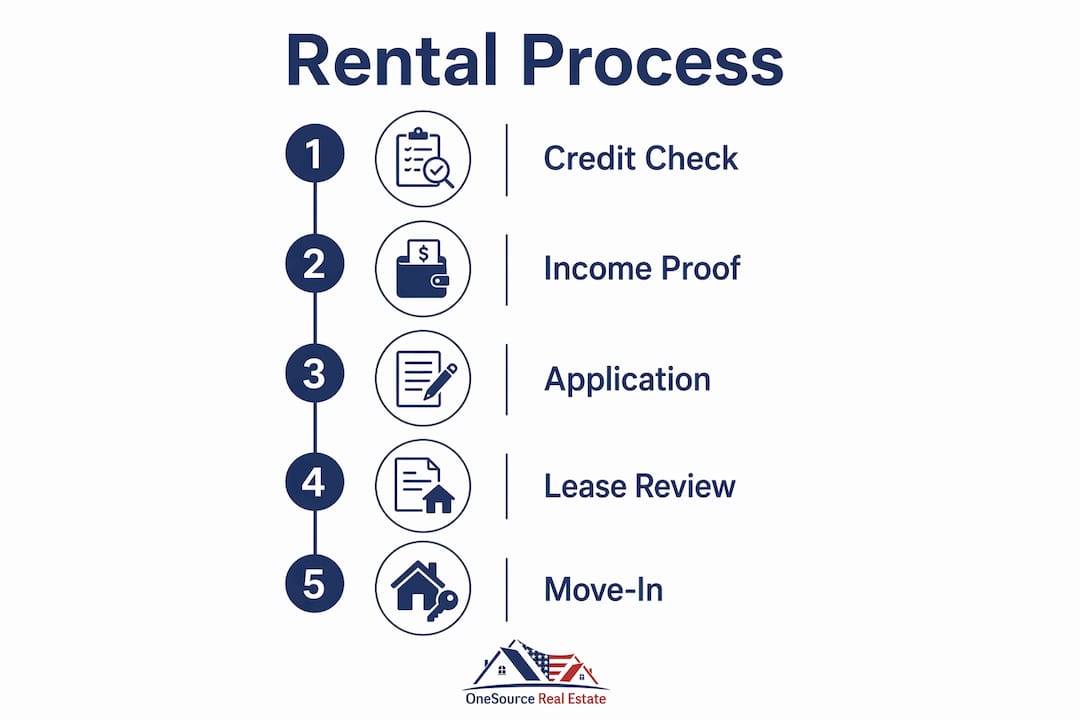
Understanding your Georgia lease terms before signing is worth the time. Georgia law gives landlords broad authority on lease structure, so clauses around early termination, maintenance responsibility, and renewal terms vary widely from one property to the next.
Rental scams are active in Atlanta, particularly on listing platforms where fraudulent posts use real property photos. Never wire money or pay a deposit before viewing a property in person and verifying the landlord's identity. Working with a licensed brokerage like OneSource Real Estate removes that risk entirely, since every listing is verified and every transaction is handled through a licensed professional.
OneSource Real Estate handles the full rental process, from listing and tenant screening to lease drafting and move-in coordination, supported by efficient daily package room organizing for Atlanta, GA apartments to help renters manage deliveries. Renters working with OneSource get access to verified listings and professional guidance without the guesswork. Visit OneSource Real Estate to connect with a local specialist.
Key Takeaways
Atlanta's rental market in 2026 is manageable for renters who budget by neighborhood, lock in utility rates early, and prepare their documentation before applying.
| Point | Details |
|---|---|
| Median rent in 2026 | The average monthly rent for a single-family home in Atlanta is approximately $1,879. |
| Intown vs. suburban pricing | Buckhead and Virginia-Highland have rental prices well above the median; Roswell and Smyrna have rental averages below intown locations. |
| Comfortable income threshold | Earning a certain higher income enables covering needs, savings, and discretionary spending comfortably under a typical budget framework. |
| Natural gas selection | Georgia's deregulated gas market requires renters to choose a certified marketer and lock in a fixed-rate plan independently. |
| Move-in payment prep | Certified cashier's checks are typically required for deposits and first-month rent; personal checks are often rejected. |
FAQ
What is the average rent for a house in Atlanta?
The average monthly rent for a single-family home in Atlanta in 2026 is approximately $1,879, with larger homes in premium neighborhoods reaching close to $3,000.
What is the cheapest rent in Atlanta?
Suburban areas like Roswell and Smyrna have rental averages below intown locations per month for single-family rentals, while Macon is among the more affordable rental markets within Georgia.
Where is the cheapest place to rent a house in Georgia?
Macon offers one of the more affordable rental markets within Georgia, making it a realistic option for remote workers who need occasional Atlanta access.
What salary do I need to live in Atlanta?
A higher income is required to comfortably cover necessities, discretionary spending, and savings under the 50/30/20 budget framework, with limited financial flexibility at incomes near the median.