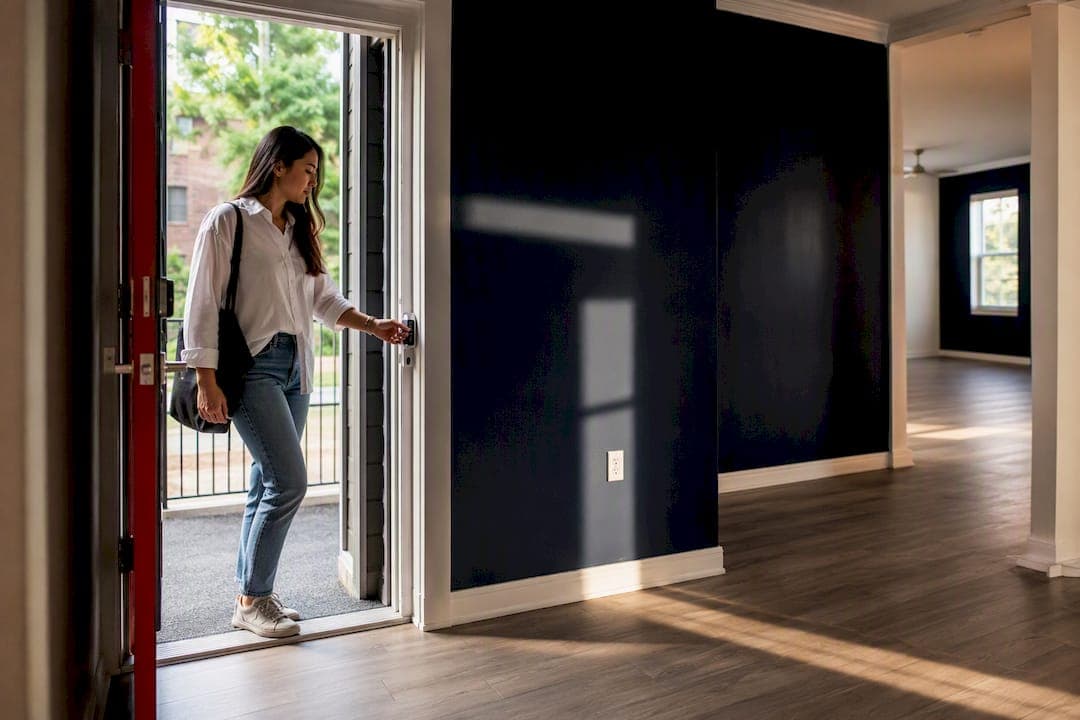
Self-guided showings work for most rental portfolios once you clear a basic volume threshold, and the upside is real: more tours per day, faster leasing, and no staff standing around waiting on a no-show. The trade-off is security risk, which time-limited access codes and identity verification largely solve. If your portfolio has more than a handful of vacant units at once, run a small pilot before rolling the program out further.
TL;DR:
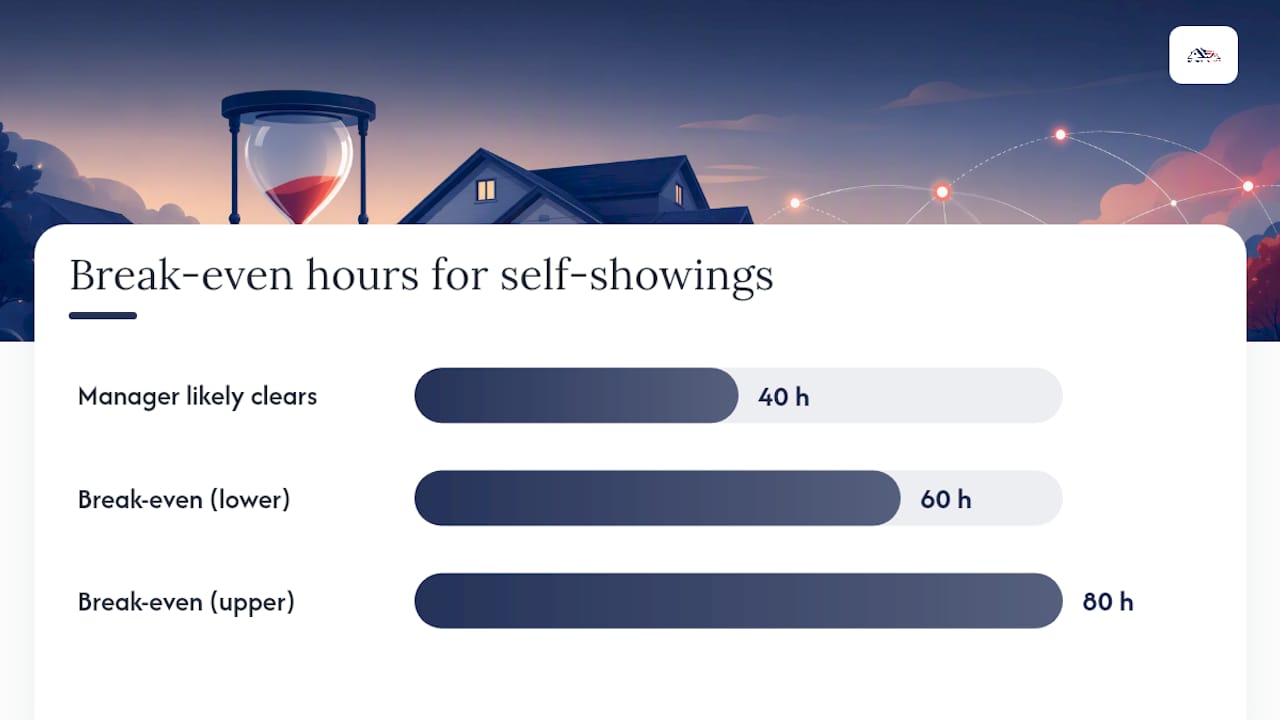
- Self-guided showings are most cost-effective for portfolios where they can save at least 60 to 80 hours of staff labor per month, typically in larger property management operations.
- Hardware costs per unit range from $50 to $250, with monthly software subscriptions and per-tour fees affecting overall expenses.
- Implementing proper identity verification, time-limited access codes, and restricted booking rules can substantially mitigate security risks.
- A small pilot involving three to ten units, with clear KPI targets and security protocols, is essential before expanding self-showings across a portfolio.
- Local legal, notification, and insurance requirements must be reviewed to ensure compliant and risk-mitigated self-tour processes.
Table of Contents
- What Are Self-Guided Showings?
- Which Portfolios Benefit Most From Self-Showings?
- How Do Self-Guided Showings Actually Work?
- What Does Self-Showing Software Cost, and When Does It Pay Off?
- What Are the Security Risks of Unattended Tours?
- How Do You Set Up a Self-Guided Showing Pilot?
- What Legal and Insurance Issues Should You Check First?
- What Common Mistakes Should You Avoid?
- What Has OneSource Real Estate Learned Managing Self-Showings?
- Let OneSource Real Estate Run Your Self-Showing Pilot
- Sources
- FAQ
What Are Self-Guided Showings?
A self-guided showing (also called a self-tour) is an unaccompanied, time-limited visit that lets a prospective renter view a vacant unit without a leasing agent present. The term borrows from the broader idea of a self-guided tour, which has described unescorted visits in museums and historic sites long before real estate adopted it. In property management, the access itself is what makes it work: a code, a lockbox, or an app unlocks the door for a defined window, and then it locks again.
Which Portfolios Benefit Most From Self-Showings?
The math tends to favor scale. One agent can only stand in one unit at a time, but a self-tour system lets ten prospects tour ten different units simultaneously, without anyone on payroll physically present. That capacity shift shows up in three measurable ways:
- More showings completed per day, since there's no travel time between appointments
- Faster lead-to-lease conversion, because prospects tour on their own schedule instead of waiting for an opening
- Fewer vacancy days, since units get seen (and rented) sooner
Industry guidance suggests self-showings clearly pay off once they remove enough attended-showing labor to approach 60 to 80 hours a month for a given portfolio. Below that, the savings are real but modest. Vacant units in commuter markets and fast-turnover metro areas gain the most, since those renters often want to tour on evenings or weekends when staffing an agent is expensive or impossible.
How Do Self-Guided Showings Actually Work?
The mechanics come down to two questions: how does the prospect get in, and how do you verify who they are before they do. Most landlords choose among four access methods:
- Timed smart locks: Bluetooth or Wi-Fi enabled, programmed to unlock only during a scheduled window; easy to audit but requires power and connectivity.
- Electronic lockboxes: Cheap and reliable, holding a physical key behind a rotating code; no batteries to worry about inside the unit itself.
- Keypad codes: Built into the door hardware, good for high-turnover units but harder to change quickly between tenants.
- App-issued codes: Generated per booking through a leasing app, the most flexible option and easiest to revoke instantly.
The standard booking flow follows the same sequence across most providers: the prospect schedules a slot, verifies their identity, receives a time-limited access code, tours the vacant unit, and the code expires automatically at the end of the window. Every step gets logged. Better systems integrate that log with your listing sites and CRM, so a verified lead flows straight into follow-up automation instead of sitting in an inbox.
What Does Self-Showing Software Cost, and When Does It Pay Off?
Costs break into five categories, and none of them are fixed:
- One-time setup: installing smart locks or lockboxes across your vacant units.
- Hardware: $50 to $250 per unit depending on lock type and brand.
- Software subscription: typically billed per unit or per portfolio, monthly.
- Per-tour fees: some platforms charge a small fee per scheduled showing.
- Signage and marketing: instructional signage, QR codes, and updated listing photos.
The break-even formula is simple: divide your monthly subscription and hardware cost by the hourly cost of the staff time you're replacing. If an agent spends 15 hours a month on attended showings at $25 an hour, that's $375 in labor. A self-tour subscription running $150 to $200 a month clears that easily once you factor in faster leasing and fewer missed appointments.
Statistic to know: Self-showings tend to justify the switch once they displace 60 to 80 hours a month of attended-showing labor across a portfolio. A landlord with two or three units rarely hits that mark. A manager running 40 or more probably clears it within the first quarter.
What Are the Security Risks of Unattended Tours?
Self-guided showings don't eliminate risk. They shift it. Guided showings put staff safety at stake; self-tours put property and access control at stake instead. The realistic risks are squatters, scammers using fake identities, theft of fixtures or appliances, and accidental property damage from unsupervised visitors. None of these are common when access is properly controlled, but all of them are avoidable with the right layers.
The mitigations that matter most, roughly in priority order:
- Require photo ID and a live selfie match before issuing any code, not just an email address.
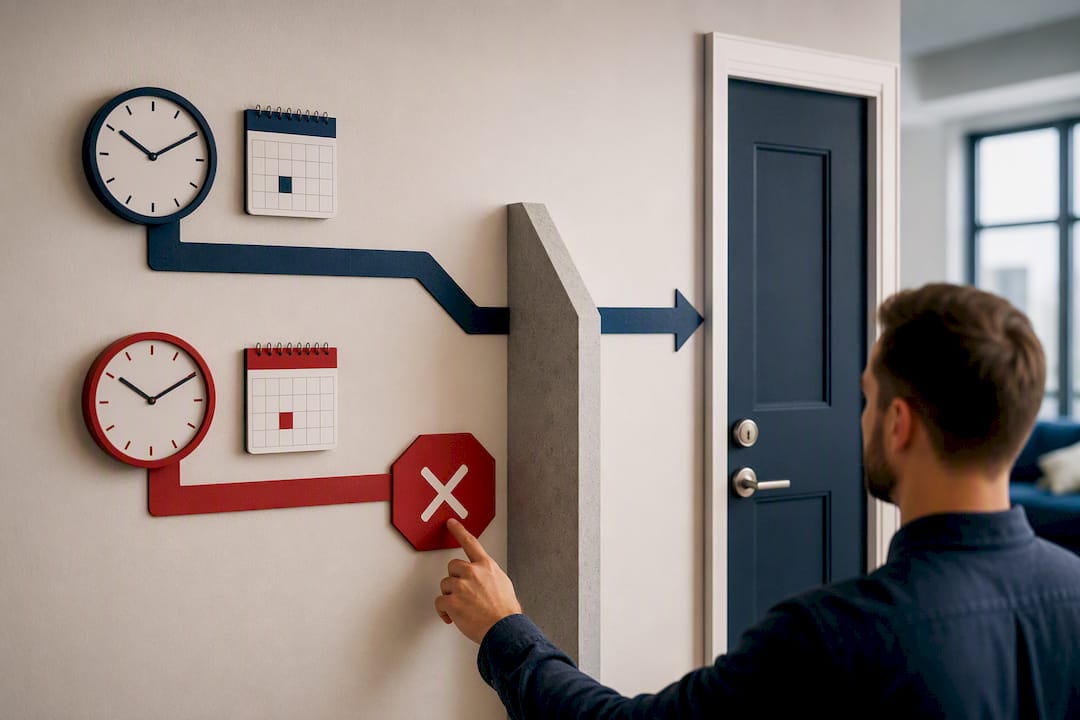
- Issue time-limited, single-use codes that expire automatically at the end of the booking window.
- Restrict self-touring to vacant units only. Never extend it to occupied properties.
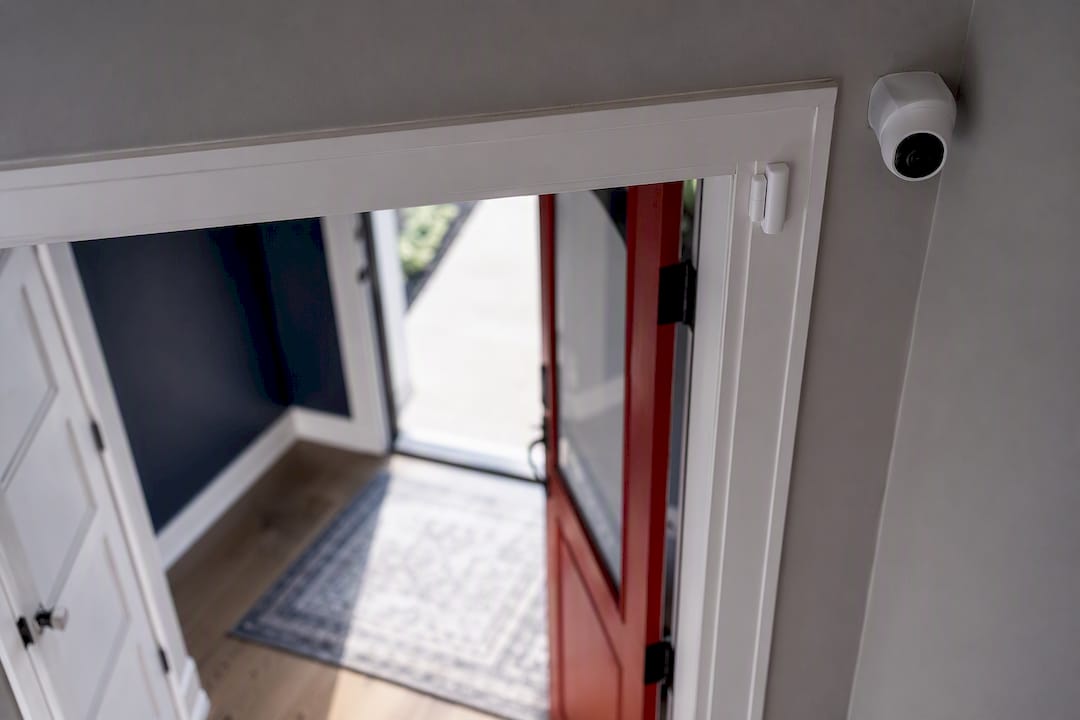
- Post visible signage noting the unit is monitored, and use CCTV where legally permitted.
- Log every entry and exit, and review flagged bookings (overlapping windows, mismatched IDs) within 24 hours.
Requiring identity verification before the first tour, typically a photo ID plus a selfie, followed by a one-time numeric code valid only for the booked window, has become the standard playbook among larger operators. Skipping that step is where most of the actual risk lives.
Pro Tip: Set your booking system to block overlapping reservations automatically. A double-booked unit with two strangers touring at once is the single most common self-tour complaint, and it's entirely preventable with one setting.
For physical hardening beyond access codes, a home security guide covering camera placement and alarm integration is worth reviewing before you open the first vacant unit to self-tours.
How Do You Set Up a Self-Guided Showing Pilot?
Run the pilot small and measured before committing your whole portfolio.
- Pick 3 to 10 vacant units that represent your typical property type and rent range.
- Set KPI targets upfront: target vacancy-day reduction, no-show rate, and incident count.
- Choose a duration, usually 60 to 90 days, long enough to see a full leasing cycle.
- Install access hardware (locks or lockboxes) and configure scheduling with verification rules built in.
- Prepare communication templates: SMS and email confirmations, entry instructions, and signage at the property.
- Assign staff roles: who reviews flagged bookings, who handles incident response, who reports KPIs weekly.
- Get owner sign-off in writing before enrolling any of their units, and document that approval.
If the pilot clears your KPI targets without a security incident, expand it in phases rather than switching your entire portfolio at once.
What Legal and Insurance Issues Should You Check First?
Entry notice laws vary by state and sometimes by city, so confirm your local landlord-tenant statute before scheduling any self-tour, particularly for units that aren't fully vacant. A few checks belong on every pre-launch list:
- Confirm notice-period requirements where the unit has any remaining occupancy overlap.
- Post clear signage if you're using recording or monitoring equipment, since privacy rules often require disclosure.
- Ask your insurance carrier whether unattended showings change your liability coverage or require a policy rider.
- Get documented owner consent before enrolling their property, and keep that record on file.
- When local rules are unclear, consult counsel rather than guessing. This is cheaper than fixing a violation later.
What Common Mistakes Should You Avoid?
Most self-tour problems trace back to weak listings or weak communication, not the technology itself. Strong photos and a 3D or video tour cut down on wasted visits from prospects who wouldn't have liked the unit anyway. Clear signage at the door, with step-by-step entry instructions, prevents the majority of confused-caller support tickets.
The recurring technical failures are predictable: dead lock batteries, no-shows that block the next booking, identity mismatches that flag a legitimate renter, and scheduling overlaps. Each has a quick fix:
- Set battery-check reminders monthly for smart locks.
- Auto-cancel and reopen slots after a 15-minute no-show grace period.
- Route flagged ID mismatches to a live staff review, not an automatic denial.
- Build a 30-minute buffer between bookings at the same unit.
Pro Tip: Treat two security incidents in a single month as your automatic pause trigger. Investigate before scheduling another self-tour at that property, not after.
Set red lines before you launch, not after something goes wrong.
What Has OneSource Real Estate Learned Managing Self-Showings?
OneSource Real Estate manages leasing, screening, and vacancy marketing for landlords across the Atlanta area, and self-guided showings have become a routine part of that property management playbook for vacant units. In one anonymized pilot across a small cluster of turnover units, tightening tenant screening criteria alongside self-tour access cut time-to-lease noticeably while keeping incident counts near zero. The documentation that mattered most: owner consent forms, verification logs, and a weekly KPI review.
— Matt
Let OneSource Real Estate Run Your Self-Showing Pilot
Setting up self-guided showings without a full-service property manager means you're the one debugging smart locks, chasing down flagged IDs, and reviewing audit logs at 11 p.m. OneSource Real Estate handles that entire operational layer already, for landlords and investors across Atlanta and the surrounding area, as part of a full-service property management plan that includes tenant screening, vacancy marketing, and lease administration alongside the showing process itself.

If you're managing rentals in Marietta, Johns Creek, Alpharetta, Powder Springs, or Austell and want self-tours running without becoming your own IT department, get a free property management quote and OneSource Real Estate will walk through whether a pilot fits your portfolio.
Sources
- How Self-Showings Can Help You Lease More Properties
- Opendoor help: schedule self-tour
- Invitation Homes — schedule your self-tour
- UTour: Self-Tour for New Homes | Zonda Home
FAQ
What Are Self-Showings?
Self-showings are unaccompanied, time-limited property tours that let a prospective renter view a vacant unit using a temporary access code, without a leasing agent present.
What Is a Self-Guided Visit?
A self-guided visit is any tour a visitor takes on their own, without a guide, typically using instructions, signage, or an access code instead of a live escort.
Are Self-Guided Tours a Thing in Real Estate?
Yes. Self-guided tours are standard practice among larger rental operators and increasingly common for independent landlords, usually built around identity verification and time-limited access codes.
What Is the Best Self-Guided Tour App?
There's no single best app. The right choice depends on your portfolio size and whether you need CRM integration, automated lead follow-up, and audit logging, or just basic scheduling and code delivery.
How Many Units Justify Switching to Self-Showings?
There's no fixed unit count, but the rule of thumb is labor hours, not doors: once self-tours would remove 60 to 80 hours a month of attended-showing work, the switch typically pays for itself within a quarter.