
Net rental income from your Georgia property flows from federal Schedule E into Georgia Form 500, taxed at the state's flat rate. County assessors value your rental at 40% of fair market value, and it won't qualify for a homestead exemption, so expect a higher bill than an owner-occupied home nearby. Short-term rentals add another layer: state sales tax, a state hotel-motel fee, and often a local occupancy tax on top. The single biggest trap catches landlords off guard every filing season: Georgia does not recognize federal bonus depreciation, which means your federal and state depreciation numbers will not match unless you reconcile them by hand.
Here's what that means in practice for 2026:
- Rental profit gets taxed at Georgia's flat income tax rate after flowing through Schedule E to Form 500
- Property tax bills are built on 40% of fair market value, multiplied by your county's millage rate
- Rentals never get homestead exemptions, even if you lived there before converting it
- Short-term stays trigger state sales tax, the state hotel-motel fee, and sometimes a separate city or county occupancy tax
- Federal bonus depreciation has to be added back on your Georgia return, then recalculated using state MACRS rules
Key Takeaways
Georgia landlords face a flat state income tax on rental profit, a 40% property assessment ratio at the county level, and a mandatory depreciation reconciliation because Georgia does not accept federal bonus depreciation.
| Point | Details |
|---|---|
| State income tax rate | Net Schedule E income flows to Form 500 and gets taxed at Georgia's 4.99% flat rate. |
| Property assessment basis | County assessors value rentals at 40% of fair market value, with no homestead exemption available. |
| Appeal deadline | You have 45 days from the notice's mailing date, not receipt, to file a property tax appeal. |
| Depreciation add-back | Georgia doesn't conform to federal bonus depreciation, so a separate MACRS calculation is required for Form 500. |
| Non-cash and eviction income | Cryptocurrency, barter payments, and retained security deposits all count as reportable rental income at fair market value. |
| Tax-ready management | OneSource Real Estate provides monthly owner statements that separate repairs from improvements, simplifying depreciation reconciliation for Georgia landlords. |
Table of Contents
- How Georgia Taxes Landlord Income From Rental Property
- What Do County Property Tax Assessments Mean for Landlords?
- Do You Need to Collect Taxes on Short-Term Rentals?
- What Expenses Can Georgia Landlords Deduct?
- How Does Georgia Handle Depreciation Differently Than the IRS?
- Where Do You File and What Are the Deadlines?
- What Records Should Georgia Landlords Keep?
- How OneSource Real Estate Approaches Tax Season for Local Landlords
- Are There Energy Efficiency or Other Tax Credits for Georgia Landlords?
- What Happens if You File or Pay Georgia Landlord Taxes Late?
- How Is Eviction Income or Forgiven Rent Taxed in Georgia?
- Can You Report Rent Paid in Cryptocurrency or Other Non-Cash Forms?
- What Georgia Landlords Should Actually Prioritize This Year
- Let OneSource Real Estate Handle the Tax-Ready Details
- Sources
- FAQ
How Georgia Taxes Landlord Income From Rental Property
Landlord taxes in Georgia start with a number you already calculated for the IRS. Your net rental income on federal Schedule E, after subtracting mortgage interest, repairs, depreciation, and other allowable expenses, becomes the starting point for your Georgia return. Georgia taxable income begins with federal adjusted gross income, then applies state-specific additions and subtractions, the depreciation add-back being the most common one for landlords.
The current state income tax rate is 4.99%, a flat rate that applies once your net rental income (combined with other income) clears the state's filing thresholds. There's no separate "landlord tax" bracket. Rental profit gets stacked on top of your W-2 income, business income, or other earnings and taxed together.
Filing mechanics work like this:
- Complete federal Schedule E and Form 1040 first, since Georgia starts from your federal numbers
- File Georgia Form 500 by April 15, matching the federal deadline
- Use the Georgia Tax Center to e-file, which confirms receipt immediately instead of leaving you guessing for weeks
- Apply any state depreciation add-backs before finalizing your Georgia taxable income
Rental losses generally offset other income if you materially participate in managing the property, though passive-activity limits under federal rules still apply before the loss ever reaches your Georgia return.
What Do County Property Tax Assessments Mean for Landlords?
Every rental property in Georgia gets assessed at 40% of its fair market value, and that assessed value gets multiplied by your county's millage rate to produce your annual bill. A property worth $300,000 gets assessed at $120,000, then taxed according to whatever millage your county and school district have set that year. Fulton, Cobb, and Gwinnett counties each set their own rates, so two nearly identical rentals ten miles apart can carry noticeably different tax bills.

The exemption gap catches a lot of first-time landlords. If you lived in the home before renting it out, your homestead exemption disappears the moment it becomes a rental, and the bill typically jumps. There's no landlord equivalent to homestead relief in Georgia.
A few practical points worth tracking:
- Assessment notices arrive by mail annually, typically in the spring, and payment deadlines vary by county
- Bills go to your county tax commissioner's office, not the Georgia Department of Revenue
- You get exactly 45 days from the date the notice was mailed, not received, to file an appeal
- Comparable sales data, recent appraisals, and repair estimates all strengthen an appeal
Pro Tip: Keep your mailing address current with the county board of tax assessors. Landlords who move or manage properties remotely sometimes miss the 45-day window entirely because the notice went to an old address, and that clock doesn't pause for a returned envelope.
Do You Need to Collect Taxes on Short-Term Rentals?
Any rental booked for fewer than 30 consecutive days in Georgia triggers state sales tax obligations, and most counties add their own layer on top. This is where landlords converting a long-term rental into an Airbnb or VRBO listing get tripped up. The rules that applied to a 12-month lease no longer apply once you start booking nightly stays.
Here's the registration sequence that keeps you compliant:
- Register for a sales tax certificate through the Georgia Tax Center before your first short-term booking
- Collect state sales tax plus the state hotel-motel fee, which applies per room per night on qualifying accommodations
- Check your specific city or county for a local occupancy or excise tax. Rates and rules vary by jurisdiction, so a property in Marietta may face different local requirements than one in Alpharetta
- Remit collected taxes on the schedule your registration assigns, often monthly for active short-term rental operators, though smaller-volume hosts sometimes qualify for less frequent filing
- Confirm whether your booking platform collects and remits on your behalf. Some marketplace facilitators handle state sales tax automatically, but local occupancy taxes often remain the host's responsibility
If you operate properties in more than one jurisdiction, keeping a simple log of which taxes apply where saves real headaches at filing time.
What Expenses Can Georgia Landlords Deduct?
Every legitimate rental expense that reduces your federal Schedule E income also reduces the number that flows to Georgia Form 500, since Georgia starts its calculation from your federal figures. That makes your federal deduction strategy directly relevant to your Georgia tax liability, not a separate exercise.
Standard deductible categories, per IRS Publication 527, include:
- Mortgage interest on the rental property
- Property taxes paid to the county (yes, the same bill discussed above is deductible)
- Repairs and maintenance, as long as they restore rather than improve the property
- Property insurance premiums
- Management fees paid to a property management company
- Depreciation, spread over 27.5 years for residential rental property
The repair-versus-improvement line trips up more landlords than any other deduction category. Fixing a leaking faucet is a repair, deductible in full the year you pay for it. Replacing the entire plumbing system is a capital improvement, which gets depreciated over time instead of deducted immediately. Get this classification wrong consistently and it becomes an audit flag.
Commonly missed deductions include mileage driving to and from the property for showings or repairs, legal and accounting fees tied to the rental business, and expenses incurred during vacancy periods between tenants, provided the property was still being actively marketed for rent.
How Does Georgia Handle Depreciation Differently Than the IRS?
This is the wrinkle that catches even experienced landlords off guard: Georgia does not conform to federal bonus depreciation under IRC §168(k). If you claimed bonus depreciation on your federal return, you have to add that amount back on your Georgia return and calculate a separate, smaller depreciation figure using standard MACRS schedules instead.
The practical workflow looks like this:
- Complete your federal Schedule E and federal Form 4562 first, claiming bonus depreciation as normal
- Prepare a separate Georgia Form 4562 that strips out the bonus depreciation and recalculates using standard MACRS
- Report the difference as an addition on Form 500
- Keep both depreciation schedules permanently, since they'll diverge further each year the property is held
One tax professional's assessment matters here: failing to reconcile the bonus depreciation add-back is one of the most common triggers for a DOR adjustment notice among Georgia landlords, precisely because it's an easy step to overlook when your federal software handles depreciation automatically.
Pro Tip: When you eventually sell the property, your federal and Georgia depreciation totals will differ, which changes your state-level recapture calculation. Model both scenarios before you list the property, not after closing.
Where Do You File and What Are the Deadlines?
Georgia landlords deal with three separate systems: state income tax, county property tax, and (if applicable) lodging tax registration. Knowing which portal handles which filing saves time every year.
- Georgia Tax Center: file Form 500, manage payments, and register for sales tax accounts tied to short-term rentals
- Form 4562 (Georgia version): reconcile depreciation figures before submitting Form 500
- County forms like PT-50R and PT-50P: used for real and personal property returns, submitted through your county tax commissioner
- Deadlines: April 15 for state income tax, county-specific windows for property tax billing and payment, and monthly or quarterly remittance for lodging tax depending on your registration
What Records Should Georgia Landlords Keep?
Keep rent rolls, receipts, 1098 mortgage interest statements, and both depreciation schedules for at least three years, longer if you're claiming a loss carryforward. Document every repair-versus-improvement decision in writing when you make it, not months later when a DOR inquiry or county appeal forces you to reconstruct the reasoning.
How OneSource Real Estate Approaches Tax Season for Local Landlords
Managing rentals across Atlanta, Marietta, and Johns Creek for years has taught OneSource Real Estate one consistent lesson: landlords who lose money at tax time almost always lost it in disorganized records months earlier, not in April.
Owners working with OneSource receive monthly statements that already separate repairs from capital improvements, which matters when depreciation schedules need reconciling for Georgia. When a county mails an assessment notice or the DOR sends an inquiry, having that paper trail ready cuts the response time from weeks to days. A short pre-filing checklist helps regardless of who manages your property:
- Confirm your county mailing address is current before assessment season
- Separate every repair invoice from every capital improvement invoice as it happens, not in March
- Reconcile bonus depreciation add-backs before, not after, submitting Form 500
- Log short-term rental jurisdictions if you operate more than one property type
Related reading: Property Taxes in Atlanta and Georgia Security Deposit Law.
Are There Energy Efficiency or Other Tax Credits for Georgia Landlords?
Georgia doesn't offer a dedicated state tax credit specifically for landlords who upgrade rental properties with energy-efficient equipment, which surprises a lot of owners who assume every state mirrors federal incentive programs. What you're working with instead is a layered system where the real opportunity sits at the federal level, with Georgia's role being mostly about how those federal deductions get treated once they reach Form 500.
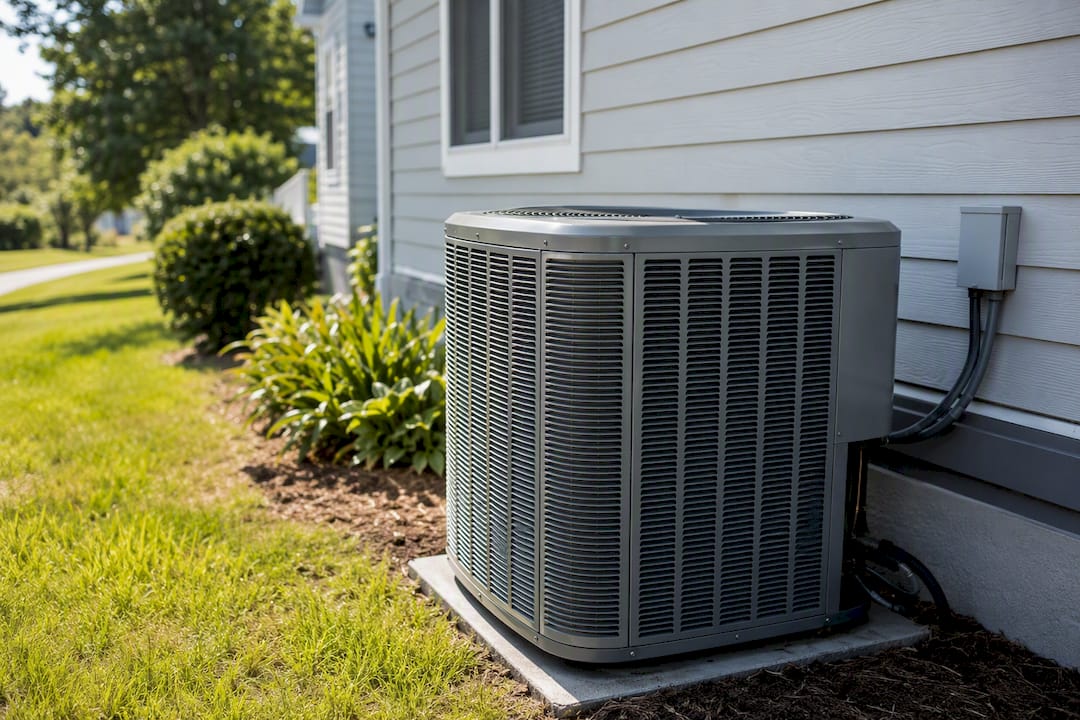
Energy-efficient improvements like new HVAC systems, insulation upgrades, or efficient water heaters generally get treated as capital improvements rather than immediate repairs, meaning they're depreciated over time rather than deducted in full the year you install them. That depreciation follows the same reconciliation pattern discussed above: whatever method you use federally, verify it doesn't rely on bonus depreciation before carrying the number to your Georgia return.
Some landlords confuse residential energy credits meant for owner-occupied homes with what's available for rental property, and that mismatch causes real filing errors. Federal residential energy credits are generally structured around a taxpayer's principal residence, not a rental unit, so a straightforward landlord shouldn't assume that dishwasher or window upgrade in a tenant's unit produces the same style of credit a homeowner would claim.
Where energy upgrades genuinely help landlords is indirectly. Lower utility costs (if you cover them), stronger tenant retention, and fewer maintenance calls all matter more to your bottom line than a credit that doesn't exist at the state level. If you're weighing a major upgrade specifically for tax reasons, run the numbers with a CPA familiar with Georgia depreciation rules before assuming the payback comes from a tax credit rather than operating savings.
What Happens if You File or Pay Georgia Landlord Taxes Late?
Missing a Georgia filing or payment deadline costs more than most landlords expect, and the penalties stack in ways that surprise people who've only dealt with federal late fees before.
For state income tax, failing to file Form 500 by April 15 (without a valid extension) triggers a late-filing penalty, and failing to pay what you owe triggers a separate late-payment penalty on top of that. Interest accrues on unpaid balances from the due date forward, and it keeps compounding until the balance is cleared, not just until you finally file the return. Filing an extension gives you more time to submit paperwork, but it does not extend your time to pay. If you owe money, that payment is still due April 15 even with an extension filed.
Property tax penalties work differently because they run through your county tax commissioner, not the state. Miss the county's payment deadline and you'll typically see interest and penalties added to the outstanding balance, with the exact rate and schedule varying somewhat by county. This is separate from the 45-day appeal window discussed earlier: missing an appeal deadline doesn't add a penalty, it just locks you into that year's assessed value.
Lodging tax remittance carries its own risk. If you're registered to collect state sales tax or local occupancy tax on a short-term rental and you fail to remit on schedule, that's treated as failing to remit taxes you already collected from guests, which tends to draw faster enforcement attention than a straightforward income tax delay. Set calendar reminders tied to your specific remittance frequency rather than assuming it matches your income tax deadline.
How Is Eviction Income or Forgiven Rent Taxed in Georgia?
Any money you actually collect from a tenant, whether it's regular rent, a court-ordered judgment for back rent, or a settlement paid during an eviction process, counts as rental income and gets reported on Schedule E the same as ordinary monthly rent. There's no special category that lets eviction-related income avoid the standard reporting requirement.
Forgiven rent works differently depending on which side of the transaction you're on. If you, as the landlord, forgive rent a tenant owed you, that forgiven amount isn't income to you since you never collected it. You simply don't report it, and you can't deduct it as a loss either, because you never had a deductible basis in unpaid rent you were never taxed on receiving. This trips up landlords who try to claim uncollected rent as a write off. Cash-basis taxpayers, which most individual landlords are, generally can't deduct rent that was never received in the first place.
Security deposits complicate the picture further. A deposit you keep because a tenant damaged the property or skipped out on final rent becomes taxable income in the year you keep it, not the year you originally collected it. If you're managing an eviction that involves withheld deposits, document exactly how much you retained and why, since that becomes reportable income requiring its own paper trail separate from monthly rent. Reviewing Georgia's notice-to-vacate requirements alongside your accounting process helps keep the legal and tax sides of an eviction properly documented together.
Can You Report Rent Paid in Cryptocurrency or Other Non-Cash Forms?
Yes, and the rule is simpler than most landlords assume: rent is rent regardless of what form it arrives in. If a tenant pays you in Bitcoin, Ethereum, or any other cryptocurrency, you report the fair market value of that cryptocurrency, converted to US dollars on the date you received it, as rental income on Schedule E. That figure then flows into your Georgia Form 500 the same way cash rent would.
The complication comes later, not at the moment you report it as income. Cryptocurrency is treated as property for federal tax purposes, so if you hold onto it and its value changes before you convert it to cash or spend it, that change in value can trigger a separate capital gain or loss transaction, distinct from the rental income you already reported. Two tax events from one rent payment: ordinary income when received, then a capital gain or loss when disposed of.
Barter arrangements follow the same basic logic. If a tenant pays partial rent by performing repair work on the unit instead of cash, you report the fair market value of those services as rental income, just as if they'd paid you cash and you'd paid them separately for the labor. Documentation matters enormously here, since there's no bank statement or canceled check to fall back on. Get a written agreement specifying the value assigned to non-cash rent payments before you accept them, and keep records showing how you calculated that value on the date of the transaction. Georgia doesn't have separate guidance for crypto or barter rent beyond standard federal reporting rules, so whatever documentation satisfies the IRS on Schedule E will generally satisfy the state as well.
What Georgia Landlords Should Actually Prioritize This Year
Most landlord tax advice treats Georgia like a generic pass-through state, and that's the mistake. The conventional wisdom says "your Schedule E flows to your state return, done." It doesn't account for the fact that Georgia's refusal to adopt federal bonus depreciation creates a permanent, compounding divergence between your two sets of books, one that gets worse every year you hold the property and catastrophic the year you sell it.
If you take one thing from this article, make it the depreciation reconciliation. Property tax appeals matter, and lodging tax registration matters if you're running a short-term rental, but those are episodic problems you handle once a year or once per transaction. The depreciation mismatch is structural. It sits quietly in your books until a sale or a DOR notice forces the reconciliation, usually at the worst possible moment.
The second priority, underrated by almost every generic tax guide: your county mailing address. A 45-day appeal window sounds generous until you realize most landlords who miss it do so because a notice went to a vacant property or an old address. Fix that before assessment season, not after you've already lost the appeal.
— Matt
Let OneSource Real Estate Handle the Tax-Ready Details
OneSource Real Estate gives Atlanta-area landlords something a spreadsheet and a once-a-year CPA meeting can't: tax-ready books built monthly, not reconstructed under deadline pressure in March. Instead of scrambling to separate repairs from capital improvements after the fact, or discovering a bonus depreciation add-back the day before Form 500 is due, owners get monthly statements that already reflect that distinction.

For landlords managing rentals in Atlanta, Marietta, Johns Creek, Alpharetta, Powder Springs, or Austell, that means accurate depreciation-ready records, on-time property tax payments tracked against county deadlines, and lodging tax remittance handled correctly for owners running short-term rentals. OneSource Real Estate's property management services coordinate tenant placement, rent collection, and financial reporting so the numbers your CPA needs each spring are already organized instead of scattered across a shoebox of receipts. Reach out to OneSource Real Estate today to talk through what tax-ready property management looks like for your specific portfolio.
Sources
- Important tax updates | Georgia Department of Revenue
- Publication 527 (Residential Rental Property) | IRS
FAQ
Do You Have to Pay Taxes on Rental Income in Georgia?
Yes. Net rental income reported on federal Schedule E flows into Georgia Form 500 and gets taxed at the state's flat 4.99% rate, on top of whatever federal tax you owe.
How Much Does a Landlord Have to Pay in Property Taxes?
Your bill depends on your county's millage rate applied to 40% of your property's fair market value, so two similar rentals in different counties can owe noticeably different amounts.
What Changed in Georgia's Landlord Rules for 2026?
The state's flat income tax rate sits at 4.99% for 2026, and the bonus depreciation decoupling continues to require a separate Georgia depreciation calculation on Form 4562, a step that hasn't changed but still trips up landlords using federal-only software.
What Is the 2% Rule in Rental Property?
The 2% rule is an investment screening guideline, not a Georgia tax rule.
Does OneSource Real Estate Help With Tax Reporting for Landlords?
OneSource Real Estate doesn't file your taxes, but it provides monthly financial statements and depreciation-ready recordkeeping that make your CPA's job faster and your Georgia Form 500 reconciliation more accurate.