
Yes, you can sell with a tenant living in the property in Georgia, and the buyer generally inherits the existing lease intact. The lease survives the sale under Georgia law, so month-to-month tenants get 60 days' written notice under O.C.G.A. § 44-7-7 if the new terms end the tenancy, while fixed-term leases simply transfer to the new owner. Before you list, pull the lease, confirm the tenancy type, and document the security deposit so it transfers cleanly at closing.
TL;DR:
- Landlords must give month-to-month tenants 60 days' written notice to terminate a tenancy before selling, while fixed-term leases transfer automatically to the new owner.
- The lease agreement must be reviewed carefully for sale clauses, tenancy type, and lease terms to determine the appropriate action and documentation needed.
- Proper notice, documentation, and handling of deposits at closing prevent legal liabilities and ensure a smooth transfer of lease obligations to the buyer.
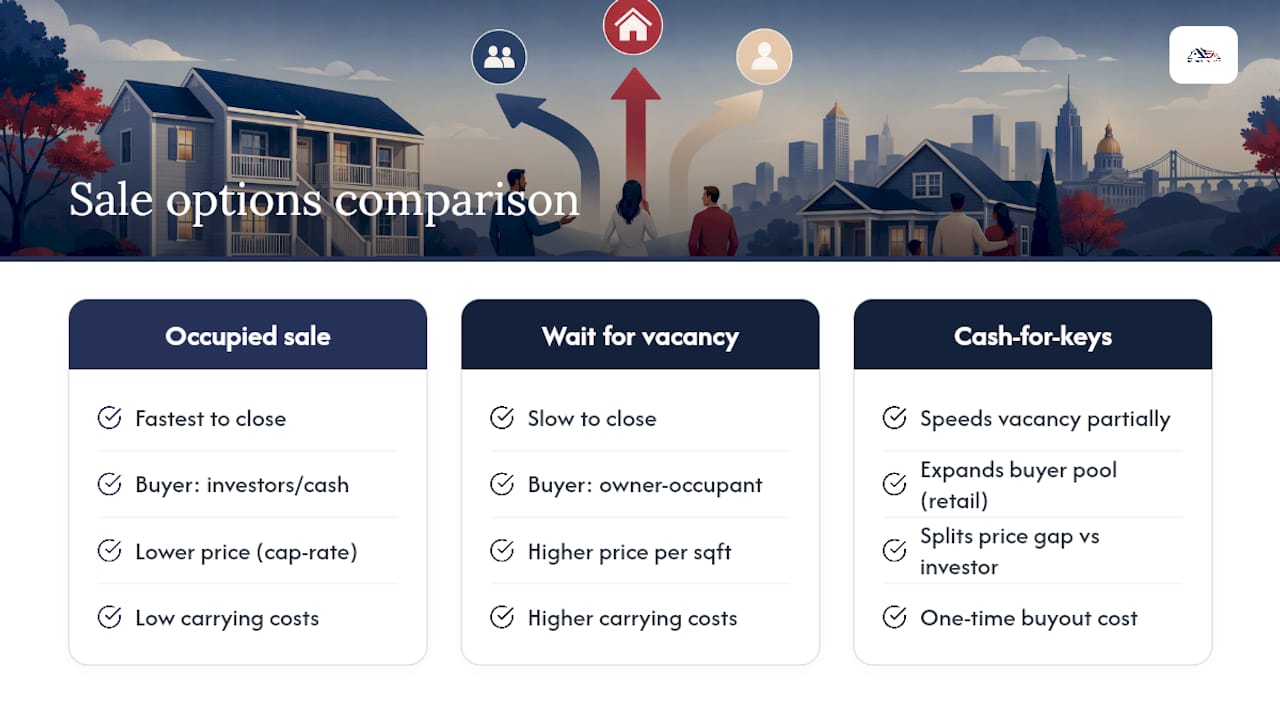
- Selling occupied is ideal for quick sales to investors, while waiting for vacancy can yield higher offers from owner-occupants, with cash-for-keys serving as an effective middle ground.
- Coordinating tenant notices, deposit transfers, and lease assignments before listing can avoid delays and disputes during the sale process in Georgia.
Table of Contents
- How Do You Assess Your Lease Before Selling With a Tenant in Georgia?
- What Notice Do You Need to Terminate a Georgia Tenancy Before Selling?
- Should You Sell Occupied, Wait for Vacancy, or Buy Out the Lease?
- How Do You Handle Showings and Inspections Without Violating Tenant Rights?
- What Happens to the Security Deposit and Lease at Closing?
- What Are the Tax Implications of Selling a Rental Property in Georgia?
- What's the Step-by-Step Checklist for Selling a Tenant-Occupied Home?
- Approach to Tenant-Occupied Sales
- Get Local Help Selling Your Georgia Rental With Tenants in Place
- Where to Verify These Georgia Landlord-Tenant Rules
- Sources
- FAQ
How Do You Assess Your Lease Before Selling With a Tenant in Georgia?
The lease document tells you what you can and cannot do, and most sellers skim it once and miss the clauses that matter most. Read it line by line before you talk to an agent or a buyer.
Start by pinning down the tenancy type. A fixed-term lease with a hard end date behaves differently from a lease that has rolled into a tenancy-at-will or month-to-month arrangement after the original term expired. That distinction determines whether you're bound for another eight months or free to give 60 days' notice and move.
Look next for a sale clause, sometimes called a "landlord may sell" provision, that spells out what happens if the property changes hands mid-lease. Some leases include an early-termination-on-sale option that lets either party end the tenancy when a sale closes; most Georgia residential leases don't include one, which means the lease simply rides along with the deed. The Georgia Realtors lease form commonly used across the state addresses assignment and sale scenarios directly, so if your lease was drafted from that template, check those sections first.
Before you go further, gather:
- The signed lease and any amendments or renewal addenda
- A current tenant ledger showing rent payments, late fees, and balances owed
- Copies of any prior notices sent to or received from the tenant
- The showing and entry language, which often sets a stricter notice standard than the general "reasonable notice" default
Buyers, especially investors, will ask for this paperwork during due diligence. Having it organized before you list saves weeks later.
What Notice Do You Need to Terminate a Georgia Tenancy Before Selling?
Georgia's notice rules are narrower than most sellers expect, and they only govern ending the tenancy, not removing someone from the property.
Under O.C.G.A. § 44-7-7, a landlord must give a month-to-month tenant 60 days' written notice to terminate. A tenant giving notice to the landlord only needs 30 days. That asymmetry catches sellers off guard when they assume the notice period runs both directions equally.
A termination notice is a letter, not a legal action. If the tenant simply stays past the notice date, you cannot change the locks, shut off utilities, or remove their belongings. Georgia treats that kind of self-help as illegal, a principle rooted in the quiet enjoyment doctrine that protects a tenant's lawful possession regardless of who owns the property. To remove a holdover tenant, you have to file a dispossessory action under O.C.G.A. § 44-7-50, which is a separate court process with its own timeline.
Here's how the sequence typically runs:
- Confirm the tenancy type and count backward from your target listing or closing date.
- Draft and serve a written 60-day notice if the tenant is month-to-month and you plan to sell vacant.
- Keep the fixed-term lease in force if the tenant has a lease that hasn't expired, and market the sale as occupied.
- File a dispossessory action only if the tenant fails to vacate after a valid notice period expires.
Counting the 60 days trips people up. Georgia courts generally read this as calendar days, not business days, and the clock starts running the day after the notice is delivered, not the day you write it. Some leases specify a different notice period for the landlord, which overrides the statutory default if it's more generous to the tenant.
Pro Tip: Send every notice by a method that creates a paper trail, certified mail, a delivery service with signature confirmation, or a dated email the tenant has already agreed to accept as valid notice under the lease. A verbal notice or a text message is nearly impossible to prove in a dispossessory hearing.
For a full breakdown of notice templates and timing, the notice to vacate guide for Georgia walks through the exact language courts expect to see.
Should You Sell Occupied, Wait for Vacancy, or Buy Out the Lease?
There's no single right answer here. It depends on how fast you need to close and how much price flexibility you have.
Selling occupied to an investor or cash buyer is usually the fastest path. Investor buyers evaluate a rental by its income, not its paint color, and an occupied unit with a paying tenant and a clean rent history is often a selling point rather than a defect. The trade-off is price: investors buy on cap rate, and they'll factor tenant risk and any below-market rent into their offer. A DSCR-based cash-out refinance is one way investor buyers size up how much a rental's income supports financing, which shapes what they're willing to pay for an occupied property.
Waiting for vacancy typically opens the buyer pool to owner-occupants, who almost always require vacant possession and often pay more per square foot than an investor would. The cost is time and carrying expenses, mortgage, insurance, taxes, and the risk that the tenant doesn't leave on schedule or the unit needs repairs once they're out. Compare that against listing as-is if repairs are the bigger concern.
Cash-for-keys, a negotiated payment in exchange for the tenant vacating early and voluntarily, splits the difference. Amounts vary widely, but the Georgia Landlord-Tenant Handbook notes that a negotiated termination often costs far less than the price gap between selling to an investor and selling to a retail buyer. Get the agreement in writing, specify the move-out date, the payment amount and timing, and confirm it in a signed lease termination addendum. Note the payment as a lease buyout, not a security deposit refund, for your own tax records.
An estoppel certificate, a signed statement from the tenant confirming rent amount, deposit held, and lease terms, changes your negotiating position with any buyer. It removes ambiguity a buyer's lender or attorney would otherwise flag during underwriting.
How Do You Handle Showings and Inspections Without Violating Tenant Rights?
A tenant who feels ambushed by showings will make your listing harder to sell, and a tenant who feels respected usually cooperates without much prodding.
Georgia doesn't set a statutory showing-notice period the way it does for termination notices, but 24 hours' notice is the customary standard, and if the lease specifies a longer or shorter window for entry, that lease language controls. Check it before you schedule the first showing.
Practical steps that keep this smooth:
- Send showing requests in writing, even a text, so there's a timestamp.
- Keep a simple log of every request, the tenant's response, and the actual entry time.
- Offer a small incentive, gift card, rent credit, or flexible scheduling, for tenants who accommodate weekend or short-notice showings.
- Coordinate appraisals and inspections the same way you coordinate showings; the appraiser and inspector are still entering occupied space.
- Use a lockbox only if your lease and the tenant both agree to it in writing; an unannounced lockbox entry can look a lot like the self-help conduct Georgia law prohibits.
Pro Tip: A showing log costs you five minutes per entry and saves you a legal headache. Documenting every tenant contact and notice is the single most effective way to defend against a later claim that you denied quiet enjoyment or entered without proper notice.
What Happens to the Security Deposit and Lease at Closing?
The deposit and the lease both need to move from you to the buyer cleanly, on paper, or you're the one holding the liability after closing.
Georgia's deposit-transfer obligations trace back to O.C.G.A. § 44-7-33, and mishandling a deposit can expose a landlord to damages claims well after the sale closes. That risk doesn't disappear just because you no longer own the property.
Here's the sequence that protects you:
- Decide whether the deposit transfers to the buyer or gets refunded to the tenant before closing, and put that choice in the purchase contract.
- Have the closing attorney record the deposit as a line-item credit to the buyer on the settlement statement, rather than handling it as a side payment.
- Draft a signed tenant notice, delivered at or before closing, naming the new owner and stating who now holds the deposit.
- Assign the lease to the buyer as part of the closing documents, with the tenant ledger and any estoppel certificate attached.
- Keep copies of everything, the assignment, the notice, and the settlement statement, in your own closing file for at least a few years.
Skipping the deposit line-item credit is one of the most common mistakes sellers make. If the settlement statement doesn't show the transfer explicitly, and something goes wrong later, a court has no paper trail showing the buyer actually received the funds. That gap can leave you personally liable even after you no longer own the property.
What Are the Tax Implications of Selling a Rental Property in Georgia?
Depreciation recapture catches more sellers off guard than any other line item on the closing statement. If you've depreciated the property over the years you owned it, the IRS treats a chunk of your gain as recaptured depreciation, taxed differently than a standard long-term capital gain, and it applies whether or not you sell with a tenant in place.
On top of federal capital gains tax, Georgia treats the gain as ordinary income for state tax purposes, added to your other income for the year. That combination, federal capital gains, depreciation recapture, and state income tax, can take a bigger bite than sellers expect when they're focused mainly on the sale price.
A like-kind exchange under Section 1031 can defer both the capital gains tax and the depreciation recapture, but only for qualifying investment property, and only if you follow strict deadlines:
- Identify a replacement property within 45 days of closing the sale
- Close on the replacement property within 180 days of the original sale
- Use a qualified intermediary to hold the proceeds; you cannot touch the money yourself
None of this changes whether you can sell with a tenant occupying the unit. It changes how much of the proceeds you keep. A CPA who works with rental property owners can run the numbers before you list, not after, because your sale timing and structure decisions affect which tax strategies are still available to you.
What's the Step-by-Step Checklist for Selling a Tenant-Occupied Home?
Right away: pull the lease, tenant ledger, and any past notices; grab a spare set of keys; and draft your notice of intent to sell so it's ready the moment you need it.
Two to six weeks before listing: agree on showing windows with your tenant, consider whether a cash-for-keys offer makes sense for your timeline, and collect repair receipts for anything you've fixed during the tenancy.
- At contract: prepare the lease assignment, confirm the deposit-transfer method, request or draft an estoppel certificate, and complete standard seller disclosures.
- At closing: verify the settlement statement shows the deposit credit, deliver the tenant notice naming the new owner, and keep a full copy of the closing packet for your records.
Pro Tip: Build this checklist into your listing timeline the same week you interview agents. Sellers who wait until under contract to gather lease documents routinely lose a week or more at the closing table.
Approach to Tenant-Occupied Sales
Tenant-occupied sales can slow down when the deposit transfer or lease assignment is handled as an afterthought instead of a closing-table line item. Coordinating tenant notice, deposit credit, and assignment paperwork as part of the same process can help avoid last-minute issues.
It is generally recommended to sell occupied when the tenant pays reliably and the buyer pool leans investor, and to wait for vacancy when a retail buyer is likely to pay more for the property empty. A coordinated handoff between management and sale teams can reduce post-closing disputes related to deposits or notices.
Get Local Help Selling Your Georgia Rental With Tenants in Place
Selling occupied yourself means chasing down lease copies, drafting notices, negotiating with a tenant, and hoping the buyer's lender doesn't flag a missing estoppel certificate three days before closing. OneSource Real Estate handles all of that as one coordinated process instead of a scramble split across you, a tenant, and a closing attorney who's never met either of you.

Our team manages tenant coordination, deposit transfer documentation, and lease assignment paperwork directly, and we work with an investor network that already understands how to price occupied rentals fairly. If your lease is complicated, your timeline is tight, or you just want to avoid a buyer walking away over paperwork, that's exactly the situation where a full-service partner earns its keep.
If you're weighing whether to sell occupied, negotiate a lease buyout, or wait for vacancy, request a rental-sale review through our property management page and we'll walk through your specific lease and timeline with you.
Where to Verify These Georgia Landlord-Tenant Rules
The Georgia Landlord-Tenant Handbook from the Department of Community Affairs covers lease survival on sale, deposit practices, and why self-help evictions are illegal, with sample forms included. O.C.G.A. § 44-7-7 and § 44-7-50 set the statutory notice and dispossessory procedures. For tax planning, the IRS guidance on like-kind exchanges lays out 1031 deadlines directly. Talk to a real estate attorney or CPA for anything specific to your lease or your tax situation.
This article is general information, not a substitute for advice from a qualified lawyer. Consult a qualified legal professional about your own circumstances before acting on anything here.
Sources
- Selling a House with Renters in Georgia
- Georgia Landlord-Tenant Handbook (DCA)
- Quiet enjoyment — Cornell Law
- Like-kind exchanges (1031) guidance — IRS
FAQ
Can You Sell a Rental Property With a Tenant Living in It?
Yes. Georgia law allows the sale, and the buyer generally takes the property subject to the existing lease, meaning the tenant's rights continue under the new owner.
What Is the New Tenant Law in Georgia?
There's no single new statute overhauling tenant rights; the governing rules remain O.C.G.A. § 44-7-7 for notice and O.C.G.A. § 44-7-50 for dispossessory actions, along with the deposit rules under § 44-7-33.
Can My Landlord Evict Me Because They're Selling the Property?
A sale alone isn't grounds for eviction. If you're a month-to-month tenant, the landlord can end the tenancy with 60 days' written notice, but removing you without a valid notice and, if needed, a court-ordered dispossessory action is illegal.
How Long Are You Liable After Selling a House With a Tenant in Georgia?
There's no fixed cutoff in Georgia statute, but mishandling the security deposit transfer at closing, especially without a documented credit on the settlement statement, can expose a seller to a claim well after the sale closes. Documenting the deposit transfer properly at closing is the best protection against that exposure.
Does a Fixed-Term Lease End When the Property Sells?
No. A fixed-term lease stays in effect after a sale, and the new owner inherits the lease's terms, including the rent amount and the end date, until it naturally expires or the tenant and new owner agree otherwise.