
For most Atlanta sellers, late February through late April is the strongest window to list, with national data pointing to a broader March through June peak. Homes shown in good condition during this stretch tend to draw faster offers and stronger prices. The bigger factor, though, is whether your specific home and neighborhood are ready, since local inventory and presentation can override the calendar entirely.
TL;DR:
- Homes in Atlanta sell faster and for higher prices during late February to late April, especially if the home is well-prepared and priced based on local comps.
- The current market favors sellers with around 4.7 months of supply, but buyer activity and neighborhood trends significantly influence the optimal listing time.
- Neighborhood characteristics, such as proximity to schools or demand from young professionals, can shift the best listing window earlier or later within the year.
- Proper prep, including decluttering, repairs, and professional photography, is crucial to maximize interest, regardless of the exact timing.
- Quick sales are most common when homes are listed during peak months, fully ready, and priced appropriately, with strategies available for urgent deadlines or cash offers.
Table of Contents
- What's the Best Month to Sell in Atlanta?
- Which Atlanta Market Signals Matter More Than the Calendar?
- Does Your Atlanta Neighborhood Change the Best Time to List?
- How Do You Prep an Atlanta Home to Sell Fast?
- Should You List Now, Wait for Spring, or Hold Off?
- How Long Does It Take to Sell a House in Atlanta?
- What Atlanta Sellers Consistently Get Wrong About Timing
- How OneSource Real Estate Helps You Time Your Atlanta Sale
- Sources
- FAQ
What's the Best Month to Sell in Atlanta?
Atlanta's selling calendar doesn't move in lockstep with the rest of the country. Local market watchers point to late February through late April as Atlanta's sweet spot, which runs earlier than the national pattern most sellers hear about.
Spring (late February to late April) is when buyer traffic peaks. Families start house hunting early so they can close before summer, and inventory is still tight enough that well-priced homes generate competing offers. March and April specifically tend to bring out serious buyers who've already lined up financing and want to move fast.
Summer stays active, but the energy shifts. Vacations pull buyers out of the market, and the urgency that defined spring starts to fade by July. Homes still sell, but sellers often need sharper pricing or faster response times to keep momentum.
Fall brings less competition among sellers, which can work in your favor. Buyers shopping in September and October tend to be motivated: relocations, lease expirations, or job changes drive them, not curiosity. It's a calmer season, often better suited to sellers who don't want a bidding war circus.
Winter is the quiet season, but quiet doesn't mean bad. Fewer listings mean less competition, and the buyers who are out there in December and January are usually serious. The tradeoff is shorter daylight hours and weather that can complicate showings.
If your timeline lands in March, lean into the momentum. If it lands in May, price sharply and move quickly, because buyer urgency is already starting to soften.
Which Atlanta Market Signals Matter More Than the Calendar?
Season sets the general backdrop, but three numbers tell you what's actually happening on the ground.
Months of supply measures how long current inventory would last at the current sales pace. A recent read put Atlanta metro around 4.7 months of supply, a level that still favors sellers in many segments but is tightening compared to the deep seller's market of a few years ago. Below six months generally means sellers hold leverage; above six, buyers gain the upper hand.
Market Signal: National and regional data consistently show that homes listed during spring months, roughly March through June, tend to sell faster and for a meaningful seller premium compared to the annual average.
Days on market matters just as much as supply. A home sitting past three or four weeks in a competitive neighborhood signals a pricing problem, not a bad season. Cash and investor buyer activity also shapes timing, since these buyers move faster and can close on your schedule rather than a mortgage timeline. For the clearest read, check neighborhood-level transaction data rather than relying only on citywide averages.
Does Your Atlanta Neighborhood Change the Best Time to List?
Metro Atlanta isn't one market. It's dozens of smaller ones, and each behaves differently depending on who's buying there.

Intown neighborhoods packed with young professionals often see demand pick up earlier in the year, sometimes weeks ahead of the citywide spring surge. Family-oriented suburbs, on the other hand, track the school calendar closely. Parents want to close and move before the new school year starts, which pulls listing activity forward into late winter and early spring.
HomeLight's neighborhood-level analysis confirms that "best month" varies enough by ZIP code that citywide averages can mislead an individual seller. To find your own window:
- Pull recent sale dates for homes within a half mile of yours.
- Ask a local agent what's closing fastest in your specific ZIP code right now.
- Compare your neighborhood's days-on-market trend against the metro average.
How Do You Prep an Atlanta Home to Sell Fast?
Timing gets you attention. Preparation gets you offers. A structured 30 to 60 day prep window consistently outperforms sellers who list first and scramble to fix issues after buyers start asking questions.
- Declutter and deep clean every room, closet, and garage first. This is the cheapest, highest-impact step and it takes as little as a weekend.
- Refresh paint and lighting in main living areas. Neutral tones and brighter bulbs photograph dramatically better than dated finishes.
- Handle small repairs before they become negotiation leverage for a buyer's inspector. Loose fixtures, leaky faucets, and cracked caulk all raise red flags disproportionate to their cost.
- Book professional photography once the home is staged and repaired, not before.
Full staging makes sense for vacant homes or higher price points where buyers expect a polished look. For occupied homes in good condition, quick cosmetic fixes often deliver nearly the same result for a fraction of the cost.
For pricing, Atlanta sellers do best setting a number based on recent local comps rather than a round figure. Our guide to pricing an Atlanta home walks through how to set a price that draws multiple showings in the first week.
Pro Tip: List on a Thursday or Friday. Buyers touring over the weekend see your home fresh, and early momentum often produces stronger opening offers.
Should You List Now, Wait for Spring, or Hold Off?
Three paths cover almost every Atlanta seller. Pick the one that matches your actual deadline, not the one that sounds ideal.
- List now if your home is already in solid shape and your timeline is tight. A quick listing also works as a diagnostic. If showings and offers underwhelm in the first week or two, you'll know to adjust price or staging fast.
- Prep for spring if you have 30 to 60 days before you need to move and your home needs work. Use that runway for repairs, decluttering, and photos so you launch at peak buyer demand.
- Hold and reassess if you're not under time pressure and current local inventory or pricing looks weak. Set a specific reassessment date, not an open-ended "wait and see."
If your deadline is genuinely urgent, selling for cash or an as-is sale can skip the prep window entirely.
How Long Does It Take to Sell a House in Atlanta?
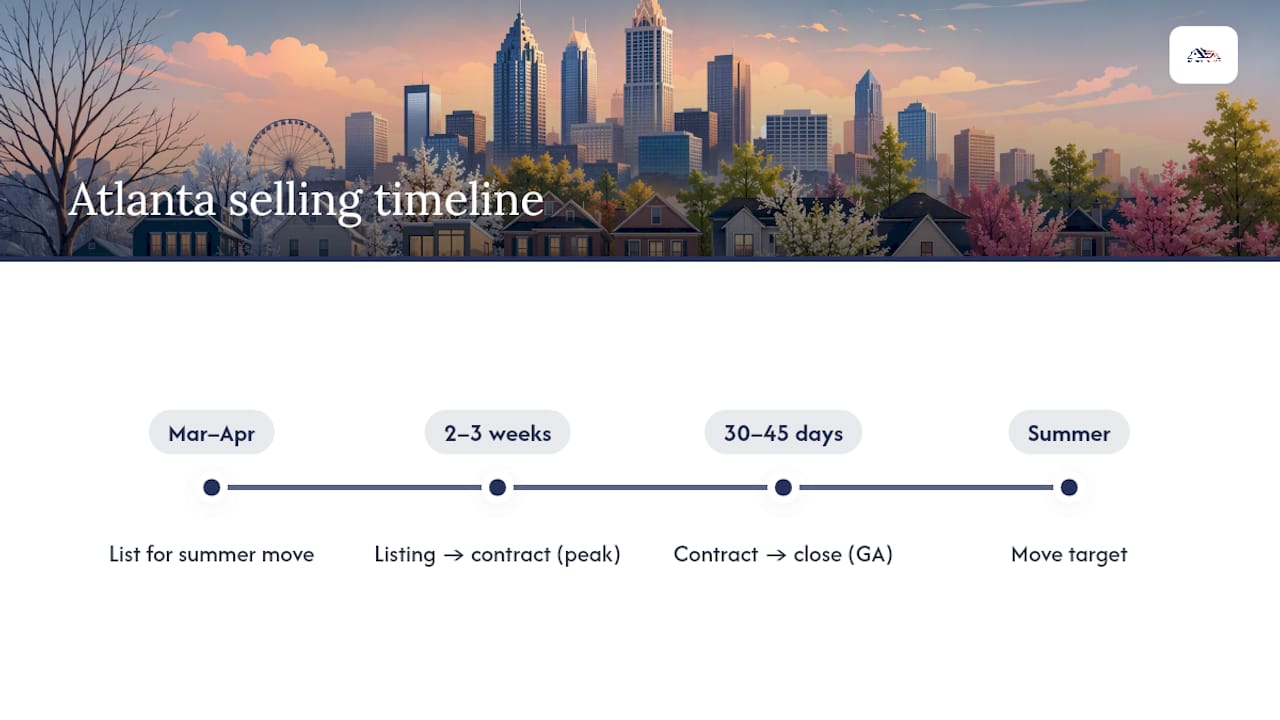
Well-prepared homes in active neighborhoods often go under contract within two to three weeks during peak season, with contract-to-close typically running 30 to 45 days in Georgia once financing, inspection, and appraisal are factored in. Families targeting a summer move should aim to list by March or April to leave room for negotiation and lender timelines.
What Atlanta Sellers Consistently Get Wrong About Timing
Most sellers fixate on finding the perfect week to list, and it's the wrong question. Season explains maybe a third of your outcome. Presentation, pricing, and how your specific ZIP code is trending explain the rest. I've seen homes in slower-moving winter months outsell spring listings simply because the seller nailed the prep work and priced against real comps instead of hope.
The pattern that actually predicts a fast, strong sale isn't the calendar. It's whether the seller checked neighborhood-level data before setting a price, and whether the home was genuinely ready before the first showing.
— Matt
How OneSource Real Estate Helps You Time Your Atlanta Sale
Timing and prep only pay off when someone turns them into an actual offer. OneSource Real Estate gives Atlanta sellers three ways to do that, depending on where you are in the decision framework above. If your home is ready and your timeline fits the spring window, the Sell My Home service handles listing, pricing, and marketing built around local transaction data rather than guesswork. If you're still weighing your options, a 30-Minute Consulting Call gets you a straight answer on where your neighborhood stands right now. And if your timeline is genuinely tight, a cash offer skips the prep window entirely and lets you close on your schedule instead of the market's. Reach out and tell us your deadline. We'll tell you which path fits.
Sources
- When is the best time to sell my home? — Atlanta Real Estate Forum
- When Is the Best Time to Sell a House in Atlanta, Georgia? — HomeLight
FAQ
Is Atlanta a buyer's or seller's market right now?
Atlanta's roughly 4.7 months of housing supply still leans toward sellers in most segments, though the gap has narrowed compared to peak seller's-market conditions of recent years.
What is the hardest month to sell a home in Atlanta?
Late in the calendar year, particularly around the holidays in November and December, tends to see the slowest buyer traffic due to fewer active listings and shorter showing windows.
What is the 3-3-3 rule in real estate?
Definitions vary by market and source, and it's not a framework Atlanta market data specifically addresses, so treat any version you hear with caution rather than as an official local standard.
Is now a good time to sell a house in Atlanta?
If your home is prepped and your neighborhood shows solid buyer demand, yes. Local guidance suggests listing now works best when your timeline is tight and your home is presentation-ready; otherwise a short prep window before listing tends to pay off more.
Does OneSource Real Estate offer a cash offer option?
Yes. OneSource Real Estate's Get a Cash Offer service is built for sellers with urgent timelines who want to skip staging and showings entirely.