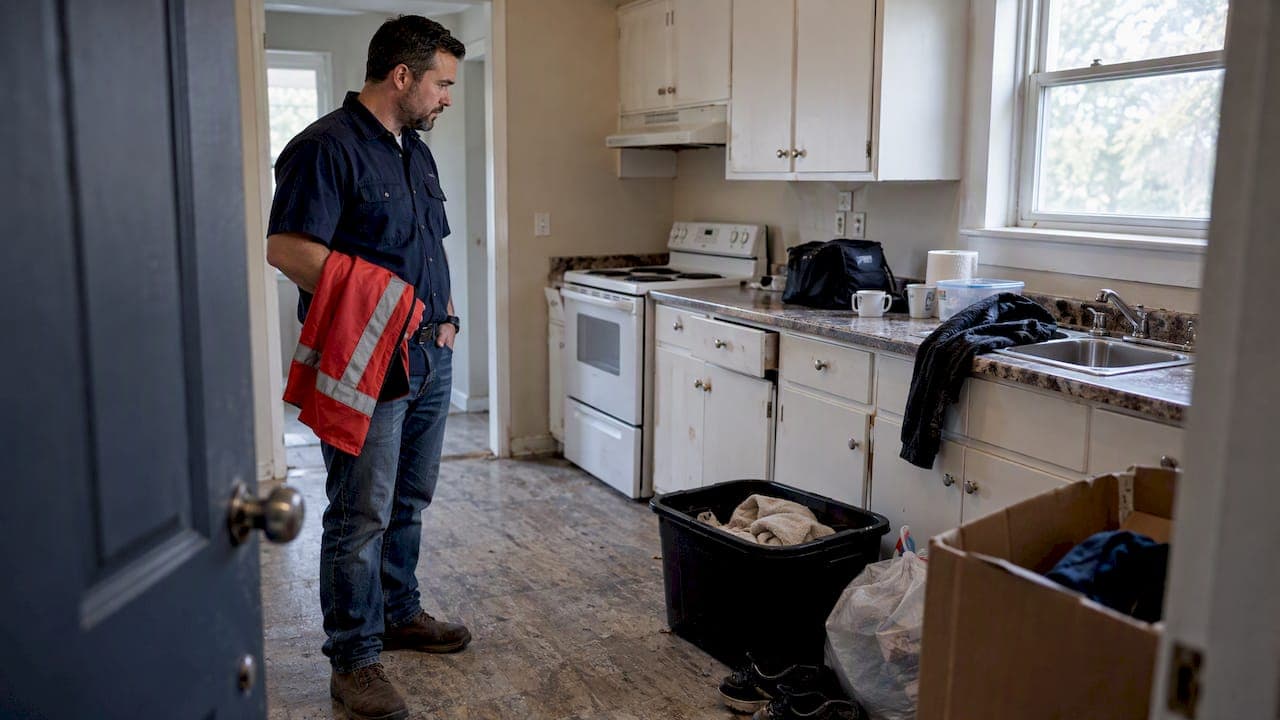
Do not re-enter the unit, change the locks, or throw out belongings. The safe path under Georgia law is to file a dispossessory affidavit and obtain a writ of possession, or to follow a carefully documented written-demand process if the case is clear-cut. Self-help eviction exposes you to real liability, and skipping a Servicemembers Civil Relief Act check can turn a simple cleanout into a federal problem.
TL;DR:
- Filing a dispossessory affidavit and obtaining a court-executed writ of possession is the legally safest method to remove tenants and their property in Georgia.
- It typically takes several weeks and incurs costs such as court fees, sheriff service charges, and storage or disposal expenses.
- Documentation must be precise, including written notices sent by certified mail, photos, videos, and a detailed inventory to protect against wrongful disposal claims.
- Before acting, landlords must check if tenants are service members or in mobile homes, as different rules and protections apply under federal and state law.
- Moving or selling tenant belongings must follow the court's timeline after a writ is executed, with independent witnesses and receipts strongly recommended.
Table of Contents
- Your first-week checklist when a unit looks abandoned
- Filing a dispossessory affidavit and getting a writ of possession
- Writing notices and documenting your case the right way
- What you can legally do with belongings left behind
- Mobile homes, service members, and other exceptions to check first
- Mistakes that turn a simple cleanout into a lawsuit
- How long it takes and what it costs to do this right
- A practical checklist and resources from OneSource Real Estate
- What experience teaches about handling abandoned property
- Let OneSource Real Estate handle the process for you
- FAQ
- Sources
Your first-week checklist when a unit looks abandoned
The first seven days set up everything that follows, including whether a judge believes your version of events.
- Secure the unit visually, but do not change locks or remove items; walk through only to confirm the apparent condition.
- Photograph and video every room with a timestamp, and log the date, time, and who was present.
- Send a written demand to the tenant's last known address and, where appropriate, post a copy on the door.
- Check whether the tenant is a service member or lives in a mobile home, since both change your options.
- Decide within days, not weeks, whether you will file a dispossessory affidavit or rely on a documented written-demand approach.
Waiting without acting is its own risk: unpaid rent keeps accruing, but so does your exposure if you guess wrong about abandonment.
Pro Tip: Keep a single dated log for every call, text, email, and visit. A disorganized paper trail is the number one reason landlords lose abandoned-property disputes.
Filing a dispossessory affidavit and getting a writ of possession
When a tenant stops paying rent or you cannot confirm they have moved out, the dispossessory process is the route Georgia courts expect you to use. You file a dispossessory affidavit in magistrate court, after reviewing the lease and serving any required notice, such as the three-day demand for unpaid rent. The tenant then has an opportunity to answer, and if they do not, or if the judge rules in your favor, the court issues a writ of possession.
- The writ authorizes removal of the tenant and the tenant's personal property from the unit.
- Under Georgia Code § 44-7-55, you may place that property on another part of your property or elsewhere, and once the writ is executed, the property is treated as abandoned.
- A sheriff or marshal typically executes the writ, not the landlord, which is part of what makes this process legally safer than handling it yourself.
Filing a dispossessory case and reaching an executed writ commonly takes a few weeks, though timing varies by county caseload, according to the Georgia Landlord-Tenant Handbook. Budget for court filing fees and sheriff service costs on top of your time. For a full walkthrough of filing paperwork and courtroom steps, see our writ of possession guide.
Writing notices and documenting your case the right way
A written demand only protects you if it is specific and provable. Vague language or an undocumented phone call will not hold up if a tenant later claims you disposed of their property wrongfully.
- Name the tenant, the unit address, a clear deadline to respond or retrieve belongings, and the consequence of nonresponse.
- Send by certified mail with a return receipt, and post a copy on the door when the lease or circumstances allow it; for more details on handling unclaimed mail in these situations, see our guidance on unclaimed mail in apartments.
- Keep proof of service: receipts, photos of the posted notice, and delivery confirmations.
- Build a written inventory of items left behind, paired with photos or video showing their location and condition.
- Give a retrieval deadline that is reasonable, not arbitrary, and understand that a deadline alone does not authorize disposal without following proper procedure.
County guidance, including Cherokee County's dispossessory materials, recommends photographing tenant property before any disposal specifically because tenants can and do sue over items that look worthless to a landlord. For notice wording you can adapt, our notice to vacate templates cover the language Georgia courts expect to see.
What you can legally do with belongings left behind
Once a writ of possession is executed, Georgia law treats the tenant's remaining property as abandoned, and you are generally no longer considered a bailee responsible for its safekeeping, per Georgia Code § 44-7-55. Removing items before that point, without a court order or a well-documented written-demand process, carries far more risk.
- Move items to secure storage and get a dated, signed inventory from whoever handles the move.
- Use third-party movers or storage companies rather than handling everything yourself; an independent witness and a receipt carry more weight than your own photos alone.
- Sell or donate only after a reasonable retrieval window has passed and your documentation supports that the property is truly abandoned.
- If you sell items, record the proceeds and apply them against unpaid rent or removal costs, keeping a clear accounting a tenant or court could review later.
- Hold onto every receipt: storage invoices, mover bills, photos, and the inventory sheet, in case a dispute surfaces months later.
Pro Tip: A signed inventory from a moving crew is worth more in court than a stack of landlord-only photos, because it adds an independent witness to your chain of custody.
Mobile homes, service members, and other exceptions to check first
Standard rental rules do not cover every situation, and skipping a check here is one of the costliest mistakes a landlord can make.
- Mobile homes often fall under personal-property rules rather than standard residential eviction, and some guidance treats a mobile home as unattended after roughly 30 days, so confirm which framework applies before acting.
- The SCRA prohibits knowingly seizing, holding, or detaining a service member's personal effects after a lawful lease termination, and this federal protection overrides normal state timelines.
- Run a quick SCRA status check through the tenant's branch of service or a legal database before disposing of anything.
- If the tenant holds a housing voucher or lives in a program-restricted unit, check with the administering agency, since local program rules can add steps beyond standard Georgia procedure.
Mistakes that turn a simple cleanout into a lawsuit
Self-help, meaning changing locks or hauling out belongings without a court order, is the single biggest source of landlord liability in abandonment cases. Even when you are almost certainly right that a tenant has left for good, acting before you have a writ or solid documentation invites a claim for the value of discarded property, plus potential damages.

Contemporaneous documentation and the dispossessory process both exist to protect you from that outcome. Photos taken the day you notice the unit looks vacant, dated notices, and a filed court case all build a record that holds up months later. When a tenant disputes the facts, or when high-value items are involved, stop and consult a Georgia landlord-tenant attorney rather than guessing.

How long it takes and what it costs to do this right
Magistrate court timelines vary by county, and busier metro courts can move slower than rural ones. Expect several cost buckets beyond your own time.
- Filing fees for the dispossessory affidavit, typically a modest court cost set by the county.
- Sheriff or marshal service and writ execution fees.
- Mover and storage costs if you need to relocate and hold belongings.
- Disposal fees if items are ultimately discarded rather than sold or donated.
Filing through magistrate court generally takes a few weeks from affidavit to executed writ, according to the Georgia Landlord-Tenant Handbook, though county caseloads shift that window. Weigh the modest added cost of the court process against the much larger risk of a wrongful-disposal claim.
A practical checklist and resources from OneSource Real Estate
A practical checklist was built from the common steps used when managing rental properties: inspect without disturbing, document everything, send a written demand, file the dispossessory affidavit when needed, coordinate with the sheriff on writ execution, then inventory and store what remains.
- Read our step-by-step writ of possession guide before you file.
- Review the full dispossessory process in our eviction filing guide.
- Check occupancy disputes against our Georgia squatters' rights guide if you are unsure whether someone has a legal claim to the unit.
- If you would rather not manage this process alone, hiring a property manager or seeking an eviction-focused consulting session can assist with filing and coordination.
What experience teaches about handling abandoned property
The landlords who avoid trouble are the ones who document first and act second. A dated photo taken the week you suspect a unit is empty is worth more than a strong memory six months later in a courtroom. Dispossessory procedure feels slower than just clearing the unit yourself, but it is the difference between a clean file and an open liability.
When the facts are messy, a service member might be involved, or real money is at stake, bring in a property manager or a Georgia landlord-tenant attorney rather than relying on judgment alone.
— Matt
Let OneSource Real Estate handle the process for you
Chasing down a dispossessory filing, coordinating a sheriff's writ execution, and documenting an abandoned unit takes time most landlords do not have, especially while also trying to re-rent the property. OneSource Real Estate's Monthly Management service handles tenant placement, rent collection, maintenance, and eviction support as part of full-service management, so you are not piecing together legal steps on your own.

- Monthly Management services can cover day-to-day landlord duties, including eviction coordination, for owners who want end-to-end handling.
- Tenant Placement services suit owners who only need a qualified renter found and screened.
- Short consulting calls provide focused answers for specific abandonment or eviction scenarios.
If a tenant has already left belongings behind and you are not sure what to do next, visit our property management page to see how our team can take this off your plate.
This article is general information, not a substitute for advice from a qualified lawyer. Consult a qualified legal professional about your own circumstances before acting on anything here.
FAQ
How long before property is considered abandoned in Georgia?
Georgia has no single statutory waiting period for standard rental units, according to the Georgia Landlord-Tenant Handbook. Property is legally treated as abandoned after a writ of possession is executed under Georgia Code § 44-7-55, not after a fixed number of days passing informally.
How do I claim abandoned property in Georgia for free?
There is no free shortcut that skips the legal process; the lawful route is filing a dispossessory affidavit in magistrate court, which carries a standard filing fee rather than being cost-free. Once a writ of possession is executed, the property left behind is regarded as abandoned and you may place or dispose of it under Georgia Code § 44-7-55.
What qualifies as abandonment in Georgia?
Abandonment generally means the tenant has vacated without proper notice and left belongings behind, but Georgia courts rely on documented evidence, such as written demands and dated photos, rather than a fixed rule. The Georgia Landlord-Tenant Handbook advises landlords to confirm vacancy through notice and documentation before treating a unit as abandoned.
How long after a tenant abandons the property can I remove their belongings?
The safest point to remove belongings is after a sheriff or marshal executes a writ of possession, since the property is then legally treated as abandoned under Georgia Code § 44-7-55. Removing items earlier, even after a written demand deadline passes, still carries legal risk unless your documentation is thorough.
Sources
- Georgia Code § 44-7-55 (Justia)
- Georgia Landlord-Tenant Handbook (Georgia Courts / DCA)
- Cherokee County dispossessory facts (Magistrate Court guidance)
- SCRA guidance (Georgia courts compilation)