
Every residential lease in the United States carries an implied promise called the covenant of quiet enjoyment. It guarantees your right to peaceful possession and use of your rental property without substantial interference from your landlord or anyone under their control. You do not need to find this phrase written in your lease for it to apply. Courts across the country recognize it as a baseline protection built into every tenancy by law.
Here is what this covenant actually covers:
- Peaceful possession: You have the right to occupy your home without your landlord unlawfully entering, harassing you, or disrupting your daily life.
- Exclusion of unauthorized parties: Your landlord cannot allow others to interfere with your use of the property without legal justification.
- Reasonable landlord access: Landlords retain the right to enter for repairs or inspections, but only with proper notice and at reasonable times except in genuine emergencies.
- Protection from controlled disturbances: If another tenant in your building is causing serious problems, your landlord has a duty to act.
- Beneficial use of the property: You are entitled to use the property for its intended residential purpose without being driven out by conditions your landlord created or failed to address.
One distinction worth knowing early: the right of quiet enjoyment is not the same as the warranty of habitability. Habitability focuses on the physical condition of the property, such as broken heat or a leaking roof. Quiet enjoyment covers interference with your peaceful use, such as harassment, unauthorized entries, or unaddressed disturbances from other tenants. Both protections matter, but they apply to different problems.
Table of Contents
- What counts as a breach of your right to quiet enjoyment?
- What remedies do you have when the covenant is breached?
- How to handle noise complaints and other disturbances
- How to end your lease early when a breach forces you out
- Expert legal insights for tenants enforcing their rights
- Key Takeaways
- FAQ
What counts as a breach of your right to quiet enjoyment?
Not every frustration with a landlord rises to a legal breach. Courts require substantial interference that meaningfully impairs your ability to use and enjoy the property. A landlord who occasionally forgets to fix a squeaky door is not violating your rights. A landlord who repeatedly enters without notice, ignores a neighbor who plays music at 3 AM every night, or shuts off your utilities to pressure you out of the unit is a different matter entirely.
Common examples of genuine breaches include:
- Landlord harassment: Threatening behavior, verbal abuse, or repeated unannounced visits designed to pressure you to leave.
- Unauthorized entry: Entering your unit without proper notice except in a true emergency. Most states require 24 hours' advance notice.
- Failure to address disruptive tenants: If another tenant under the same landlord is creating serious, ongoing disturbances and the landlord does nothing, that inaction can constitute a breach.
- Utility shutoffs: Cutting off water, heat, or electricity to force you out is both a breach of quiet enjoyment and often a separate statutory violation.
- Extreme noise or disturbances: Persistent, severe noise from construction or other tenants that the landlord controls and refuses to address.
One important limit: landlords are not liable for disturbances caused by strangers or neighbors who are not their tenants. If someone from outside the building is harassing you, that is a matter for law enforcement, not a quiet enjoyment claim against your landlord.
Constructive eviction is the most severe form of breach. It occurs when a landlord's actions or failures make the property so untenable that you are effectively forced to leave. Under constructive eviction, you can be relieved of future rent obligations and may pursue damages. The legal bar is high: the property must be genuinely unlivable, and you must actually vacate within a reasonable time after the breach. Staying put for months after conditions become intolerable weakens or eliminates the claim.
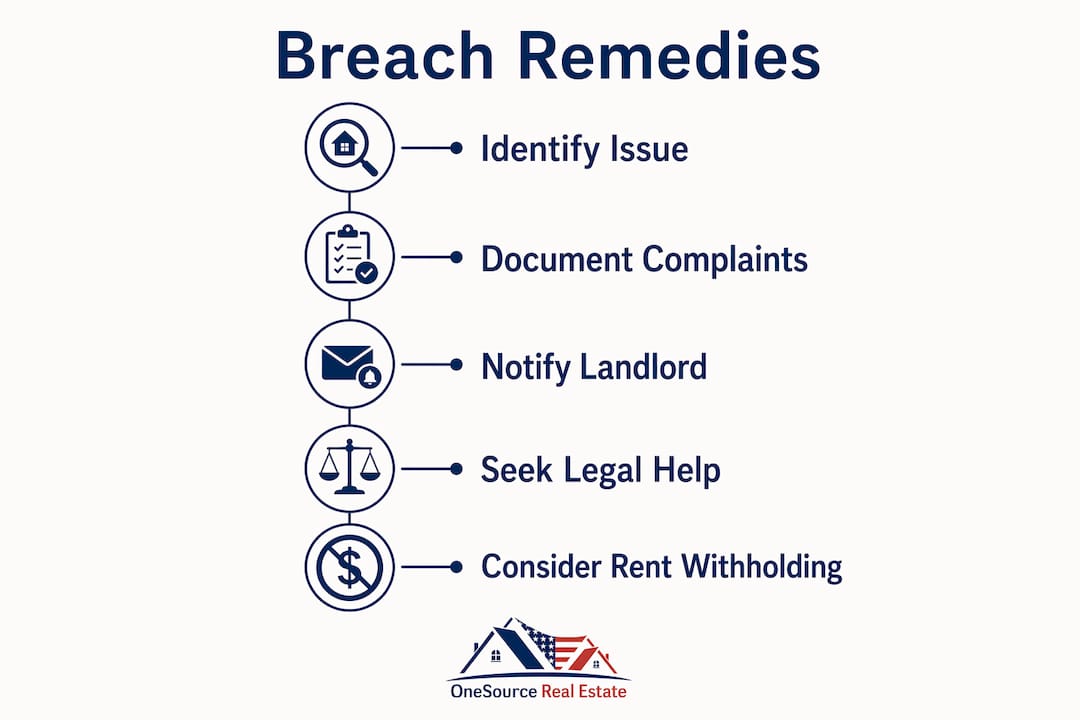
What remedies do you have when the covenant is breached?
When a landlord violates your right to peaceful enjoyment, you have real legal options. The right remedy depends on the severity of the breach, your jurisdiction, and how well you have documented the problem.
- Contract damages: You can sue for the difference between the rent you paid and the actual rental value of the property given the interference. In constructive eviction cases, recoverable damages may also include moving expenses and, in some jurisdictions, attorney's fees.
- Injunctive relief: A court can order your landlord to stop the offending conduct. This is particularly useful when the breach is ongoing and damages alone would not fix the problem.
- Lease termination: In serious cases, especially constructive eviction, you may be legally entitled to terminate the lease without penalty and walk away from future rent obligations.
- Remaining in possession: You do not always have to move out to pursue a claim. In many jurisdictions, tenants can stay in the unit and sue for damages while the lease continues.
Pro Tip: Never withhold rent as a protest tactic without first consulting a tenant's rights attorney. Failing to pay rent can forfeit your legal defenses and even constitute a breach of the lease on your part, which hands your landlord a powerful counterargument in court.
Remedies vary significantly by state. Georgia, Texas, California, and other states each have their own statutes and case law shaping what tenants can recover and how. What works in one jurisdiction may not apply in another, which is exactly why legal aid resources and local tenant attorneys matter.
How to handle noise complaints and other disturbances
Noise is the most common quiet enjoyment complaint tenants bring to landlords and courts. But not all noise qualifies as a breach. A neighbor's occasional party does not meet the substantial interference standard. Nightly disturbances that prevent sleep, repeated loud arguments, or construction noise during hours your landlord controls are a different story.
When disturbances affect your ability to use your home, take these steps:
- Document everything in writing: Keep a log with dates, times, duration, and a description of each incident. Photos, videos, and audio recordings add weight to your case.
- Notify your landlord in writing: A text or email creates a paper trail. A phone call does not. Send a written complaint describing the disturbance and requesting action.
- Give your landlord a reasonable opportunity to respond: Courts expect you to give the landlord a chance to fix the problem before you escalate. What counts as "reasonable" depends on the severity, but a week to two weeks is a common benchmark for non-emergency situations.
- Follow up if nothing changes: If the landlord ignores your complaint, send a second written notice referencing the first and stating that you will pursue legal remedies if the issue continues.
- Contact local authorities when appropriate: For noise violations that break local ordinances, a police report or noise complaint with the city creates an independent record that supports your legal position.
Your landlord has a duty to take reasonable steps to stop disturbances caused by tenants under their control. The Texas Attorney General's office notes that landlords are responsible for addressing tenant-caused disturbances, though they are not required to guarantee silence.
Pro Tip: Keep your own behavior above reproach. Tenants who disturb their neighbors undermine their own quiet enjoyment claims. Courts and landlords are far less sympathetic when the complaining tenant is also part of the problem.

Landlord entry rights also fall under this section. Your landlord can enter for legitimate reasons, including repairs, inspections, and showing the unit to prospective tenants. Most states require advance written notice of at least 24 hours. Repeated unannounced entries, even for ostensibly valid reasons, can cross into harassment and breach your right to privacy.
How to end your lease early when a breach forces you out

Terminating a lease early is a serious legal step. Done correctly, it protects you from owing future rent. Done carelessly, it leaves you liable for months of payments to a landlord who may sue to collect. The threshold for justified early termination is a substantial breach, not a minor inconvenience.
Follow these steps if you believe the breach warrants leaving:
- Send a formal written notice to your landlord describing the breach in specific detail, citing the dates and nature of each incident, and stating that you consider the covenant of quiet enjoyment violated.
- Set a clear deadline for remedy. Give the landlord a defined window, typically 14 to 30 days depending on the severity, to correct the problem. This step is often legally required before you can terminate.
- Document every communication. Save every email, text, letter, and written response. If you speak with your landlord by phone, follow up with a written summary of what was discussed.
- Vacate within a reasonable time if the breach is not remedied. For a constructive eviction claim to hold up, courts expect you to leave promptly after the property becomes untenable. Waiting too long signals that conditions were not actually unlivable.
- Preserve all evidence for court. Organize your documentation chronologically: your initial complaints, the landlord's responses or lack thereof, records of the disturbances, and any repair requests. A well-organized file is far more persuasive than a pile of screenshots.
- Consult an attorney before you vacate. A tenant's rights attorney can assess whether your situation meets the legal standard for constructive eviction in your state and help you avoid procedural mistakes that could cost you the case.
Landlords sometimes respond to early termination by suing for unpaid rent. Being prepared with thorough documentation and legal counsel is not optional if you want to defend that claim successfully. Understanding your lease terms before you sign is the best way to know exactly what your rights and obligations are from day one.
Expert legal insights for tenants enforcing their rights
Legal experts who work in tenant rights consistently point to the same mistakes tenants make when trying to enforce the covenant of quiet enjoyment. Knowing these pitfalls in advance puts you in a much stronger position.
- Read your lease carefully before signing. Lease agreements may contain clauses that modify or limit the implied covenant. While courts will not allow landlords to eliminate the covenant entirely, specific lease language can narrow its scope in ways that affect your remedies.
- Do not confuse quiet enjoyment with habitability. If your heat stops working in January, that is a habitability issue. If your landlord keeps entering your apartment unannounced, that is a quiet enjoyment issue. The distinction matters because the remedies and legal standards differ.
- Documentation is your most powerful tool. that written records and giving landlords a reasonable chance to respond are the foundation of any successful tenant claim. Without documentation, it is your word against your landlord's.
- Never withhold rent without legal advice. Stopping rent payments without proper legal guidance can forfeit your defenses and expose you to eviction proceedings, even when your underlying complaint is valid.
- Understand the limits of landlord liability. Your landlord is not responsible for every bad actor in the world. Disturbances from strangers or neighbors outside the landlord's property are generally outside the scope of a quiet enjoyment claim.
- Georgia tenants have specific protections. If you rent in Atlanta or the surrounding metro area, Georgia fair housing laws layer additional protections on top of the implied covenant, and local legal aid organizations can help you navigate both.
Pro Tip: Before any legal escalation, send your landlord a written summary of every complaint you have made, the dates you made them, and the responses you received. This single document often prompts landlords to act, and if it does not, it becomes exhibit A in your case.
Reviewing real estate contract terms before you sign a lease is one of the most practical things you can do to protect yourself. Knowing what your lease says about landlord entry, disturbance remedies, and dispute resolution means you are never caught off guard when a problem arises.

If you are navigating a rental situation in Atlanta or the surrounding area and want a landlord who takes these obligations seriously, OneSource Real Estate's property management services are built around compliance, communication, and tenant-landlord relationships that work. Professional management means fewer disputes and faster resolutions when issues do arise.
Key Takeaways
The implied covenant of quiet enjoyment is a legally enforceable right in every U.S. residential lease, protecting tenants from substantial interference with their peaceful use of the property.
| Point | Details |
|---|---|
| Implied in every lease | The covenant applies automatically to all U.S. residential tenancies, even without explicit lease language. |
| Substantial interference required | Courts require more than minor annoyances; the breach must meaningfully impair your use of the property. |
| Constructive eviction is the severest breach | If conditions become untenable and you vacate promptly, you may be relieved of future rent obligations. |
| Documentation is foundational | Written records of disturbances and landlord communications are essential before any legal action. |
| Withholding rent carries serious risk | Stopping rent payments without legal counsel can forfeit your defenses and expose you to eviction. |
FAQ
What is the right of quiet enjoyment?
The right of quiet enjoyment is an implied legal covenant in every U.S. residential lease guaranteeing tenants peaceful possession and use of their rental property without substantial interference from the landlord or parties under the landlord's control.
What qualifies as a breach of the covenant of quiet enjoyment?
A breach requires substantial interference with your ability to use and enjoy the property, such as landlord harassment, repeated unauthorized entry, utility shutoffs, or failure to address serious disturbances by other tenants under the landlord's control. Minor annoyances do not meet the legal threshold.
What is constructive eviction and how does it relate to quiet enjoyment?
Constructive eviction occurs when a landlord's actions or failures make the property so untenable that you are effectively forced to leave. It is the most severe form of a quiet enjoyment breach and can relieve you of future rent obligations if you vacate within a reasonable time.
Can you withhold rent if your landlord breaches quiet enjoyment?
Withholding rent without legal guidance is risky and can forfeit your legal defenses. Consult a tenant's rights attorney before stopping payments, even when the landlord's breach is clear.
Does quiet enjoyment protect you from all neighbor noise?
No. Your landlord is responsible for disturbances caused by other tenants under their control, but not for noise from strangers or neighbors outside the landlord's property. For those situations, local noise ordinances and law enforcement are the appropriate channels.