
TL;DR:
- Property management in Dallas, GA involves handling tenant screening, leasing, maintenance, and legal compliance to protect owners' investments. Utilizing local market data and proactive maintenance strategies ensures optimal rental income and legal adherence. Owner portals and technology streamline oversight, offering transparency and real-time access to property performance.
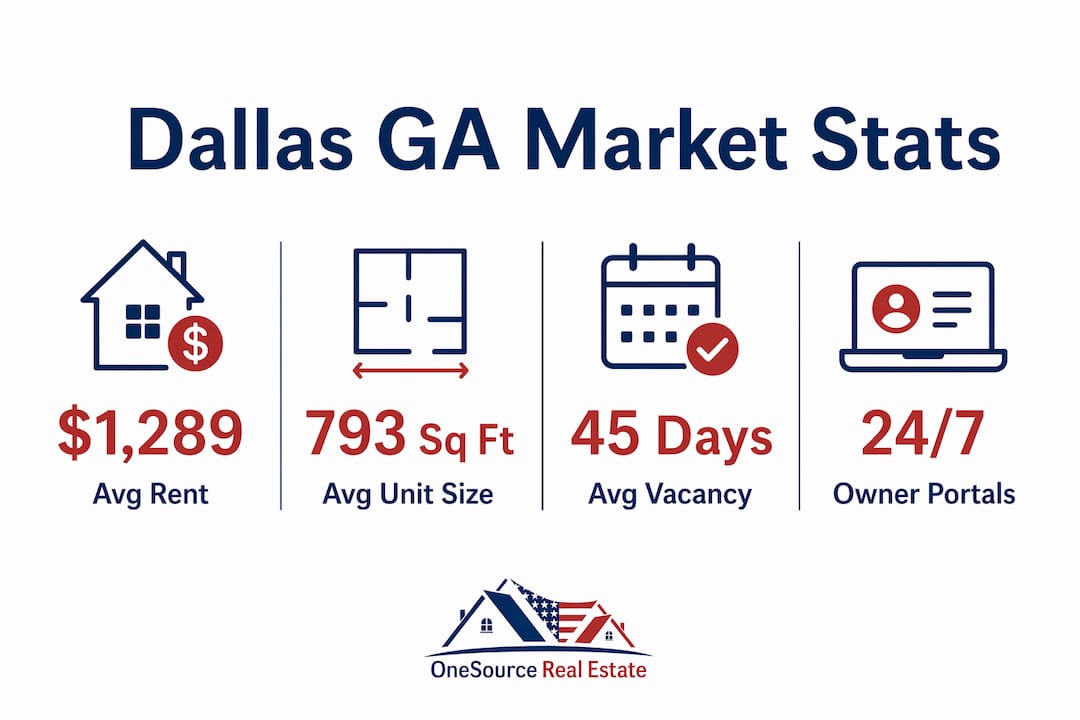
Dallas GA property management is the professional practice of overseeing all daily operations of a rental property, from tenant screening to legal compliance, so owners can protect their investment without managing every detail themselves. Property owners in Dallas, Georgia face a rental market that rewards preparation. The average monthly rent sits at $1,289 for roughly 793 square feet, which means pricing, presentation, and tenant quality all directly affect your bottom line. OneSource Real Estate works with Dallas area owners to handle that full management cycle, covering leasing, maintenance, rent collection, and reporting under one roof.
What services are included in Dallas GA property management?
Professional property management covers far more than collecting rent. A full service provider handles every touchpoint between you and your tenant, from the moment a unit is listed to the day a lease ends.
Core services typically include:
- Tenant screening: Background checks, credit reviews, income verification, and rental history checks. Careful applicant vetting aligns with Georgia landlord-tenant law and reduces the risk of costly evictions.
- Leasing and marketing: Professional photography, listing syndication, and showing coordination to minimize vacancy periods.
- Rent collection: Automated payment systems and clear due-date policies keep cash flow consistent. Online rent payment options and auto-drafts reduce late payments and cut down on owner follow-up.
- Property inspections: Move-in, move-out, and periodic inspections document property condition and catch problems early.
- Maintenance coordination: Licensed vendor relationships mean repairs get scheduled and completed without the owner making calls.
- Legal compliance: Lease drafting, security deposit handling, and proper notice procedures all follow Georgia statutes.
Pro Tip: Ask any management company you interview whether their lease template follows the Georgia Realtors standard form. That form is updated annually and reflects current state law, which protects you from liability gaps that older templates miss.
Owner portals add another layer of value. Secure 24/7 owner portals give you real-time access to financial reports, maintenance logs, and property performance data without needing to call your manager. That transparency is now a baseline expectation, not a premium feature.
How does Dallas GA's local rental market shape management strategy?
Understanding local market data is the foundation of good property management decisions. Dallas, GA sits in Paulding County, part of the broader Atlanta metro, and its rental market reflects suburban growth patterns that differ from urban core dynamics.

The table below shows key benchmarks for the Dallas rental market as of 2026:
| Metric | Dallas, GA Benchmark |
|---|---|
| Average monthly rent | $1,289 |
| Average unit size | 793 sq ft |
| Market position | Atlanta suburban corridor |
| Primary compliance framework | Georgia landlord-tenant law |
These numbers matter for two reasons. First, pricing a unit above the local average without a clear amenity advantage extends vacancy. Second, pricing too low leaves money on the table and can attract applicants who do not meet income thresholds. A property manager who tracks local rental market trends adjusts your listing price based on current absorption rates, not last year's numbers.
Georgia landlord-tenant law compliance is non-negotiable in this market. Dallas renters expect clear lease terms, timely maintenance responses, and proper security deposit handling. Owners who skip these steps face disputes that cost far more than a management fee.
Pro Tip: Track your vacancy rate separately from your occupancy rate. A property that sits empty for 45 days between tenants loses more annual income than a 5% rent reduction would cost. Your manager should report both metrics monthly.
What are best practices for maintenance and inspections in Dallas GA?
Proactive maintenance is the single biggest factor separating profitable rental properties from money-losing ones. Dallas, Georgia's climate adds specific pressure points that owners must plan for.
-
Schedule move-in and move-out inspections with photos. Documented condition reports protect you legally and give tenants a clear baseline. Disputes over security deposits drop sharply when both parties sign off on a timestamped photo record.
-
Conduct mid-lease inspections every 6 months. Catching a slow leak under a sink or a cracked caulk line around a tub costs under $100 to fix early. Left unaddressed, the same issue can cause mold, subfloor damage, and a repair bill that runs into thousands.
-
Plan maintenance around Dallas moisture patterns. Maintenance planning that accounts for moisture exposure and traffic patterns reduces repair frequency and extends the life of finishes like paint, caulk, and flooring. Bathrooms, laundry areas, and exterior entry points need seasonal attention.
-
Address minor repairs immediately. Routine inspections and prompt minor repairs prevent larger, costly future repairs and maintain property safety. A tenant who sees fast responses to small requests stays longer and treats the property better.
-
Build a vetted vendor list before you need it. Emergency HVAC calls in July or plumbing failures in january are not the time to search for a contractor. A professional management company maintains pre-negotiated relationships with licensed vendors, which means faster service and better pricing than an owner calling cold.
The difference between a well-maintained property and a deteriorating one is not budget. It is consistency. Owners who rely on ad hoc repairs spend more over time than those who follow a scheduled inspection and maintenance program.
How do owner portals and technology improve rental property oversight?
Technology has changed what property owners can reasonably expect from their management company. The standard is now real-time data, not monthly paper statements.
A well-built owner portal gives you:
- Live financial dashboards: View rent collected, maintenance expenses, and net income by month without waiting for a mailed report.
- Maintenance request tracking: See every open work order, the assigned vendor, and the estimated completion date.
- Lease and document storage: Access current leases, inspection reports, and vendor invoices from any device.
- Tenant payment history: Identify patterns in late payments before they become a problem.
- Performance benchmarks: Compare your property's vacancy rate and rent per square foot against local averages.
Property owners who engage actively with transparent reporting and clear communication resolve issues faster and report higher satisfaction with their management relationship. That finding reflects a practical reality: owners who can see what is happening do not need to guess, and they make better decisions as a result.
Online payment tools also benefit tenants directly. Auto-draft options and digital payment portals reduce the friction of monthly rent, which means fewer late payments and more consistent cash flow for you. For a Dallas rental property generating $1,289 per month, even one avoided late payment per year adds up.
Key Takeaways
Professional Dallas GA property management protects rental income by combining local market knowledge, legal compliance, proactive maintenance, and technology-driven transparency into one managed service.
| Point | Details |
|---|---|
| Local market benchmarks matter | Dallas GA rents average $1,289/month; pricing above or below this without justification extends vacancy or reduces income. |
| Full service management covers more than rent | Screening, leasing, inspections, maintenance, and legal compliance all fall under professional management. |
| Proactive maintenance saves money | Addressing minor repairs immediately prevents costly escalation and improves tenant retention. |
| Owner portals are now standard | Real-time financial and maintenance data gives owners control without requiring daily involvement. |
| Georgia law compliance is non-negotiable | Lease terms, deposit handling, and notice procedures must follow state statutes to avoid legal exposure. |
What I've learned after years of watching owners manage Dallas rentals themselves
The owners who struggle most are not the ones with bad properties. They are the ones who underestimate how much time and local knowledge rental management actually requires.
Self-managing a single rental in Dallas sounds manageable until a tenant calls at 10 PM about a water heater, you need to serve a proper notice under Georgia law, or you realize your lease does not include a clause that would have protected you in a dispute. Each of those moments costs money and stress that a professional manager would have absorbed.
The proactive maintenance point is where I see the sharpest contrast. Owners who manage their own properties tend to respond to problems. Professional managers prevent them. That shift from reactive to planned upkeep is worth more than the management fee in most cases, especially in a market like Dallas where moisture and seasonal temperature swings accelerate wear on finishes and mechanical systems.
Technology is the other gap. Owners who self-manage often track income and expenses in a spreadsheet, which works until it does not. A proper property management platform gives you audit-ready records, tenant communication logs, and maintenance histories that protect you if a dispute ever reaches a courtroom.
My honest recommendation: if you own more than one rental property in the Dallas area, the math on professional management almost always works in your favor. The fee pays for itself in reduced vacancy, avoided legal mistakes, and time you get back.
— Matt
OneSource Real Estate manages Dallas properties so you do not have to
Owning a rental property in Dallas, GA should generate income, not consume your weekends. OneSource Real Estate provides a full management suite built for residential property owners across the Atlanta metro, including Dallas and surrounding Paulding County communities.
OneSource Real Estate handles tenant screening, leasing, rent collection, maintenance coordination, and owner reporting through a transparent portal that keeps you informed without pulling you into daily operations. Their local knowledge of the Dallas rental market means your property is priced correctly, maintained proactively, and leased to qualified tenants. If you are ready to put your rental property management on a professional footing, OneSource Real Estate is the place to start.
FAQ
What does a Dallas GA property manager actually do?
A property manager handles tenant screening, rent collection, maintenance coordination, inspections, and legal compliance on behalf of the owner. The goal is to protect the property's value and keep it occupied with qualified tenants.
How much does property management cost in Dallas, GA?
Management fees vary by provider and service level, but most full service companies charge a percentage of monthly rent collected. Exact pricing is not publicly standardized, so request a written fee schedule from any company you consider.
What is the average rent for a Dallas, GA rental property?
The average monthly rent in Dallas, GA is approximately $1,289 for a unit averaging 793 square feet as of 2026. Use this as a baseline when evaluating your own property's pricing.
Do I need a property manager if I only own one rental?
One rental property still requires lease compliance under Georgia law, maintenance response, and tenant communication. A professional manager reduces legal risk and vacancy time even for single-property owners.
How do owner portals work in property management?
Owner portals are secure online platforms that give property owners real-time access to financial reports, maintenance logs, and lease documents. Most reputable management companies include portal access as part of their standard service.