
The due diligence period in Georgia is a contractual "free look" window built into your purchase agreement. During it, you can walk away from the deal for any reason and get your earnest money back, as long as you deliver written notice to the seller before the deadline. Georgia law sets no mandatory length for this window; the timeframe is negotiated between buyer and seller and written into the contract. Georgia Title & Escrow Company describes the typical residential range as 10–14 days, though competitive offers can compress that to 3–7 days.
The single most important action you can take the moment both parties sign: schedule your home inspection. Not tomorrow. That day.
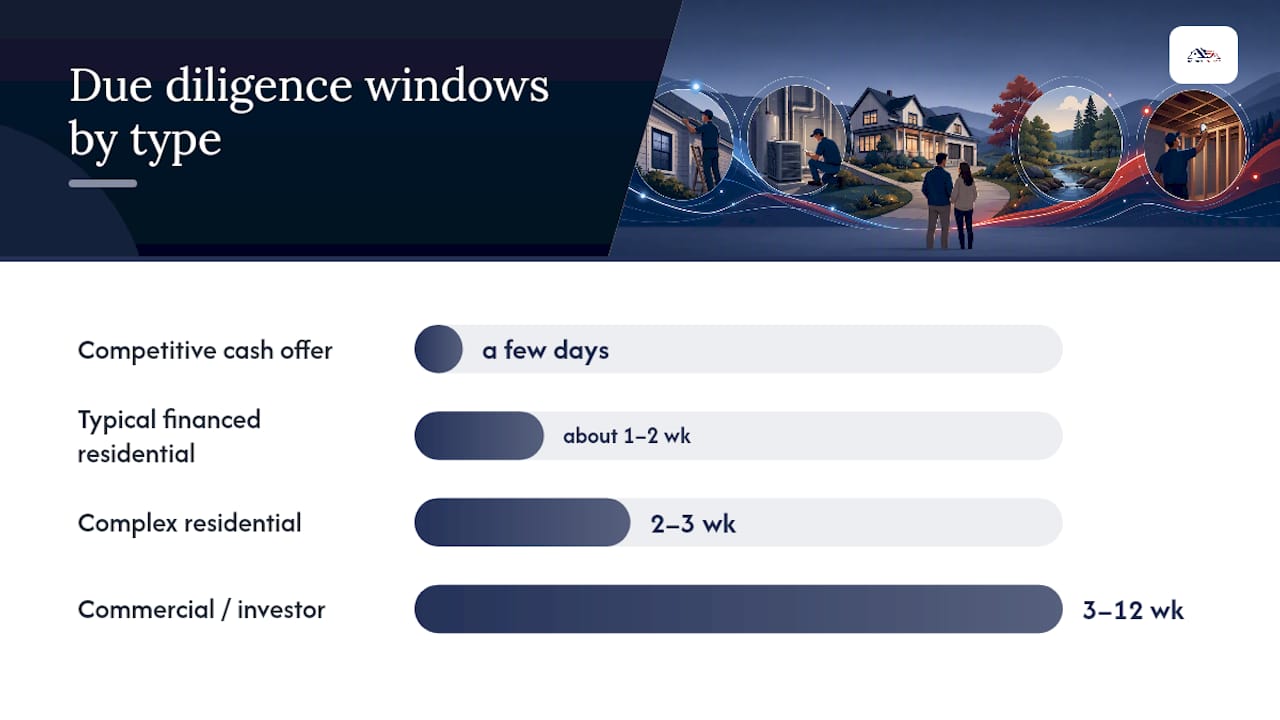
- Competitive cash offer: a few days
- Typical financed residential purchase: about one to two weeks
- Complex, commercial, or investor property: several weeks or longer
Key Takeaways
Georgia's due diligence period is a contractual, negotiated window, and the buyers who protect their earnest money are the ones who act on day one, document everything, and never let the deadline sneak up on them.
| Point | Details |
|---|---|
| Clock starts on execution date | The period begins the day both parties sign, not the day after. |
| Typical residential window is 7–14 days | Georgia sets no statutory length; 10–14 days is common for financed purchases. |
| Written notice is required to cancel | Deliver termination notice before the deadline to recover your earnest money. |
| Hire certified inspectors | Georgia has no home-inspector license law; choose ASHI, InterNACHI, or NRPP-certified professionals. |
| OneSource Real Estate coordinates the process | OneSource handles inspection scheduling, document collection, and deadline tracking for buyers in Atlanta and surrounding areas. |
Table of Contents
- When does the due diligence period in Georgia actually start?
- How long is the due diligence period in Georgia?
- What can you do during due diligence, and how does cancellation work?
- What should you actually do during the due diligence period?
- What happens after the due diligence period ends?
- When should you bring in a Georgia real estate attorney?
- The OneSource Real Estate due diligence game plan
- How to negotiate the due diligence period length in Georgia
- Why buyers who use the full window come out ahead
- OneSource Real Estate is ready to help you from day one
- Sources
- FAQ
When does the due diligence period in Georgia actually start?
The clock starts on the execution date, which is the date both parties sign the purchase agreement. Not the day after. Not the next business morning. Perigon Legal confirms that buyers should schedule inspections the same day the contract is executed to avoid losing critical days.
Most buyers assume the period begins the following day.
Counting the days: Georgia purchase contracts typically count calendar days unless the agreement specifies business days. Here are two quick examples:
- Contract signed on Monday with a 7-day window: the period expires the following Monday.
- Contract signed on Thursday with a 10-day window that crosses a weekend and a federal holiday: count every calendar day including Saturday, Sunday, and the holiday unless your contract explicitly excludes them.
When you need to terminate or request an amendment, written notice must go to the seller or the seller's agent. How you deliver it matters. Email with a read receipt, fax with a confirmation sheet, or hand delivery with a signed acknowledgment all create a timestamp. A text message to your agent is not a reliable substitute.
Pro Tip: Request any extension in writing before the deadline, not the morning it expires. Send the request by email and ask your agent to confirm receipt in writing. That paper trail is your protection if a dispute arises later.
How long is the due diligence period in Georgia?
Georgia has no statute that sets a minimum or maximum length. The period is entirely negotiated, which means you have real leverage at the offer stage. Deal Run's Georgia Transaction Guide notes that the due diligence mechanism here functions similarly to a Texas option period but without a separate option fee, and that experienced buyers sometimes shorten or waive it to win competitive offers.
Practical ranges by transaction type:
| Transaction type | Typical due diligence window |
|---|---|
| Competitive cash offer | a few days |
| Typical financed residential | about one to two weeks |
| Complex residential (septic, well, older home) | two to three weeks |
| Commercial or investor property | several weeks to a few months |
Factors that push the window longer include financing type (FHA and VA loans have more moving parts), property complexity (septic systems, private wells, new construction punch lists), and specialist availability. A radon test takes 48–72 hours minimum. A septic inspection in a rural county may require a licensed contractor with a 5-day lead time.
Negotiation levers:
- Offer a slightly higher earnest money deposit in exchange for a longer window.
- Propose a flexible closing date to offset the seller's concern about a longer period.
- If you're in a multiple-offer situation, a shorter window signals confidence and can tip the decision your way, but only shorten it if you can realistically complete your inspections.
What can you do during due diligence, and how does cancellation work?
During the due diligence period, you hold an unrestricted termination right under the contract. You don't need a reason. You don't need to prove a defect. You just need to deliver written notice before the deadline.
How to give proper notice:
- Address it to the seller or the seller's agent (check your contract for the required recipient).
- State clearly that you are terminating the purchase agreement.
- Reference the property address and contract date.
- Send it by a method that creates a timestamp (email with confirmation, fax, or hand delivery with acknowledgment).
A sample termination sentence: "Pursuant to the due diligence provision of the Purchase and Sale Agreement dated [date] for the property located at [address], Buyer hereby provides written notice of termination and requests the return of the earnest money deposit in full."
If you terminate on time, your earnest money is refunded. If you miss the deadline, the deposit is typically at risk and you are generally bound to the contract unless another surviving contingency applies.
Note: your termination right depends entirely on the contract language. Financing and appraisal contingencies may survive the due diligence period separately. Consult your agent or a Georgia real estate attorney for contract-specific interpretation.
What should you actually do during the due diligence period?
Start with the inspections and long-lead tests. Every day you wait is a day you might not have if results come back with problems that need follow-up.
Prioritized checklist:
- General home inspection (schedule day one)
- Pest and wood-infestation report (often required by lenders)
- HVAC, roof, or electrical specialist if the general inspector flags concerns
- Septic system inspection and soil/perc test if applicable
- Well water quality test if the property is on a private well
- Radon test (minimum 48-hour closed-house test)
- Lead-based paint inspection for homes built before 1978
- Boundary survey if lot lines are unclear or encroachments are suspected
- HOA documents, CCRs, and financial statements if the property is in an HOA
- Title search and review of any easements or encumbrances
- Permit and code violation check with the local county or municipality
Champia Inspections confirms that Georgia does not require a statewide license to perform home inspections. That means anyone can legally call themselves a home inspector in this state. Protect yourself by hiring inspectors certified by ASHI (American Society of Home Inspectors), InterNACHI (International Association of Certified Home Inspectors), or, for radon testing, NRPP (National Radon Proficiency Program). These certifications signal that the inspector follows a defined standard of practice and carries professional accountability.
Typical cost ranges for Georgia due diligence tasks:
| Inspection or service | Typical cost range |
|---|---|
| General home inspection | $300 to $500 |
| Pest/wood-infestation report | $75 to $150 |
| Radon test | $100 to $200 |
| Septic inspection | $200–$500 |
| Boundary survey | $500 to $1,200 |
| Title search | $200 to $500 |
| Phase I Environmental Site Assessment | $2,000 to $4,000 |

Phase I ESA costs are sourced from commercial due diligence guidance for Georgia; boundary survey and title search ranges reflect the same source. Residential inspection costs vary by property size and provider.
Pro Tip: Call your preferred inspector the same hour the contract is signed. Slots fill fast in active Atlanta-area markets, and a 48-hour delay can mean losing 2 days of a 10-day window. Ask for same-day or 24-hour report delivery in writing when you book.
For buyers planning to rent out the property after purchase, reviewing HOA documents and lease restrictions early is especially useful. A guide to Georgia Realtors lease requirements can help you understand what document checks matter most before you close.
What happens after the due diligence period ends?
Once the period expires, the broad exit right is gone. Your earnest money is generally non-refundable unless a separate, surviving contingency applies. This is the point where many buyers feel exposed, and rightfully so.
Contingencies that may survive the due diligence period:
- Financing contingency, if explicitly written into the contract with its own deadline
- Appraisal contingency, if the property appraises below the purchase price and the contract addresses it
- Title defects that cannot be cured within the closing timeline
- Express contract remedies for seller misrepresentation or undisclosed material defects
The Consumer Financial Protection Bureau's homeownership resources are worth reviewing for financing protections, but don't treat the financing contingency as a broad safety net. If your underwriting is borderline, aim to get a conditional approval or clear-to-close before the due diligence period expires. That way, if the loan falls apart, you have the clearest possible path to recovering your deposit.
Recordkeeping after due diligence ends:
- Keep all inspection reports in a shared folder (Google Drive or Dropbox work well).
- Save delivery receipts for every notice you sent or received.
- Store written extension requests and seller responses together.
- Your agent and attorney should both have access to this folder.
When should you bring in a Georgia real estate attorney?
Consult a Georgia real estate attorney before the due diligence period expires if you encounter any of the following. Georgia is an attorney-closing state, so an attorney is already part of the closing process, but getting one involved early costs far less than discovering a title problem after you've lost your exit right.
- Title defects — clouds on title, unresolved liens, or competing ownership claims.
- Easements and encroachments — a neighbor's fence on your lot line or a utility easement that limits your planned use.
- Restrictive covenants — HOA rules or deed restrictions that prohibit your intended use of the property.
- Zoning or use restrictions — the property is zoned differently than the seller represented, or a planned addition isn't permitted.
- Unresolved code violations — open permits or citations that the seller hasn't disclosed.
- Environmental contamination — underground storage tanks, soil contamination, or proximity to a Superfund site.
- Contract ambiguity — unclear language about what's included in the sale, repair obligations, or contingency terms.
To find an attorney quickly: look for someone with Georgia residential or commercial closing experience, ask for a flat-fee contract review (often $200–$500), and confirm they can turn around an opinion before your deadline. Get their advice in writing, even a short email summary.
If you're concerned about contractor liens on the property, reviewing Georgia lien waiver requirements before closing can help you understand what documentation to request from the seller.
The OneSource Real Estate due diligence game plan
Follow this plan starting the day the contract is signed. Procrastination is the most common failure point in due diligence.
Day-one priorities:
- Schedule the general home inspection (call, don't email, for fastest response).
- Confirm lender underwriting status and request a timeline for conditional approval.
- Order the title report through your closing attorney.
- Request HOA documents, CCRs, and the most recent financial statements if applicable.
- Schedule any specialist tests with long lead times (septic, well, radon).
- Open a shared Google Drive or Dropbox folder and invite your agent, attorney, and lender.
- Set a calendar reminder for 48 hours before the due diligence deadline.
Sample 7-day schedule:
- Day 1: Sign contract. Schedule general inspection, confirm lender status, open shared folder.
- Day 2: General home inspection completed. Request pest/WDO report.
- Day 3: Review inspection report. Identify any specialist follow-ups needed. Start radon test.
- Day 4: Schedule HVAC, roof, or structural specialist if flagged. Review HOA documents.
- Day 5: Specialist inspections completed. Radon test still running. Review title report.
- Day 6: Radon test results received. Review all reports. Consult attorney if needed.
- Day 7: Decide: proceed, negotiate repairs, or terminate. Deliver written notice if terminating.
Sample email to your agent (day one):
"Hi [Agent], now that the contract is executed, please help me schedule a general home inspection as soon as possible today or tomorrow. I'd also like to confirm the HOA document request is submitted and that the title order is placed. Please add me to any confirmation emails so I have a record. Thanks."
Sample amendment request for an extension:
"Buyer requests a 7-day extension of the due diligence period due to [pending septic inspection / lab delay / lender underwriting timeline]. Seller's response requested by [date/time]."
Pro Tip: Use a shared Google Drive folder named after the property address. Drop every report, email confirmation, and notice into it the moment you receive it. If a dispute arises later, that folder is your evidence.
How to negotiate the due diligence period length in Georgia
Ask for the time you actually need, then offer something in return. Sellers in competitive markets don't love long due diligence windows because it keeps their property off the market. Your job is to make a longer window feel less risky to them.
Practical trade-offs to offer:
- Increase the earnest money deposit to show commitment.
- Offer a faster closing date to offset the longer inspection window.
- Agree to release a portion of the earnest money as non-refundable after a set number of days.
- Propose a specific end date rather than a number of days to give the seller a clear timeline.
When to request an extension:
- Unexpected inspection results that require specialist follow-up.
- Lab delays on radon, water quality, or soil tests.
- Lender underwriting delays that put your financing contingency at risk.
- Title issues that need attorney review before you can make an informed decision.
When shortening due diligence makes sense:
- You've already toured the property multiple times and it's in excellent condition.
- You're paying cash and have no financing contingency to manage.
- You've reviewed the seller's disclosure and there are no red flags.
Waiving due diligence entirely is a significant risk. A guide to selling as-is in Atlanta illustrates what buyers accept when they skip inspections, and the surprises are rarely small ones.
Why buyers who use the full window come out ahead
The buyers who get burned during due diligence almost always share one trait: they waited. They assumed the inspection could happen in a few days, that the title search was the attorney's job to rush, that the radon test was optional. Then the window closed.
The due diligence period in Georgia is one of the strongest buyer protections in any residential contract in the country. It's a contractual right to exit without penalty, and it costs nothing to use. The only way to lose it is to let the clock run out.
What most guides don't say clearly enough: the period isn't just for inspections. It's your window to confirm that the financing works, that the title is clean, that the HOA isn't financially distressed, and that the property can legally be used the way you intend. Buyers who treat it as "inspection time" and nothing else often close on problems they could have caught.
The other thing worth saying plainly: a shorter due diligence period is not always a competitive disadvantage. A buyer who comes in with a tight, well-organized 7-day window, a certified inspector already booked, and a lender who's ready to move is often more attractive to a seller than a buyer asking for 21 days with no plan. Speed and preparation are the same thing here.
OneSource Real Estate is ready to help you from day one
Buyers who work with OneSource Real Estate get more than representation. They get a team that coordinates inspections, tracks deadlines, collects documents, and connects them with Georgia-licensed attorneys before problems become crises.

OneSource Real Estate handles buyer representation across Atlanta and the surrounding areas, including inspection scheduling, HOA document requests, title coordination, and deadline management. When you're working with a 10-day window, having an agent who moves the same day the contract is signed makes a measurable difference. For buyers who plan to rent the property after closing, OneSource also offers full-service property management to handle the transition from purchase to income-producing asset.
Contact OneSource Real Estate the day your offer is accepted. The earlier the team is involved, the more of your due diligence window you keep.
Sources
These organizations and resources are worth bookmarking before your due diligence period begins.
- Georgia Due Diligence Period & Purchase Contract Guide | Georgia Title & Escrow Company
- What is the Due Diligence Period in Georgia? | Perigon Legal
Use these resources for official standards, forms, and rule updates. Informal advice from listing agents or online forums is not a substitute for primary sources and licensed professionals.
FAQ
How long is a normal due diligence period in Georgia?
Georgia sets no statutory length, so the period is negotiated. Residential transactions commonly run 7–14 days, with 10–14 days cited as typical for financed purchases; competitive cash offers often compress to 3–7 days.
Can a buyer back out after the due diligence period ends?
Generally no, not without losing earnest money. Once the period expires, the broad exit right is gone. A buyer may still exit if a surviving contingency applies, such as a financing or appraisal contingency written into the contract.
Can I visit the property during the due diligence period?
Yes. The due diligence period is specifically designed for property access. Buyers typically schedule inspectors, specialists, and their own walkthroughs during this window, subject to reasonable notice to the seller.
What should I do first during the due diligence period?
Schedule your general home inspection the same day the contract is signed. Simultaneously confirm your lender's underwriting timeline, order the title report, and request HOA documents if applicable. OneSource Real Estate can coordinate all of these on your behalf.