
Sign the new manager's contract and confirm an onboarding date before you send termination notice to the old one. That single sequencing decision prevents the "management gap" that causes missed rent, lost documents, and angry tenants. Plan on a transition window of about one to two months for a clean handover.
TL;DR:
- The best time to switch property managers in Atlanta is when multiple issues like late financial statements, rising maintenance costs, long vacancies, tenant communication problems, and lease enforcement gaps persist together over several months.
- Following the proper transition order—signing a new contract, confirming onboarding, transferring documents, then issuing termination—avoids disruptions such as missed rent payments and lost tenant contact information.
- Owners should verify the incoming manager’s credentials, review sample reports, and ask detailed questions about maintenance processes and fee structures before making a final hiring decision.
- Skipping steps in the handoff process or trusting verbal assurances about deposits and balances greatly increases the risk of financial and legal liabilities.
- A typical transition window spans one to two months, during which document transfer, tenant communication, and final reconciliations are carefully managed to ensure a smooth switch.
Table of Contents
- How Do You Know It's Time to Switch Property Managers in Atlanta?
- Transition Checklist: What to Do, in What Order
- What to Ask Before You Hire a Replacement Manager
- Common Mistakes Owners Make When Switching Managers
- Why the Handoff Sequence Actually Protects You
- Ready to Make the Switch Without the Headache?
- Where to Look for More on Atlanta Property Management
- Sources
- FAQ
How Do You Know It's Time to Switch Property Managers in Atlanta?
Most owners don't wake up one morning and decide to switch property managers in Atlanta. They accumulate evidence over several months, then hit a breaking point. If you recognize three or more of the following, you're past the point of giving your current manager "one more chance."
- Financial statements arrive late, incomplete, or don't reconcile. If you can't tell what a repair actually cost versus what you were charged, that's not a communication problem. It's an accounting problem.
- Maintenance costs climb with no vendor oversight. A manager who approves every invoice without competitive bids or a spending threshold is spending your money like it's theirs.
- Vacancies drag on longer than comparable units nearby. Atlanta's rental market moves fast in most submarkets; a unit sitting empty for 45+ days usually points to weak marketing or bad pricing advice.
- Tenants complain about slow or nonexistent communication. Repeated complaints about unreturned calls or ignored maintenance requests erode tenant retention, which costs you more than any management fee.
- Lease enforcement is inconsistent or the manager has missed compliance deadlines. Skipped renewal notices, ignored lease violations, or missed Georgia disclosure requirements expose you to real liability.
None of these signs alone is fatal. Together, they're a pattern worth acting on.
Transition Checklist: What to Do, in What Order
The order matters more than almost anything else in this process. Owners who terminate their current manager before lining up a replacement routinely end up chasing down keys, statements, and tenant contacts while rent goes uncollected. Here's the sequence that avoids that.
- Review your existing management agreement first. Find the notice period, any early termination fee, and what obligations survive termination (final accounting, document handoff, etc.). Some Atlanta management contracts auto-renew unless you notify within a specific window, so check that clause closely.
- Interview and select your replacement manager. Don't skip this step to "save time." A rushed choice here just moves your frustration to a new company with the same problems.
- Sign the new management agreement and confirm a firm onboarding date. This is the point of no return in a good way. You now have somewhere for your property to land.
- Collect and confirm transfer of every document that matters: signed leases, tenant contact information, security deposit records and the bank or trust account they sit in, maintenance and repair histories, and all keys, fobs, or access codes.
- Issue formal written termination to your current manager, referencing the notice period from step one. Do this only after step three is locked in.
- Let the incoming manager handle tenant communication. A short introduction letter with updated contact details, a new payment portal or address, and a clear effective date prevents tenants from missing a rent payment or sending it to the wrong place.
- Reconcile final accounting with the outgoing manager. Confirm the security deposit balances match what Georgia law requires them to hold, and get written confirmation, not just a verbal promise, that funds transferred to the new manager or trust account.
- Document every step in writing. Save emails, signed receipts, and timestamps for the key handoff and the final financial reconciliation. If a dispute comes up later over a missing deposit or an unpaid vendor invoice, this paper trail is what protects you.
Pro Tip: Ask your outgoing manager for a bank statement or trustee accounting entry showing the security deposit transfer, not just a spreadsheet total. A number on a spreadsheet can be wrong. A bank record is much harder to dispute.
Expect the deposit and vendor-balance reconciliation to take longer than you think. Closing out old accounts often stretches across one or two billing cycles, especially if repair holds or pending invoices are still working through the system.
What to Ask Before You Hire a Replacement Manager
Vetting the next manager is where most of your future headaches get prevented or created. Come to the interview with specific questions, not just a gut feeling about who seems nice on the phone.
- Ask for a sample monthly owner statement and a live walkthrough of the owner portal. You want to see exactly how income, expenses, and reserve balances are reported before you sign anything.
- Ask how maintenance requests move from tenant complaint to completed repair. Find out the dollar threshold above which they need your approval, and whether their vendors offer any workmanship warranty.
- Ask about tenant screening criteria and average time-to-rent for neighborhoods like yours. A manager who can't tell you their typical vacancy period in your specific part of Atlanta hasn't tracked their own performance.
- Get the full fee structure in writing: the management fee basis (percentage of rent collected versus gross rent due), leasing fees, lease renewal fees, and any markup on repairs. Also confirm the contract length and how you can exit it if things go wrong again.
- Request references from other Atlanta-area owners, ideally with properties similar in size and location to yours.
- Verify local credentials. Membership in the National Association of Residential Property Managers and a Better Business Bureau listing are two signals worth checking, along with proof of active insurance coverage. Aramis Realty is a useful example of how local single-family managers display these credentials on their own sites.
Common Mistakes Owners Make When Switching Managers
The single biggest mistake is firing the old manager before the new one is contracted and ready. That gap, even a short one, is when rent gets missed, maintenance requests fall into a void, and tenants start calling you directly because nobody else picked up.
A close second: skipping the document handoff and trusting the outgoing manager to "send everything over eventually." Get lease files, tenant contacts, deposit records, and keys in hand before you cut ties, not after.
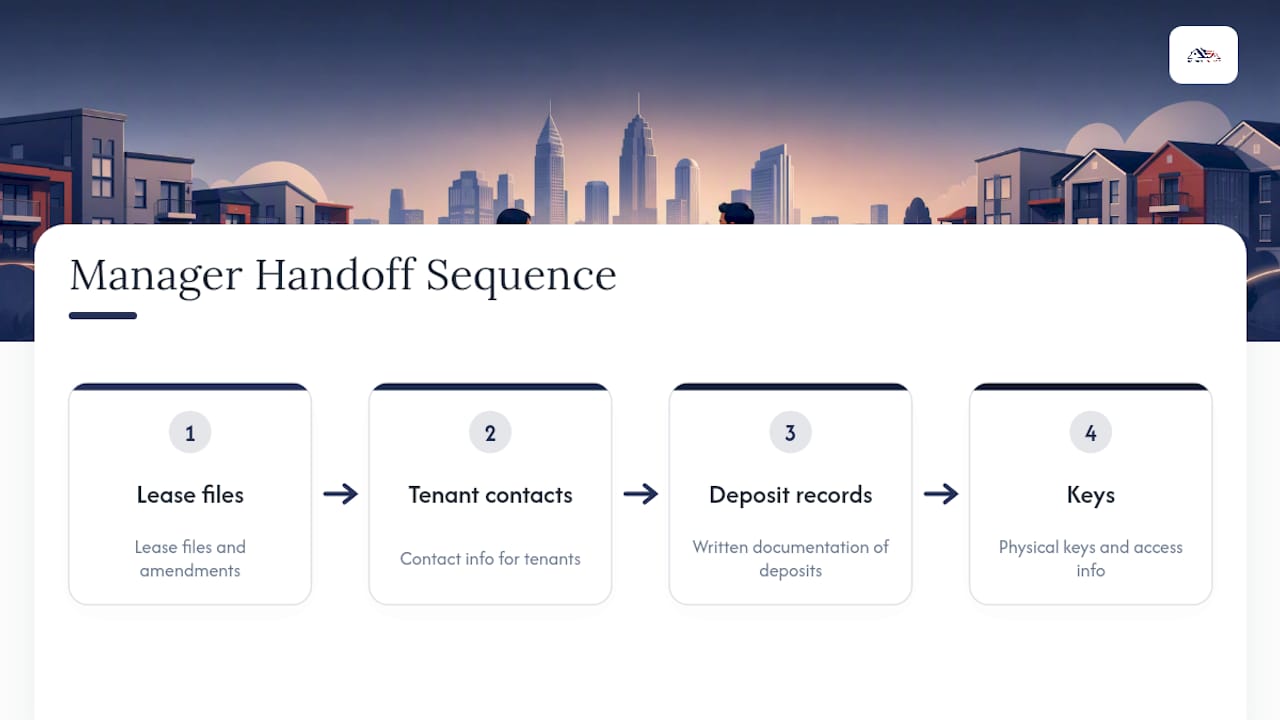
Owners also underestimate how disruptive a poorly communicated switch feels to tenants. If a tenant doesn't know where to send next month's rent, they'll either send it late or send it to the wrong account, and untangling that mess falls on you. Let the incoming manager own that notification with clear payment instructions and a real effective date.
Finally, owners sometimes accept a verbal assurance that security deposits transferred correctly. Georgia's rules on holding and returning deposits put real liability on whoever controls those funds, so get documentation, not a handshake.
Why the Handoff Sequence Actually Protects You
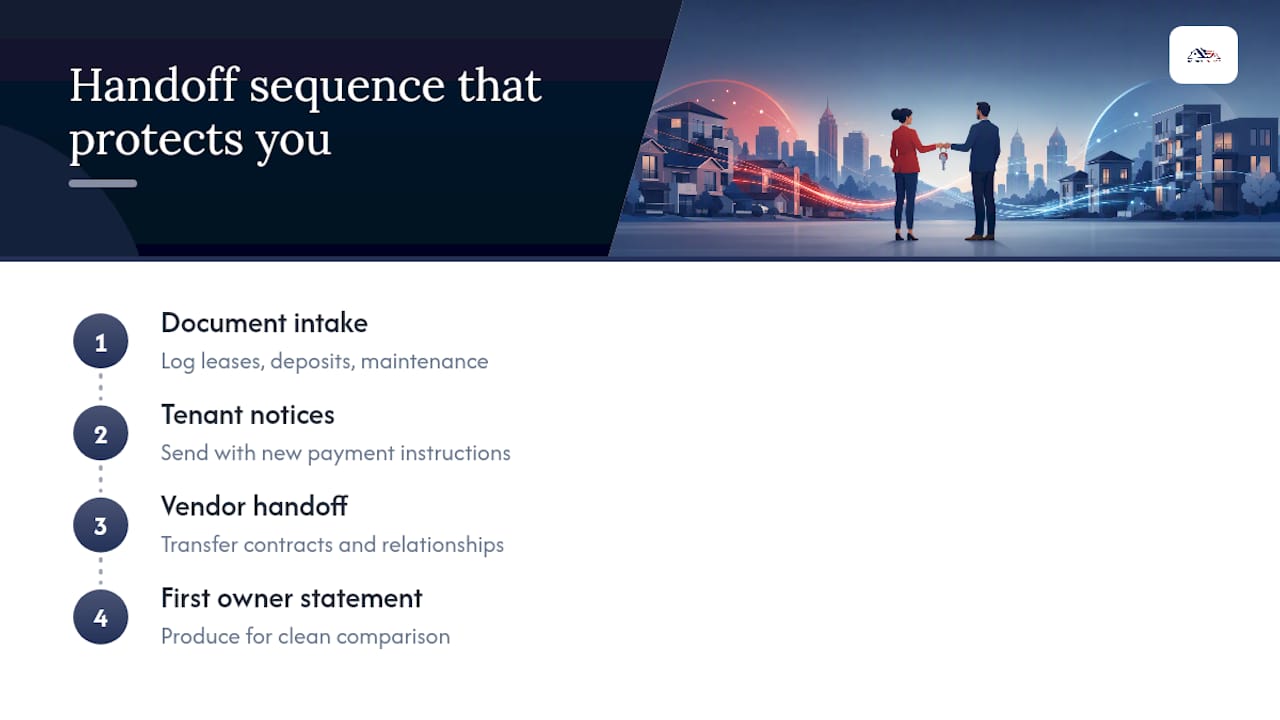
There are full-service brokerage and property management firms working across Atlanta and the surrounding metro, and the transitions that go smoothly all share the same structure. Document intake comes first: leases, deposit records, and maintenance history get logged before anything else moves. Tenant notices go out next, with new payment instructions attached, so nobody misses a rent cycle. Vendor contracts and relationships transfer in parallel. Then the first owner statement gets produced under the new management, giving you a clean comparison point against what you were used to seeing.
Owners who skip steps in that order are the ones who call three weeks later asking where a deposit went or why a tenant stopped paying. The sequence isn't bureaucracy. It's what keeps rent flowing and liability off your desk during a period when things could easily fall apart.
— Matt
Ready to Make the Switch Without the Headache?
If you're comparing a tech-heavy national platform against a smaller local shop, you've probably noticed the tradeoff: scale and automated tools on one side, hands-on local knowledge on the other. Some property management companies provide both local knowledge and technology tools, and may handle the document intake, tenant notices, and vendor handoff to simplify the transition process for you.
Here's how it starts: you send us your current management agreement and property documents through our property management page, and we build a transition plan around your notice period and timeline instead of a generic template. In the first 30 to 60 days, that plan covers document intake, tenant introduction letters with updated payment instructions, and your first owner statement under new management. If you're ready to stop losing sleep over a manager who isn't performing, request a free onboarding plan and see what the handoff actually looks like for your property.
Where to Look for More on Atlanta Property Management
For a broader comparison of local providers, see our ranking of Atlanta property management companies. If rent collection consistency is part of what pushed you to switch, our rent collection services guide breaks down common platforms. Vendor transitions, including landscaping and tree care contracts tied to your property, are covered in this guide to multi-property vendor service agreements.
FAQ
Which property management company is considered the best in Atlanta?
There's no single "best" citywide. Owners typically choose between tech-enabled platforms like Mynd or HomeRiver Group, and full-service local firms like OneSource Real Estate, based on whether they want more automated tools or more hands-on local service.
What are signs of a bad property manager?
Late or confusing financial statements, unexplained maintenance cost increases, vacancies that run longer than comparable units nearby, and slow tenant communication are the clearest warning signs.
How do I replace a property management company?
Sign a contract with your new manager and confirm an onboarding date first, transfer leases, deposit records, and keys, then issue formal written termination to your current manager according to your contract's notice period.
What are people saying about HomeRiver Group in Atlanta?
HomeRiver Group markets itself as a national platform paired with local Atlanta teams, offering rent collection, maintenance coordination, and investor consultation as part of its standard service package.
How much notice do I need to give before switching property managers in Atlanta?
Most management agreements require written notice with a transition window of roughly 30 to 60 days, so check your specific contract for the exact terms before you commit to a switch date.